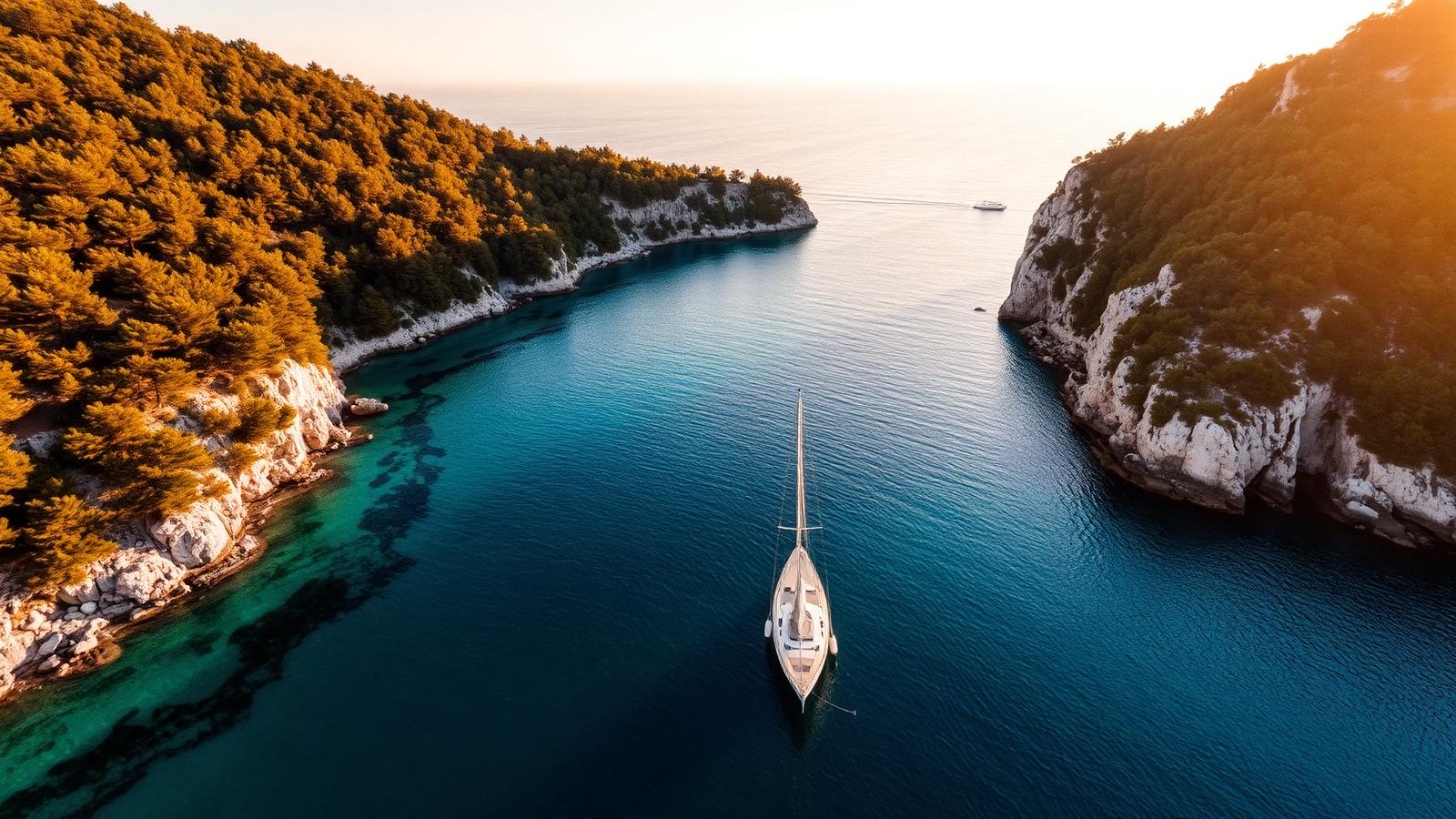
Island-hop through Brač, Hvar, Vis, Korčula and Mljet on one of the finest two-week sailing routes in the Mediterranean.
There are sailing holidays where the passage is the point, and others where the boat is simply the best possible way to move between beautiful places.
A Split to Dubrovnik sailing itinerary manages to be both.
In around two weeks you can leave the historic waterfront of Split, work your way through the islands of central and southern Dalmatia and finish beneath the walls of Dubrovnik, sailing through water that seems to become clearer with every island you pass.
The distances are manageable, there is almost always somewhere interesting within a few hours' sailing, and you can alternate busy towns such as Hvar and Korčula with nights where the biggest decision is whether to swim before or after opening the wine.
For a first sailing holiday in Croatia, it's difficult to imagine a better route.
Why Sail One-Way from Split to Dubrovnik?
A lot of Croatian charter itineraries are loops. You collect the boat on Saturday, spend six days trying to get as far away from the marina as possible and then spend the final two days undoing all your good work.
A one-way Split to Dubrovnik yacht charter is different.
Instead of retracing your route, every day takes you further south. Brač leads naturally to Hvar, Hvar to Vis, then onwards towards Korčula and Mljet before the Elaphiti Islands guide you towards Dubrovnik.
Over two weeks, the route is roughly 160–200 nautical miles depending on the detours and anchorages you choose. That's enough sailing to feel like a genuine cruise without requiring six or seven hours underway every day.
The great luxury is time.
With two weeks, you don't need to leave somewhere wonderful simply because the spreadsheet says it's Tuesday.
Day 1: Split – Don't Rush Away
Most charter holidays begin with people frantically loading supermarket bags onto the boat while somebody else tries to remember where the water-tank filler is.
Don't make your first evening more complicated than it needs to be.
Provision the yacht, understand the systems and spend your first night in or around Split. If it's your first time with the boat, this is also the moment to establish where everything important lives: lifejackets, anchor controls, electrical switches, emergency equipment and, crucially, the coffee maker.
Split itself deserves some time. Diocletian's Palace and the old city are immediately behind the waterfront, so there is little reason to treat the city purely as a charter base.
Tomorrow is when the sailing starts.
Day 2: Split to Milna, Brač – Around 10–12 Nautical Miles
The first leg should be easy.
Milna, on the western side of Brač, is only around 10 nautical miles from Split, making it a gentle introduction to Croatian sailing. Current ferry-route distance data puts Split to Milna at about 10.1 nautical miles, which gives a good indication of the passage length.
Milna's deep natural harbour has been used by sailors for centuries and works perfectly for your first proper night away from base.
More importantly, the short passage means you can leave Split relatively late without immediately putting the holiday behind schedule.
Have lunch under sail, swim during the afternoon and arrive in time for dinner ashore.
That's a much better first day than trying to cover 40 miles because somebody drew a line on Google Maps.
Day 3: Brač to Hvar
Now the holiday starts to look like the Croatia you came for.
Leave Brač and work south towards Hvar, ideally allowing enough time for a swim or lunch stop before you reach the town.
Hvar has become one of the Mediterranean's best-known island destinations, and in July and August you certainly won't have it to yourself.
But there's a reason everyone comes.
The old stone town rises immediately from the waterfront, the fortress sits above it, and the Pakleni Islands spread across the water just offshore.
Hvar harbour itself can be exceptionally busy during peak season. Instead of becoming fixated on securing a prime spot directly on the town quay, the better option is often to berth or moor around the Pakleni Islands and use the tender or water taxi to go ashore.
It gives you Hvar when you want it and quiet water when you've had enough.
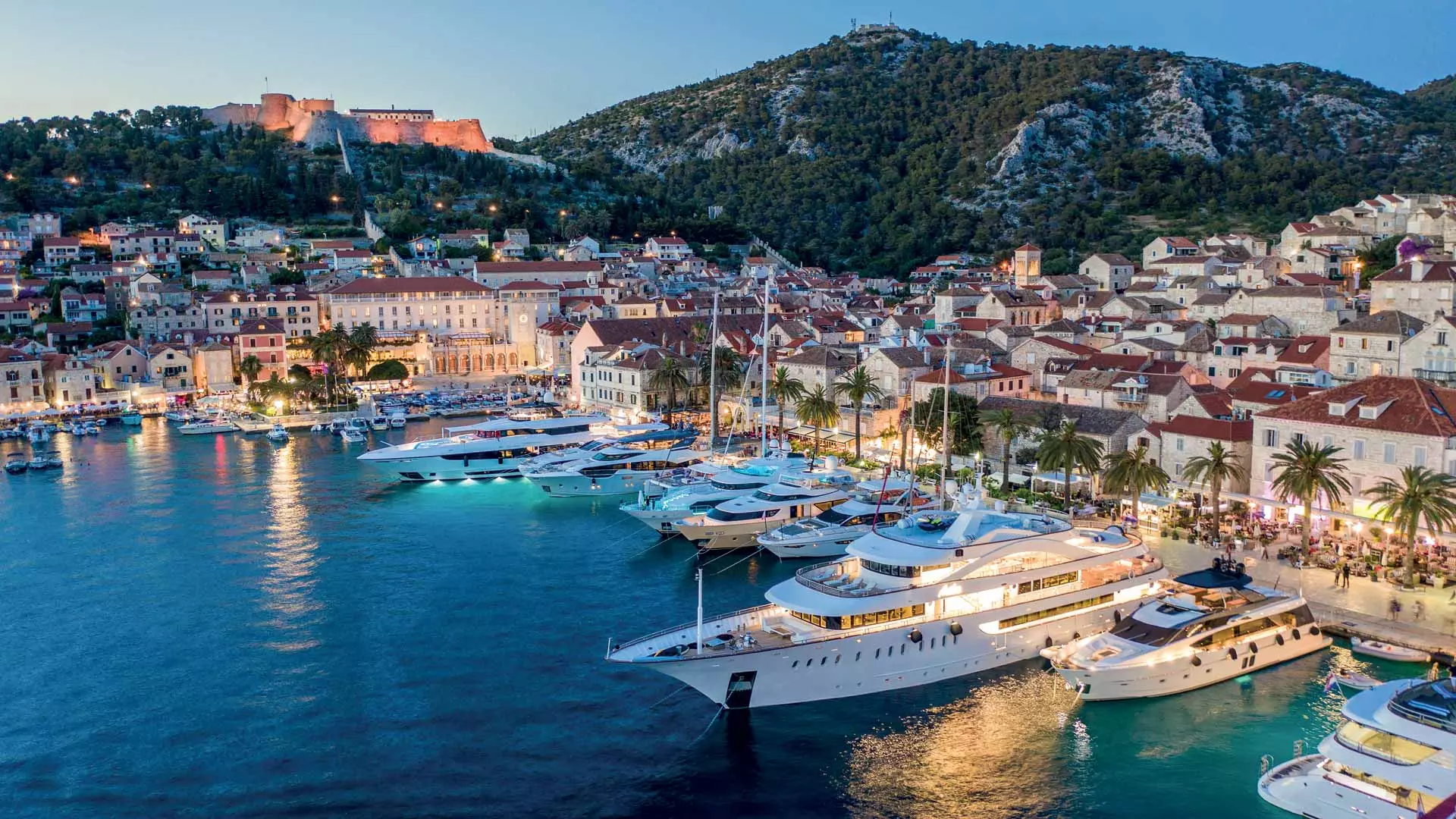
Day 4: Hvar and the Pakleni Islands – Stay Put
This is the first reason a two-week itinerary is better than trying to squeeze Split to Dubrovnik into seven days.
Don't go anywhere.
Spend the morning swimming around the Pakleni Islands, have lunch ashore and head into Hvar later in the afternoon.
Croatia rewards people who stop moving.
Some charter crews seem determined to collect islands like passport stamps, but very few people come home wishing they'd spent more of the holiday motoring between them.
Day 5: Hvar to Vis – Around 20 Nautical Miles
The sail from Hvar to Vis is one of the best passages on the itinerary.
The official Split-Dalmatia tourism authority suggests around 15–20 nautical miles and three to four hours for the Hvar-to-Vis leg.
You're now leaving some of the denser island groups behind and heading into more open water, which gives you a better chance to actually sail rather than repeatedly furling everything because another headland has stolen the wind.
Vis spent decades relatively isolated because of its military importance during Yugoslav rule, and it still feels noticeably different from Hvar.
Vis Town is handsome and relaxed, with boats lining the waterfront and restaurants tucked behind old stone buildings.
Don't hurry through it.
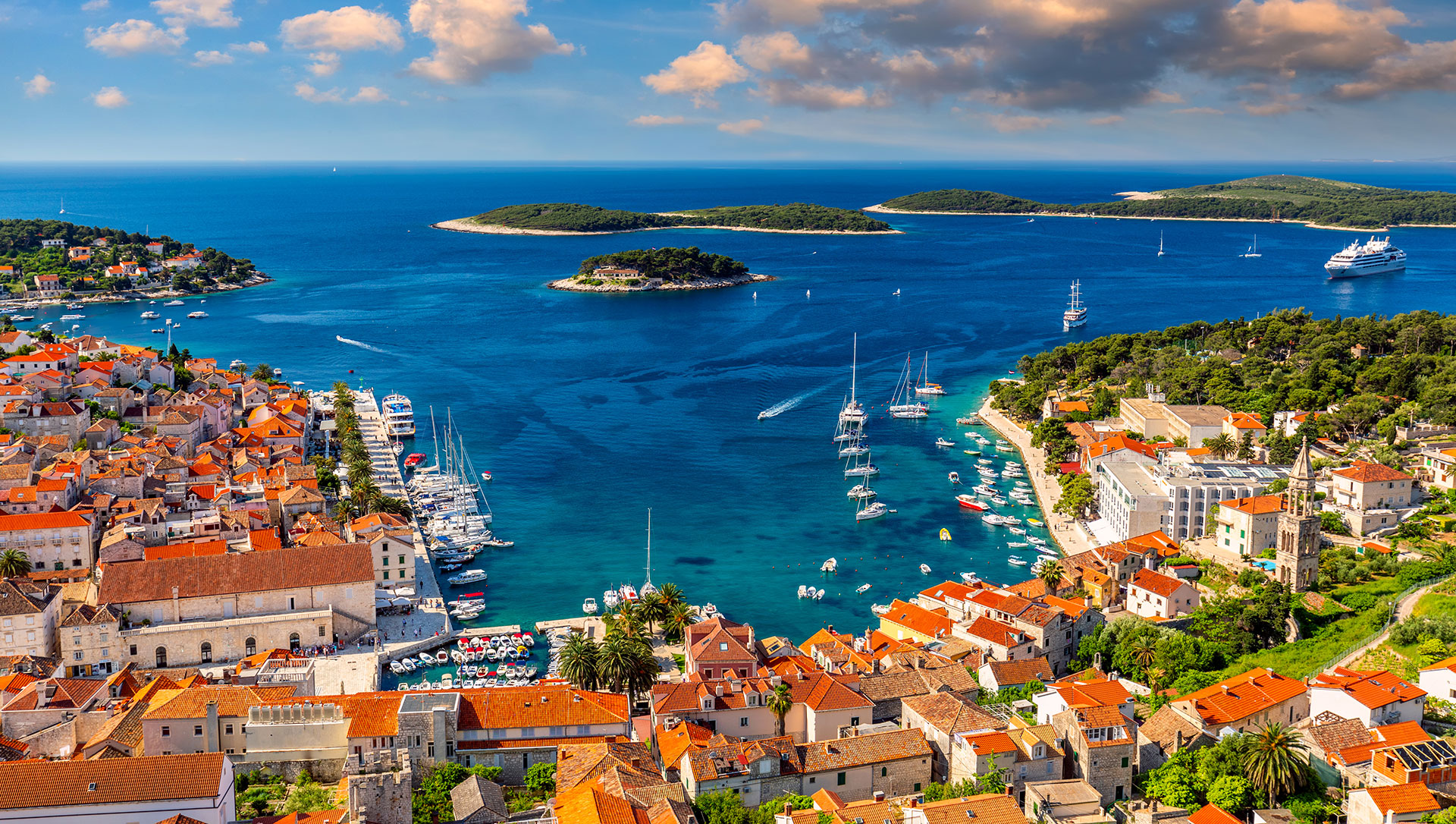
Day 6: Vis, Komiža and the West Coast
Keep the boat on Vis for another day.
You could move around the island to Komiža, explore the western coastline or simply hire scooters or a car and see some of the interior.
Komiža is particularly attractive: a traditional fishing town facing west towards the small island of Biševo.
Trips to the famous Blue Cave leave from this part of Vis, although whether it's worth joining the queues in peak summer is a matter of personal enthusiasm.
The better reason to come is Vis itself.
After Hvar, the island feels pleasantly unhurried.
Day 7: Vis to Vela Luka, Korčula
This is one of the longer sailing days, so leave reasonably early.
From Vis, head southeast towards the western end of Korčula, aiming for Vela Luka.
The passage puts you back into proper open-water sailing and is exactly why having a fortnight works so well: a longer day here doesn't need to be followed by another one tomorrow.
Vela Luka doesn't have the immediate postcard appeal of Korčula Town at the opposite end of the island.
That's actually part of the attraction.
It's a genuine working island town rather than somewhere designed entirely around visiting yachts.
Find your berth, get off the boat and leave the famous sights until tomorrow.
Day 8: Sail the Length of Korčula
Rather than simply treating Korčula as a stop, use the day to explore its coast.
Sail east from Vela Luka towards Korčula Town, stopping somewhere along the way for lunch and a swim.
The island is long and narrow, so this becomes one of the more satisfying full sailing days of the trip.
Korčula Town appears almost absurdly well placed for arrival by yacht.
A fortified old town sits on a small peninsula surrounded by water, with mountains rising behind it across the Pelješac Channel. The marina lies directly beside the historic centre, so within minutes of tying up you can be walking through medieval streets rather than crossing an industrial port.
It is one of the best arrivals on the entire route.
Day 9: Korčula – Another Day Off
Stay.
Korčula is somewhere that deserves an evening when you're not thinking about tomorrow's departure.
Explore the old town, find a beach, have a long lunch and let somebody else cook dinner.
If you need fuel, water, provisions or anything fixed, this is also a sensible point to deal with it before continuing south.
By now the boat should feel less like a charter yacht and more like home.
That's usually when the best part of a two-week sailing holiday starts.
Day 10: Korčula to Mljet – Around 15 Nautical Miles
The passage from Korčula towards Mljet is relatively short again.
Korčula to Pomena on western Mljet is around 14–15 nautical miles, making this an easy half-day sail.
Mljet is greener and quieter than almost everything you've visited so far.
Much of its western side forms Mljet National Park, famous for its forests and two saltwater lakes. Pomena and Polače are the natural bases for visiting the park by yacht.
This is one of those places where arriving by boat feels like cheating.
Everybody else has had to catch a ferry.
You've simply sailed into the bay.
Day 11: Mljet – Don't Just See It From the Cockpit
Keep another full day for Mljet.
Take the tender ashore, hire bikes or walk into the national park rather than spending the entire day admiring the forest from the cockpit.
Mljet is also a good place to remember that cruising Croatia isn't simply about old towns and restaurant quays.
Some of the best nights are the quiet ones.
Check current national-park navigation, anchoring, mooring and admission arrangements before arrival, as protected areas can have specific rules and fees.
Day 12: Mljet to Šipanska Luka
From Mljet, begin the final stage towards Dubrovnik via the Elaphiti Islands.
Šipan is the largest of them and Šipanska Luka makes an excellent penultimate cruising stop.
The contrast with where you're heading tomorrow is the point.
It's quiet, green and small enough that you can explore much of what you want on foot.
Recent sailors still regularly single out Šipanska Luka as a favourite anchorage on the Dubrovnik cruising circuit.
Have dinner ashore and resist the temptation to push on to Dubrovnik.
Saving that arrival for tomorrow makes it much better.
Day 13: Šipan to Dubrovnik
The final passage isn't the longest, but it may be the one you remember.
Leave Šipan, pass the remaining Elaphiti Islands and work your way towards Dubrovnik.
The southern Dalmatian cruising area between Dubrovnik, Mljet and Korčula is compact: for context, a typical seven-day Dubrovnik circuit covering Mljet and Korčula is around 148 nautical miles in total.
By now, after nearly two weeks aboard, handling the yacht should feel instinctive.
Fenders come out without a committee meeting. Mooring lines appear before they're requested. Someone finally knows which cupboard contains the bin bags.
And then Dubrovnik appears.
Spend the final night ashore rather than treating the city merely as somewhere to return the boat.
After two weeks island-hopping, walking through one of Europe's great walled cities is a suitably dramatic finish.
Day 14: Dubrovnik – Hand the Boat Back Reluctantly
Charter-day reality eventually arrives.
Refuel according to your charter company's instructions, clear the boat, check every cabin for chargers and sunglasses and accept that somebody has somehow lost one shoe.
If flights allow, keep the rest of the day for Dubrovnik rather than rushing straight to the airport.
One-way charters need to be organised in advance, and availability varies between fleets. Some companies charge a one-way fee because the yacht eventually has to be repositioned.
For this itinerary, it's worth it.
Doing the same route in reverse merely to return to Split would fundamentally change the trip.
When Is the Best Time to Sail from Split to Dubrovnik?
July and August provide the warmest, busiest version of Croatia.
If you want full restaurants, warm evenings and plenty of atmosphere, they're excellent.
But June and September may be even better for sailing Croatia.
The sea is warm, the charter fleets are active and almost everything is open, but popular harbours aren't quite as frantic.
Whichever month you choose, don't mistake generally good Mediterranean summer conditions for guaranteed weather.
The local maestral often provides pleasant afternoon sailing, while the northeasterly bora can arrive much more aggressively. The jugo, from the southeast, can bring stronger winds, cloud and uncomfortable seas.
Your itinerary should always lose an argument with the weather forecast.
Marina Every Night? Absolutely Not.
Croatia has an excellent network of marinas, town quays, buoy fields and restaurant moorings.
Use all of them.
Spending 13 consecutive nights in marinas rather defeats some of the point of chartering a yacht through the Croatian islands.
Mix nights ashore in places like Hvar and Korčula with quieter nights on buoys or at anchor.
It saves money, but more importantly it creates completely different days.
There is something particularly good about waking up, climbing directly off the stern and swimming before breakfast.
That's harder to recreate when the neighbouring charter boat is two metres away and somebody is already dragging a suitcase down the pontoon.
What Qualifications Do You Need to Sail in Croatia?
If you're taking a bareboat charter, check the qualification requirements with the charter company before booking flights.
Croatia recognises specified foreign certificates, and its Ministry of the Sea states that operators of foreign-flagged boats or yachts in Croatian territorial waters must hold an appropriate certificate of competence. If the flag state doesn't require one, an accepted certificate under Croatian rules is still required.
A VHF qualification may also be required depending on the yacht and charter arrangements.
Don't assume that simply having years of practical sailing experience is enough for the paperwork.
Get the charter company to confirm your exact certificates in writing before paying the final balance.
The Route We'd Choose
The beauty of this itinerary is that it feels ambitious without becoming exhausting:
Split → Brač → Hvar → Vis → Korčula → Mljet → Šipan → Dubrovnik.
It gives you big-name Croatian destinations without turning the holiday into a race between them.
Hvar provides the glamour. Vis slows everything down. Korčula gives you one of the Mediterranean's great old-town arrivals. Mljet supplies the wilderness. Dubrovnik provides the finale.
And between them you get what you actually chartered the boat for in the first place.
The sailing.
The Verdict
If we had two weeks and one Croatian charter to choose, a one-way sailing trip from Split to Dubrovnik would be very difficult to beat.
The distances suit a normal cruising yacht. There are enough islands that bad weather rarely leaves you without alternatives, but enough open water that you're still taking the boat somewhere rather than simply hopping between adjacent bays.
Most importantly, the route gets better rather than simply longer.
By the time Dubrovnik comes into view, Split feels much further away than the mileage suggests.
That's normally the sign of a good sailing trip.
Planning a Croatian sailing trip?
Use the Jack & Anchor Marina Directory to research marinas and overnight stops along the Croatian coast, or the Marine Services Directory if you need local repairs, maintenance or support.
If you're considering buying your own yacht rather than chartering, browse Boats for Sale or use BoatCheck to investigate a used boat before you buy.