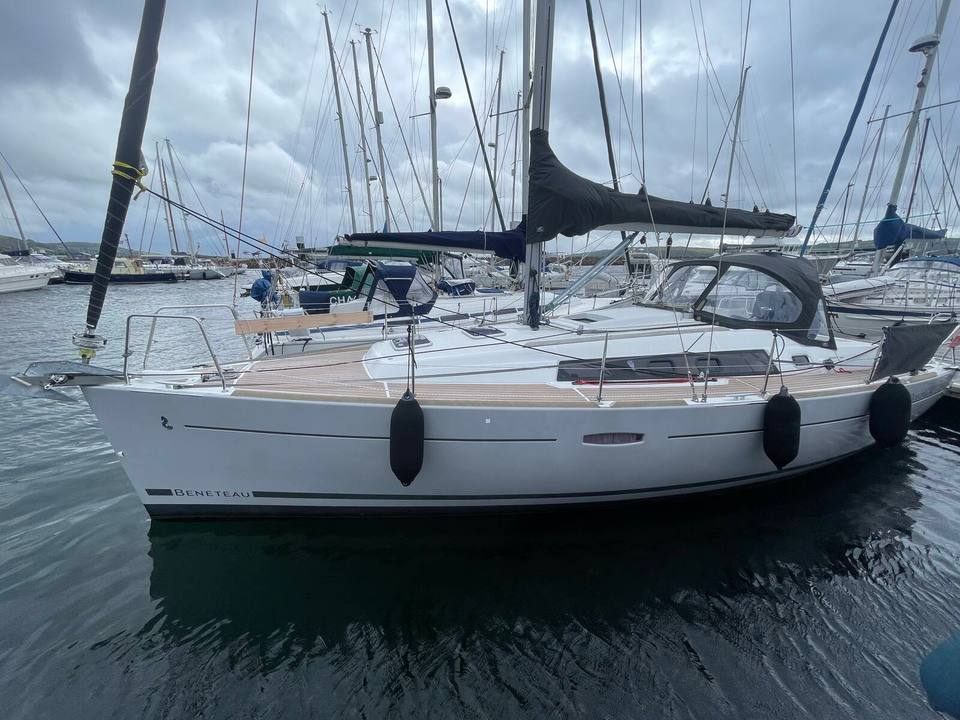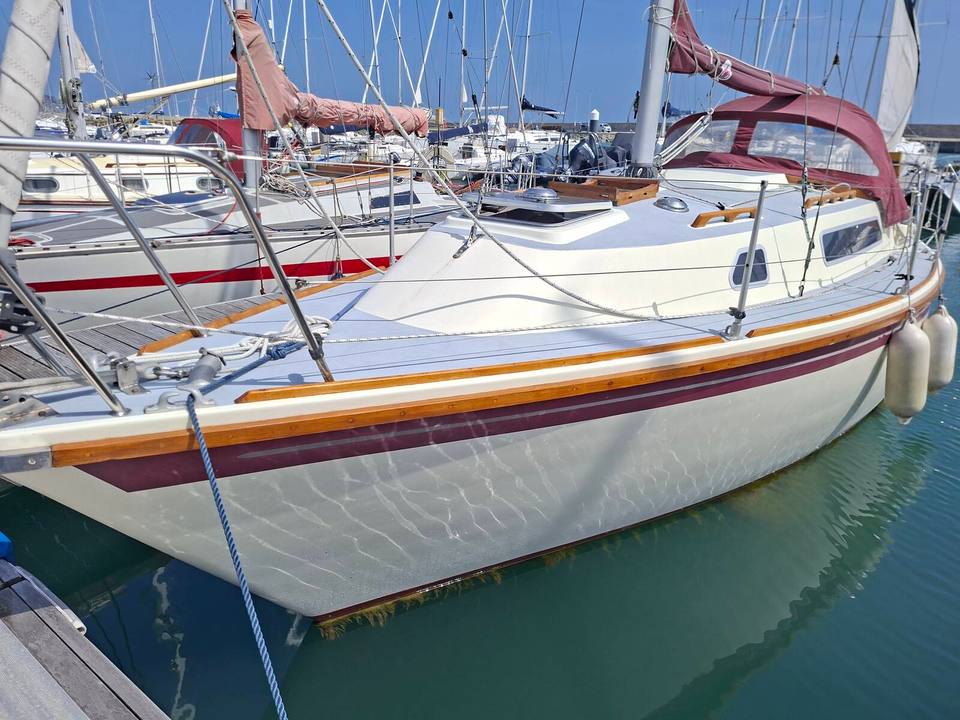

A ten-year-old French or Dutch yacht can look thousands of pounds cheaper than the same model on a British broker's website. Sometimes the saving is real. Often it disappears the moment the boat crosses into British waters, because a boat bought in the EU and brought to Great Britain is an import, and imports attract 20% VAT no matter how many times VAT was paid on that hull in France, Spain or the Netherlands.
This guide works through what that means in practice in autumn 2026: which taxes apply, how HMRC values the boat, what the Recreational Craft Regulations require, which documents you need before you hand over any money, and how to get the boat home. We read the current HMRC and GOV.UK guidance, the UK Trade Tariff, the Recreational Craft Regulations 2017, the European Commission's 2026 guidance note on pleasure craft, and the UK Ship Register's fee and document lists, then built three worked examples and a break-even table so you can test a listing before you book flights to see it.
It covers Great Britain (England, Scotland and Wales). Northern Ireland follows different customs rules for goods moving to and from the EU, and there is a short note on that near the end. Nothing here is tax advice for your particular case; where the rules leave room for judgement we say so and point you to the office that decides.
The short answer
If you are UK resident, you buy a used boat in the EU and you bring it to Great Britain to keep and use, expect the following.
| Item | What applies in October 2026 | Source |
|---|---|---|
| Customs duty | 0% on yachts, motorboats and inflatables under heading 8903 (Russia and Belarus origin excepted) | UK Trade Tariff, heading 8903 |
| Import VAT | 20% of the customs value plus transport and insurance costs to the first UK destination | HMRC: VAT on imports |
| Declaration (arriving by sea) | Pleasure craft report, Q flag, then form C384 (Vessels) emailed to HMRC's Pleasure Craft Unit | GOV.UK: arriving in the UK |
| Returned Goods Relief | Not available to you if the boat was exported from the UK by someone else | Same GOV.UK page |
| CE marking | Recognised in GB indefinitely; keep the Declaration of Conformity | RCR 2017 GB guidance |
| Registration | Part 1 £153 for five years, or Small Ships Register £35 for five years | UK Ship Register fees |
The single number to remember is 1.2. For a boat you sail or truck home yourself, the landed cost before registration and other fees is roughly the purchase price in sterling, plus delivery, all multiplied by 1.2.
Why EU VAT history does not help you
Most used boats in the EU carry what brokers call "VAT paid status". The European Commission's Guidance Note for Pleasure Craft, dated 30 April 2026, explains that the correct customs term is "customs status of Union goods with VAT at import paid". A boat with that status can be sold any number of times inside the EU without anyone paying VAT on the hull again, as long as it stays in the EU customs territory.
The status belongs to the EU, not to the boat. Once the boat leaves the EU customs territory it loses Union status, and the UK has never been part of that territory since 1 January 2021. HMRC sees the arriving boat as goods from abroad and charges import VAT on its value. The VAT the first owner paid in France in 2014 is not refundable to you and is not credited against the UK charge.
PBO's 2026 round-up of advice from boat buying professionals makes the same point from the other direction: a boat bought in the EU will pay VAT again in the UK even if it originally came with a UK VAT invoice.
The British boat for sale in Spain
This is where buyers get caught. A British couple sailed to the Mediterranean in 2023 on a boat that was VAT paid in the UK. They now want to sell it in Palma. The advert says "UK VAT paid, British registered". All of that may be true, and none of it helps a new owner who wants to sail the boat back to Britain.
HMRC's guidance on pleasure craft arriving in the UK allows Returned Goods Relief on a boat that was in free circulation in the UK when it left and has had no more than running repairs abroad. For the VAT part of the relief there is an extra condition: the same person who exported the boat must re-import it. The exclusion is spelt out: if a vessel is exported and sold to a new owner while outside the UK, the new owner is liable for import VAT if it returns.
The general Returned Goods Relief guidance adds the time limit, which is three years from export, though it can be waived in some circumstances, including some pleasure craft returned by individuals.
There is a legitimate way round this, and it is worth asking about. If the British sellers bring the boat back to the UK themselves, within three years and in the same condition, and claim relief in their own names, they can then sell it to you in the UK as a UK VAT-paid boat. The sale then happens on a British pontoon, after your survey, with no import charge for you. Many sellers will not want the extra passage, but on a £100,000 boat the difference is about £20,000, which pays for a lot of delivery. Any such arrangement depends on the relief actually being granted to the sellers, so the contract should not complete until the boat is back and cleared.
Keeping the boat in the EU instead
The Commission's guidance answers a question many British owners ask: can someone who is not established in the EU own a Union-status boat and keep it in the EU indefinitely? The answer in its FAQ is yes. Ownership, nationality and flag are not relevant to customs status, and while the boat stays in the EU the presumption of Union status applies.
So if you want a boat to keep in Brittany, Mallorca or Croatia and have no plan to bring it to Britain, buying a VAT-paid boat locally and leaving it there involves no UK import at all. Our UK and Spain berthing cost comparison is a useful starting point for that sum.
Two catches. First, the boat loses Union status the moment it leaves the EU, including for a summer trip to the Solent; getting it back into the EU tax-free then depends on the EU version of returned goods relief, which also requires the same person to re-import within three years. Second, you cannot bring that boat to Britain for a holiday under the UK's own temporary admission relief. HMRC's guidance on temporary admission for pleasure craft limits it to vessels registered outside the UK to a person established outside the UK and used by a non-UK resident. A UK resident bringing their own EU-kept boat into British waters is importing it.
Customs duty: zero, and why the GOV.UK page still mentions it
The GOV.UK arrivals page still says that owners of vessels under 12 metres "may have to pay Customs Duty" and links to the tariff. We checked the UK Trade Tariff on 30 October 2026 for the commodity codes that cover private yachts and motorboats.
| Commodity code | Description (shortened) | Third country duty | EU preference | VAT |
|---|---|---|---|---|
| 8903 11 00 00 | Inflatable boats | 0.00% | 0.00% | 20% |
| 8903 21 00 00 | Sailboats, length not over 7.5 m | 0.00% | 0.00% | 20% |
| 8903 22 10 00 | Sailboats over 7.5 m but not over 24 m, seagoing | 0.00% | 0.00% | 20% |
| 8903 22 90 00 | Sailboats over 7.5 m but not over 24 m, other | 0.00% | 0.00% | 20% |
| 8903 31 00 00 | Motorboats (not outboard), not over 7.5 m | 0.00% | 0.00% | 20% |
| 8903 32 10 00 | Motorboats over 7.5 m but not over 24 m, seagoing | 0.00% | 0.00% | 20% |
| 8903 32 90 00 | Motorboats over 7.5 m but not over 24 m, other | 0.00% | 0.00% | 20% |
Every line shows a 0% third country rate, so for Great Britain the origin of the boat does not change the duty. The exception is an additional 35% duty on goods originating in Russia or Belarus. A boat built in Russia and sold second-hand in Finland, for example, deserves a careful look at origin before you commit.
The duty-free position is not the same everywhere in the UK. The Northern Ireland version of the tariff, which follows EU rates for goods at risk of entering the EU, showed a 1.7% third country duty on code 8903 22 90 00 on the same day.
How HMRC works out the VAT
Import VAT is charged on a value made up of three parts, according to HMRC's guidance on VAT on imports:
- The customs value, which for a straightforward purchase is the price you paid.
- Incidental expenses such as commission, packing, transport and insurance up to the first destination in the UK.
- Any customs duty, which for boats in GB is zero.
The C384 (Vessels) form asks for the value of the vessel including equipment, the country of manufacture, the hull identification number, where it will be moored, where and when you bought it, the price paid with the invoice, whether VAT was paid on the purchase, whether that VAT was refunded, and whether you bought from a private individual. You sign a declaration that the boat is for your personal use and not for resale, and the form warns that false declarations can lead to penalties including forfeiture of the boat. You can download the current C384 form from GOV.UK.
Exchange rate
If the invoice is in euros, the sterling value is set using HMRC's published monthly exchange rate rather than your bank's rate on the day. For October 2026 HMRC's rate is €1.1665 to the pound, valid from 1 to 31 October. A boat arriving in November will use the November rate, so a sharp move in sterling between agreeing the price and arriving home changes the VAT bill as well as the purchase cost.
Equipment and later purchases
GOV.UK reminds arriving skippers that goods acquired abroad worth more than £270 in total must be declared, and that this includes equipment bought and fitted outside the UK. If you buy the boat and then spend €4,000 on a new liferaft, sails or a plotter in La Rochelle before the passage home, that equipment belongs in your C384 value.
Delivery costs
The guidance includes transport costs to the first UK destination. For a boat trucked over, that is the haulage invoice. For a boat sailed home by a paid delivery skipper, the skipper's fee and expenses are the transport, and our worked examples treat them that way. If you sail it home yourself, there is no transport invoice to add, but your fuel and berthing on the way home are your own costs. If you are unsure how a particular cost should be treated, the Pleasure Craft Unit (contact details below) is the place to ask before you arrive rather than after.
Worked example 1: a 10 metre yacht bought privately in Brittany
The assumptions are labelled so you can replace them with your own numbers.
- Boat: a 2014 10 metre production cruising yacht, CE marked, Union-status (EU VAT paid), bought from a private French owner.
- Agreed price: €62,000, nothing extra bought before departure.
- Exchange rate: HMRC October 2026, €1.1665 to £1.
- Delivery: a professional skipper for three sailing days from southern Brittany to the south coast of England, plus two travel days. We used Scotsail's published 2026 delivery terms as a reference point: skipper from £299 a day, travel days charged at half rate, travel and expenses at cost, and fuel and harbour dues paid by the owner. The £350 travel and £250 fuel and dues figures below are our assumptions for illustration, not quotes.
| Line | Amount |
|---|---|
| Purchase price €62,000 at 1.1665 | £53,150 |
| Skipper, 3 days at £299 | £897 |
| Skipper travel days, 2 at £149.50 | £299 |
| Skipper travel to the boat (assumed) | £350 |
| Fuel and harbour dues on passage (assumed) | £250 |
| Value for import VAT | £54,946 |
| Import VAT at 20% | £10,989 |
| Customs duty at 0% | £0 |
| UK Ship Register Part 1, new registration | £153 |
| Total before survey, insurance and travel to view | £66,089 |
The headline price was £53,150. The landed cost is about £66,100, or 24% more, and that is before you add your own travel to view the boat, a survey, the tonnage measurement needed for Part 1 registration, and insurance. If a comparable boat were advertised in a British marina for anything under about £66,000 as a UK VAT-paid private sale, it would have been the cheaper buy, and you would not have needed to arrange a Channel passage in autumn weather.
Where the French boat does win is on choice and condition. If the British market has two tired examples and the French market has six good ones, paying the import cost may still buy you a better boat. That is a legitimate reason, as long as you put the right price on it.
Worked example 2: a motorboat from an EU dealer
Buying from a VAT-registered dealer adds a question that does not arise with a private seller: will the dealer charge local VAT?
The EU VAT Directive exempts goods sent outside the EU by the seller, and goods taken outside the EU by a customer not established in that country, under Article 146. In plain terms, a French dealer can sell to a UK resident without French VAT if the boat leaves the EU and the dealer has the export evidence its tax office requires. Dealers handle this differently. Some arrange the export themselves; some will invoice without VAT only once proof of exit arrives; some prefer to charge VAT and leave you to argue for a refund. Ask before you agree a price, and get the answer in writing.
Assume a 2019 motor cruiser advertised by a French dealer at €145,000 including French VAT at 20%, trucked to a UK yard. We have left road transport as a blank because haulage quotes depend heavily on beam, height, route and permits, and we would rather you use a real quote than our guess.
| Line | Dealer zero-rates as export | Dealer charges French VAT |
|---|---|---|
| Price paid | €120,833 | €145,000 |
| Sterling at 1.1665 | £103,586 | £124,303 |
| Road transport to UK yard | your quote (T) | your quote (T) |
| UK import VAT at 20% | £20,717 + 0.2T | £24,861 + 0.2T |
| Total before transport and fees | £124,303 | £149,164 |
The right-hand column is the case to avoid. You pay French VAT that is built into the price and, if it is not refunded, the C384 value is what you actually paid, so UK VAT is charged on top of the French VAT. The form asks directly whether VAT was paid on the purchase and whether it was refunded, which is how HMRC finds out. The difference between the two columns on this boat is just under £24,900. Before you sign, get the dealer to agree in writing that the invoice will be issued without VAT for export, or if not, how and when the French VAT will be refunded. If the dealer cannot do either, check the HMRC position with the Pleasure Craft Unit before you go ahead.
For a Dutch dealer the logic is the same but Dutch VAT is 21%, so the ex-VAT price is the advertised price divided by 1.21.
Worked example 3: the ex-British boat in Palma
Take a UK-built 11 metre yacht, exported from the UK in May 2023 by British owners, now offered in Mallorca for €95,000. It is UK VAT paid and on Part 1 of the UK Ship Register.
| Route | Who imports | Returned Goods Relief | UK import VAT on €95,000 (£81,440) |
|---|---|---|---|
| You buy in Palma and sail it home | You | Not available for VAT: you did not export it | £16,288 |
| Sellers sail it home, claim relief, sell to you in the UK | Original owners | Possible if within three years and unaltered | £0 if relief is granted |
| Sellers sail it home after May 2026 | Original owners | Three-year limit passed; a waiver must be requested | Depends on HMRC's decision |
The three-year limit in this example runs out in May 2026, so that particular boat is now in the waiver zone. The guidance says the limit can be waived in some circumstances for pleasure craft returned by individuals, through HMRC's National Import Reliefs Unit, but a waiver is not automatic. If you are relying on it, the sellers need to apply and get an answer before you complete.
Also check how the boat stands on the EU side. A British-owned, British-flagged boat in Spain is usually there under EU temporary admission, which the Commission's guidance limits to 18 months for boats registered outside the EU and owned by persons established outside it. If the boat has overstayed or been used in a way that breaks the conditions, Spanish customs may have a claim against it. Ask the sellers for their arrival evidence and any correspondence with Spanish customs, and ask your surveyor or broker to look at the paperwork, not just the hull.
A break-even check before you travel
The sums above turn into a simple test. If an EU boat and a UK boat are genuinely comparable, the EU boat is only cheaper if its price, plus delivery, plus 20% of both, plus registration, comes in under the UK price.
We used the delivery figure from worked example 1 (£1,796) and Part 1 registration (£153). The table shows the highest euro price at which an EU private sale breaks even with a UK private sale of a VAT-paid equivalent, at HMRC's October 2026 rate.
| UK asking price | Break-even EU price (£) | Break-even EU price (€) | EU boat must be cheaper by |
|---|---|---|---|
| £30,000 | £23,076 | €26,919 | 23.1% |
| £50,000 | £39,743 | €46,360 | 20.5% |
| £75,000 | £60,577 | €70,662 | 19.2% |
| £100,000 | £81,410 | €94,965 | 18.6% |
| £150,000 | £123,076 | €143,569 | 17.9% |
| £250,000 | £206,410 | €240,777 | 17.4% |
The table flatters the EU option, because it ignores the costs that appear only on the import route: flights to view the boat, a survey abroad, a surveyor or delivery skipper's travel, the tonnage measurement for Part 1, and the time you spend on paperwork. On smaller boats, those fixed costs push the required discount above a quarter. The formula, if you want to run your own numbers, is: maximum EU price in pounds = (UK price minus 1.2 × delivery minus registration) ÷ 1.2.
The Recreational Craft Regulations and CE marking
VAT is the cost; the Recreational Craft Regulations 2017 decide whether the boat can legally be put into service in Great Britain. They cover recreational craft from 2.5 to 24 metres hull length.
CE-marked boats
Most production boats built for the EU market since 16 June 1998, when the Recreational Craft Directive took full effect, carry CE marking. The government's GB guidance on the regulations, updated in March 2025, confirms that CE marking is recognised in Great Britain indefinitely, following the Product Safety and Metrology etc. (Amendment) Regulations 2024 which came into force on 1 October 2024. A CE-marked boat built to the Directive does not need UKCA marking to be used in Britain.
What you need is evidence that it really is compliant. Ask for:
- the builder's plate with the design category and maximum load;
- the Declaration of Conformity issued by the builder;
- the owner's manual supplied with the boat;
- a hull identification number (HIN) that matches the plate, the paperwork and the transom.
A missing Declaration of Conformity can often be replaced by the builder or its national importer. A HIN that does not match the documents is a much bigger problem and should stop the purchase until it is explained.
When a Post-Construction Assessment is needed
Regulation 43 requires a Post-Construction Assessment (PCA) in three situations:
| Situation | What the regulations say |
|---|---|
| Private importer, manufacturer has not carried out the conformity assessment | The private importer must apply the PCA procedure before putting the product into service |
| Major engine modification or major craft conversion | Anyone placing on the market or putting into service must apply the PCA procedure |
| Boat built for own use, sold within five years of entering service | The seller must apply the PCA procedure before placing it on the market |
The procedure itself is in Schedule 5 and has to be carried out through a UK Approved Body. The government's register lists HPi Verification Services Ltd as UK Approved Body 1521 for Schedule 5 PCA work under the 2017 regulations. We could not find a published PCA price, so get a written quote, and do it before you buy rather than after.
The engine point catches people. A yacht that has been re-engined with a different model, or a motorboat that has had a major engine change, may count as a major engine modification. Ask the seller what engine the boat left the factory with, and compare it with what is fitted now.
Pre-1998 boats with no CE marking
This is where the rules stop giving a clear answer. Before 2021, an older non-CE boat could move freely between the UK and the rest of the EU because it was already on the single market. Since Brexit, opinions differ on whether a second-hand, pre-1998 boat from the EU is being "placed on the market" or "put into service" in Great Britain for the first time when a private buyer imports it. Guidance from the French boating industry federation has taken the view that second-hand boats moving between the UK and the EU need a PCA; some UK surveyors argue the regulations were never meant to reach used private boats. The regulations are enforced in GB by Trading Standards, and the GB guidance notes that the most serious offences can carry up to three months' imprisonment.
If you are looking at a pre-1998 boat in the EU, get a written view from an Approved Body or your local Trading Standards service before you pay a deposit. Without one, you are betting on a point that has not been settled.
Documents to see before you pay
A sound purchase in another country depends more on paperwork than a sale in your home marina does, because putting a problem right later means dealing with a foreign registry in a foreign language. Before you transfer money, see originals or verified copies of the following.
Ownership. A bill of sale from the seller to you, and evidence of the seller's own title. The UK Ship Register will want a five-year chain of title for Part 1 registration (see below), so collect previous bills of sale now while the seller can still find them.
Registration and deletion. The current registration certificate, and an undertaking from the seller to close it. In France the process changed in 2022: the deletion certificate for export is now issued digitally by the departmental maritime registration office (DDTM), in the seller's name, and since 1 January 2022 it carries no information about VAT, because the maritime authorities have no remit over tax. Foreign registries can check that the certificate is genuine on France's PROMETE system. The seller needs the bill of sale, the existing registration document, a copy of your identity document and your email address, so put that in the contract as their obligation.
Union status and VAT. The original VAT invoice, or customs import documents, or other evidence of Union status. This will not save you UK VAT, but it protects you if you keep the boat in the EU for a while, and it matters if you take the boat back into the EU yourself within three years, when EU returned goods relief may apply.
Conformity. Builder's plate, Declaration of Conformity, owner's manual, HIN.
Engines and equipment. Engine serial numbers, service history, and receipts for recent large purchases. Any equipment bought abroad needs to go on the C384.
Radio. The existing ship radio licence and MMSI. You cannot take over a foreign licence; you will need your own (see below).
Our first-time buyer's guide covers the general checks that apply to any purchase. For an independent desk check of identity, theft records, registrations and previous adverts before you travel, a BoatCheck report works from the listing link and any identifiers the seller gives you. For the hull, engines and systems, a pre-purchase survey is still the main defence; our guide to UK survey costs explains what to expect from a full survey and how fees are calculated, which is a useful benchmark when you ask for quotes from French or Spanish surveyors.
Getting the boat home
There are two routes: under her own power, or on the back of a lorry. They lead to different customs procedures.
Sailing or motoring home
For a boat arriving by sea, the GOV.UK arrivals guidance sets out the steps:
- Submit a pleasure craft report before arrival, using the online sPCR service, with passport details for everyone on board.
- Fly the yellow Q flag on entering the 12 nautical mile limit.
- On arrival, complete form C384 (Vessels) and email it to HMRC's Pleasure Craft Unit of Expertise at pleasurecraft.lcsouth@hmrc.gov.uk. The unit's phone number is 03000 516 864, open Monday to Friday from 8am to 4.30pm.
- Pay the import VAT as HMRC directs.
- Declare any other goods over the allowances, including equipment bought abroad.
HMRC updated the guidance on 20 July 2026, and the C384 step is now stated plainly on the page. Plan the arrival for a weekday if you can. A boat that turns up at 7pm on a Saturday will still need its paperwork done, and the unit is not open at weekends.
The passage itself is the bigger decision. From southern Brittany to the south coast of England is a proper offshore trip across busy shipping lanes, and for an unfamiliar boat that is often the first real test of her rig, engine and electrics. In autumn, weather windows are shorter. Many buyers use a professional delivery skipper for the first passage, either alone or as crew alongside the skipper, which also produces an independent record of how the boat behaved. Delivery terms vary: Scotsail's published terms, for example, include a 75% day rate for days lost to weather or breakdown, which is worth reading before you budget for a tight schedule.
By road
A lorry suits motorboats with a modest beam, boats a long way from the Channel, and anything you are not confident about taking to sea. The boat then arrives as freight rather than as a pleasure craft under way. The haulier or a customs agent usually makes the import declaration, and the VAT is collected through that declaration rather than through the C384 route. GOV.UK says you do not need an EORI number if the goods are both uncontrolled and for personal use only, but agents may still ask for one or make the declaration on your behalf under their own; ask at the quoting stage who makes the declaration and how the VAT will be paid.
If the boat once belonged to a UK owner who is now bringing it back as freight to claim Returned Goods Relief, the GOV.UK relief guidance says a pleasure craft report should still be made and the declaration should use the procedure code 61 23 F01. This only applies if the original exporter is importing it.
If you would rather hand the logistics to someone else, Jack & Anchor's boat delivery service quotes for skippered passages and road transport across the UK and Europe, and can price both so you can compare them before deciding.
After arrival: registration, radio and insurance
Choosing a register
The boat's foreign registration has to be closed and a UK registration opened if you plan to go abroad again. Registration is optional for a boat kept and used only in UK waters, but the RYA's paperwork guidance treats it as essential once you leave territorial waters.
| Part 1 | Part 3 (Small Ships Register) | |
|---|---|---|
| Fee | £153 for five years; renewal £72 | £35 for five years |
| Proof of title | Yes | No; carry the bill of sale as well |
| Marine mortgage can be registered | Yes | No |
| Who can register | British citizens and other qualifying owners, including those living abroad with a UK representative | UK residents (185 days a year), not businesses |
| Main extra requirements | Five-year chain of title, tonnage measurement survey, deletion from previous register | Simple application |
Sources: UK Ship Register fees, Part 1 new registration, Small Ships Register.
For an imported boat, the Part 1 documents list is the long one. It includes the application form, the declaration of eligibility, bills of sale covering the last five years of ownership, a builder's certificate if the boat is under five years old, a Certificate of Survey for Tonnage and Measurement issued within the previous 12 months by an approved Certifying Authority, and a deletion certificate or transcript from the previous register. If the deletion is not yet ready, the register may accept an undertaking to supply it within six weeks. Documents not in English need notarised translations, and the register asks for wet signatures on several forms. A French deletion certificate and a chain of French bills of sale may all need translating, which is a cost worth asking a translator about early.
If you are financing the purchase, Part 1 is effectively compulsory, because it is the only part on which a marine mortgage can be registered. The RYA notes that Part 3 does not on its own constitute legal proof of ownership.
Radio licence and MMSI
Under Ofcom's ship radio rules, a ship radio licence cannot be transferred to a new owner. You apply for a new one in your name. For a boat already on a UK licence, the call sign and MMSI stay with the vessel. For a boat coming from France, Spain or the Netherlands, the existing call sign and MMSI belong to the foreign administration, so expect a new UK call sign and MMSI, and plan to have the DSC VHF and any AIS transponder reprogrammed. On some sets that is a job for a dealer rather than a menu option. The seller should cancel their own licence with their national administration.
Using radio equipment without a valid licence is a criminal offence in the UK; Ofcom lists a maximum penalty of a £5,000 fine and up to six months in prison.
Insurance
Arrange cover from the moment of purchase, not from the moment the boat is in Britain. The passage home, or the time on a lorry and the lifts at each end, are the riskiest days you will have with the boat. Tell the insurer the boat is being delivered from abroad, who is skippering, and the route; many policies have navigation limits and conditions for delivery passages. Our yacht insurance page sets out what to ask about.
Northern Ireland
Under the Windsor Framework, Northern Ireland applies EU customs rules to goods. The tariff difference shown above (1.7% third country duty on some boats in the NI tariff against 0% in GB) is one sign that the position differs. HMRC also treats sales of boats between Northern Ireland and the EU under the rules in VAT Notice 728 on new means of transport. The temporary admission period for visiting non-UK boats is 18 months in Northern Ireland against 24 months in Great Britain. If you are buying in the EU to keep a boat in Northern Ireland, treat this guide as background only and speak to HMRC before you buy.
Moving to the UK with your boat
One group can avoid import VAT altogether. If you have lived outside the UK for at least 12 months, owned and used the boat for at least six months, and are now moving your normal home to the UK, the boat can qualify for transfer of residence relief. This is for genuine moves, and goods imported under the relief cannot be lent, used as security, hired out or transferred to anyone else within 12 months of the date you moved. It is not a route for buying a boat in Spain and bringing it over on your next holiday.
A timeline for an EU purchase
| Stage | What to do |
|---|---|
| Before viewing | Run the break-even sum; ask the seller for HIN, build year, CE status, engine history and VAT evidence; order a desk history check |
| Before offering | Confirm the boat's EU customs status; for ex-British boats, ask whether the sellers can import it under Returned Goods Relief |
| Offer and contract | Make it subject to survey and documents; for dealers, agree in writing how VAT will be invoiced; make the seller responsible for the deletion certificate |
| Survey | Hull, engines, rig and systems, plus a check of plate, HIN and Declaration of Conformity; for pre-1998 or re-engined boats, get the PCA position in writing |
| Completion | Pay against a signed bill of sale; arrange insurance from that moment; collect all original documents |
| Delivery | Book skipper or haulier; plan a weekday arrival; prepare the pleasure craft report and C384 |
| Arrival | Q flag, sPCR, C384 to the Pleasure Craft Unit, pay VAT, declare equipment |
| After | Tonnage measurement and Part 1 or Part 3 application; Ofcom licence and new MMSI; reprogramme DSC and AIS |
What we would do
Price the import before you price the boat. Most bad EU purchases come down to someone who compared euro asking prices with sterling asking prices and forgot the 20%.
Treat "UK VAT paid" on a boat for sale abroad as a starting point for questions, not as an answer. It only helps you if the person who took the boat out of Britain is the one who brings it back.
Get the conformity question settled for anything built before mid-1998 or re-engined since, and get it settled in writing.
If the sums still work after all that, an EU purchase can get you the right boat rather than the nearest one, and that is a reasonable thing to pay for.
Sources
- GOV.UK: Sailing a pleasure craft that is arriving in the UK (updated 20 July 2026)
- GOV.UK: Form C384 (Vessels)
- GOV.UK: VAT on imports, acquisitions and purchases from abroad
- GOV.UK: Pay less import duty and VAT when re-importing goods
- GOV.UK: Sailing a pleasure craft into the UK temporarily for private use
- GOV.UK: Sailing a pleasure craft within UK waters
- GOV.UK: Who needs an EORI
- GOV.UK: Transfer of residence to Great Britain
- UK Trade Tariff, heading 8903 (checked 30 October 2026)
- HMRC exchange rates for October 2026
- Recreational Craft Regulations 2017: Great Britain guidance
- Recreational Craft Regulations 2017, regulation 43 and Schedule 5
- UK conformity assessment body register: HPi Verification Services Ltd
- European Commission: Guidance Note for Pleasure Craft (30 April 2026)
- EU VAT Directive 2006/112/EC
- Préfecture du Var: request for deletion of French registration for export
- UK Ship Register: fees, Part 1 registration and Small Ships Register
- RYA: Paperwork for boating abroad
- Ofcom: Ship radio and ship portable radio
- PBO: Buying a boat, advice from the professionals
- Scotsail: yacht delivery price details
Tax rules, tariff rates and exchange rates change. Check the current GOV.UK guidance and speak to HMRC's Pleasure Craft Unit before you commit to a purchase that depends on a particular treatment.