
1. Decide What You Actually Want to Do With Your Boat
Before browsing hundreds of boats for sale, think about how you're realistically going to use one.
This single decision determines almost everything else.
Ask yourself:
- Will you mainly use the boat on the sea, rivers, canals or lakes?
- Will you use it for day trips or overnight stays?
- How many people will normally be aboard?
- Do you want to fish, water-ski or wakeboard?
- Are you interested in sailing?
- Will children regularly be aboard?
- Do you want to cruise long distances?
- Will you keep it in a marina or tow it home?
- Are you comfortable maintaining a boat yourself?
- Do you want speed, comfort, economy or a combination?
A first-time buyer planning summer day trips around the coast has very different requirements from someone wanting to spend two weeks cruising the Mediterranean.
It is surprisingly easy to buy too much boat.
A larger boat might look more impressive at the marina, but it normally means a larger berth, bigger engines, higher fuel consumption, more expensive maintenance and more equipment to look after.
For many first-time boat owners, the best first boat is the smallest boat that comfortably does everything you need it to do.
2. What Type of Boat Should a Beginner Buy?
There is no single best first boat.
However, some categories make particularly good choices depending on what you're hoping to do.
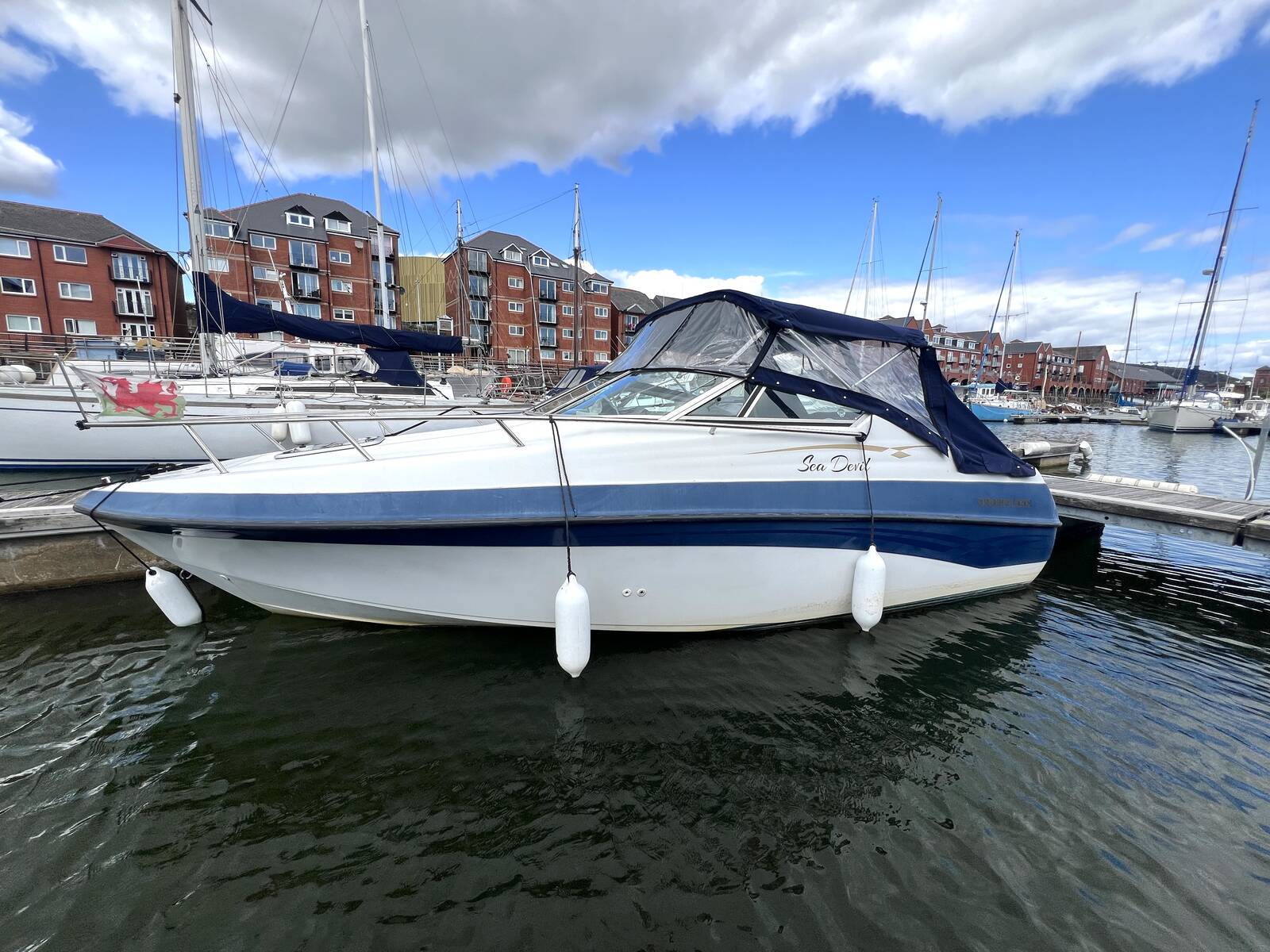
Bowriders and Sports Boats
Typically around 5–8 metres long, bowriders are popular family boats with seating in both the cockpit and bow.
They're excellent for:
- family days out
- swimming
- watersports
- coastal exploring
- lakes
- short-distance cruising
They are generally straightforward to operate and many smaller models can be kept on trailers.
Popular manufacturers include Bayliner, Sea Ray, Quicksilver, Jeanneau, Chaparral, Regal and Monterey.
RIBs
Rigid Inflatable Boats – better known as RIBs – combine an inflatable collar with a rigid hull.
They're extremely popular around the UK because they're capable, relatively lightweight and excellent in coastal conditions.
A RIB can be ideal for:
- coastal cruising
- fishing
- watersports
- diving
- exploring coves
- moving between beaches
The trade-off is usually less shelter and accommodation than you'd find on a conventional motor cruiser.
Cuddy Cabins
A cuddy cabin combines an open cockpit with a small enclosed cabin.
For families, this can be a useful middle ground between a completely open sports boat and a larger cruiser.
The cabin provides somewhere for children to rest, somewhere to store equipment and, depending on the boat, sometimes space for a small toilet.
Cabin Cruisers
If you want to spend nights aboard, a small motor cruiser may be more suitable.
Depending on size, you'll find features such as:
- beds
- toilets
- showers
- cooking facilities
- refrigerators
- heating
- shore power
- larger fuel and water tanks
The trade-off is additional cost and maintenance.
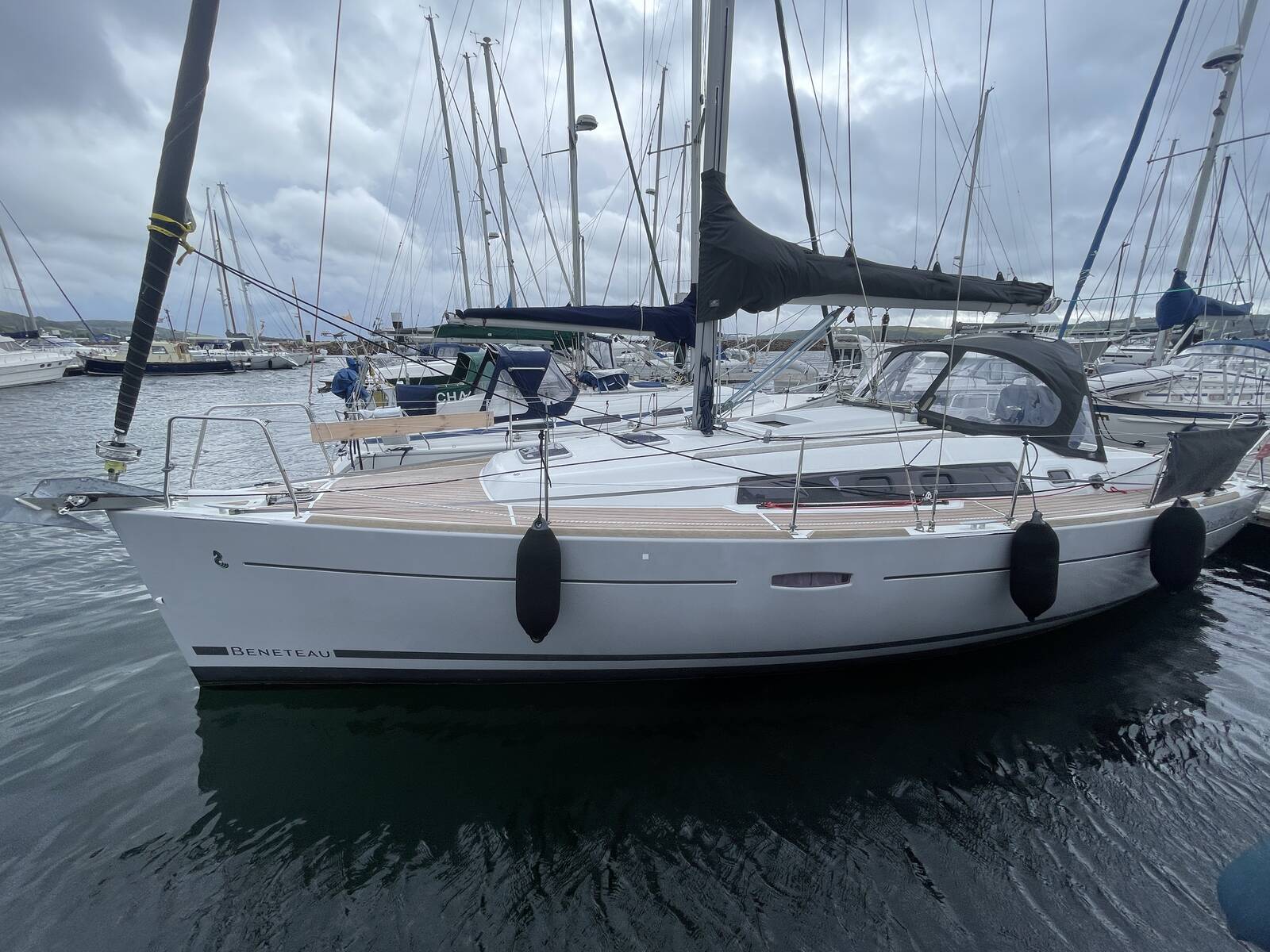
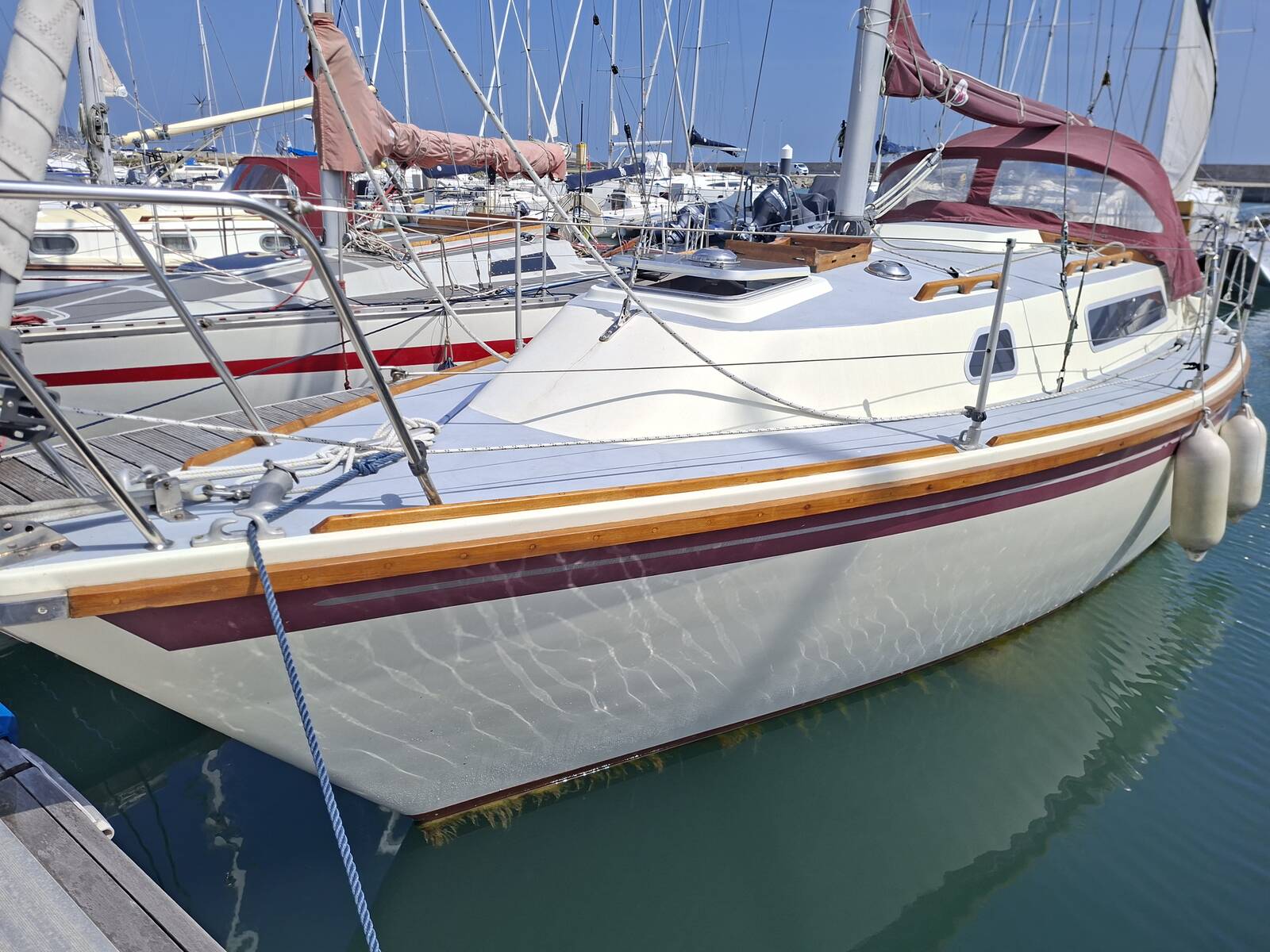
Sailing Boats
Sailing offers a completely different boating experience.
Fuel use is obviously much lower than a large motorboat, but sailing requires more knowledge and hands-on involvement.
If the idea of learning the skills appeals to you, a sailing boat can provide enormous capability for the money.
Fishing Boats
Dedicated fishing boats tend to prioritise deck space, stability and practicality over luxury.
Features might include:
- rod holders
- live wells
- fish finders
- deck wash systems
- enclosed wheelhouses
- large working cockpits
Brands such as Orkney, Warrior, Arvor, Jeanneau and Quicksilver are common choices around the UK.
Narrowboats and Inland Cruisers
If your boating will primarily take place on Britain's canal and river network, inland boats have very different requirements from coastal craft.
Boats used on inland waterways may need registration or licensing with the relevant navigation authority, and requirements can include insurance and a valid Boat Safety Scheme certificate.
3. New Boat vs Used Boat: Which Is Better?
One of the first decisions when buying a boat is whether to buy new or second-hand.
Buying a New Boat
The advantages are obvious.
You get:
- manufacturer warranties
- modern engines and electronics
- no previous-owner surprises
- the latest hull and equipment designs
- potentially lower early maintenance costs
- the ability to choose specifications and options
The disadvantage is depreciation.
Just like cars, new boats can lose value during the first few years of ownership.
Buying a Used Boat
For most first-time boat buyers, the used market offers significantly more choice and potentially better value.
A boat that originally cost £80,000 might be available several years later for considerably less, despite providing broadly the same experience on the water.
The trade-off is condition.
With used boats, the maintenance history and previous ownership can be just as important as the make, model and age.
A well-maintained 15-year-old boat can be a far better purchase than a neglected five-year-old one.
That makes pre-purchase boat checks, documentation, surveys and sea trials particularly important when buying second-hand.
4. How Much Should You Spend on Your First Boat?
The purchase price is only part of the cost of owning a boat.
This catches many new owners by surprise.
If you have £30,000 available, buying a £30,000 boat without leaving anything aside for running costs isn't necessarily sensible.
Your annual ownership costs could include:
- marina berth or mooring
- insurance
- servicing
- engine maintenance
- antifouling
- lifting and launching
- winter storage
- fuel
- cleaning
- replacement batteries
- safety equipment
- navigation subscriptions
- repairs
- trailer maintenance
- harbour or navigation fees
Larger boats usually increase several of these costs simultaneously.
A useful approach is to create two budgets:
Purchase budget: What can I comfortably spend buying the boat?
Ownership budget: What am I comfortable spending every year to keep and use it?
The second number is often more important than the first.
5. Marina Berth, Mooring, Dry Stack or Trailer?
Before buying your boat, decide where you're going to keep it.
Marina Berth
A permanent marina berth is arguably the most convenient option.
Turn up, load your bags and leave.
Depending on the marina, you'll often have access to:
- electricity
- fresh water
- toilets
- showers
- security
- restaurants and cafés
- fuel
- chandlery
- maintenance services
But marina fees can represent one of the largest annual boating expenses.
Prices vary enormously depending on location and boat length.
Swinging Mooring
A swinging mooring is normally cheaper but less convenient.
You'll generally need a tender or water taxi to reach your boat.
Dry Stack
Dry stack storage has become increasingly popular for smaller motorboats and RIBs.
Your boat is stored ashore and launched using a forklift when required.
It keeps the hull out of the water and can reduce fouling, but availability and boat-size restrictions vary.
Trailer
For smaller boats, keeping the boat at home on a trailer can dramatically reduce ownership costs.
You also gain the ability to explore different boating areas.
But check:
- towing weight
- your vehicle's towing capacity
- trailer condition
- launching facilities
- storage space
- driving licence requirements
A supposedly cheap trailer boat can become much less attractive if buying it also means changing your car.
6. Where to Find Boats for Sale
Today, most people begin their search online.
You'll find boats advertised through:
- dedicated boat marketplaces
- yacht brokers
- marina brokerages
- dealerships
- Facebook Marketplace
- boating groups
- classified websites
- private advertisements
Buying privately can sometimes produce better prices, while established brokers can simplify documentation and the transaction itself.
Whichever route you choose, don't assume that an attractive listing means the boat is a good purchase.
The advertisement is the beginning of your research, not the end.
7. Research the Boat Before Travelling to View It
Before driving three hours to inspect a boat, spend some time researching it.
Search the exact:
Make + model + year
Then compare several examples.
Look at:
- asking prices
- engine configuration
- engine hours
- equipment
- location
- condition
- age
- specification
This gives you an approximate market range.
If one boat is dramatically cheaper than every comparable example, don't automatically assume you've found a bargain.
Find out why.
It might have:
- very high engine hours
- accident damage
- outdated electronics
- mechanical problems
- poor cosmetic condition
- missing paperwork
- VAT complications
- outstanding finance
Occasionally it really is simply a motivated seller.
But unusually cheap boats deserve additional scrutiny.
8. Check the Boat's Identity
One of the most important things to establish is that the boat you're viewing is actually the boat described in the paperwork.
Modern recreational boats normally carry an identifying number commonly referred to as the HIN – Hull Identification Number, or Craft Identification Number.
The format and terminology vary depending on the boat's age and market.
Where available, compare identifying numbers shown on the boat with:
- purchase documentation
- registration documents
- builders certificates
- CE/RCD documentation
- previous Bills of Sale
- insurance documentation
Engines also carry serial numbers.
Check that the engines installed correspond with the documentation and service history you've been given.
9. Check Who Actually Owns the Boat
This is more important than many first-time buyers realise.
Unlike a house or car, recreational boat ownership isn't necessarily recorded in one universal database.
The RYA notes that there is currently no general legal requirement for all boat ownership to be registered in the UK, meaning many boats are unregistered. It also notes that Part Three Small Ships Register registration does not, by itself, constitute legal proof of ownership.
You therefore need to establish the chain of title.
Ideally the seller should be able to provide documentation demonstrating how they acquired the boat.
Look for:
- original sales invoice
- Bills of Sale
- previous invoices
- builder's certificate
- registration documents
- finance settlement documentation
- previous ownership records
The RYA specifically advises buyers to establish that the seller legally owns the boat and has the right to sell it, as well as checking whether mortgages, debts or other charges exist.
Never be embarrassed about asking for paperwork.
You're buying the boat, not interrogating the seller.
A legitimate owner should understand why you want to establish title.
10. Check Whether the Boat Has Outstanding Finance
Outstanding finance is one of the more serious issues to investigate when buying a used boat.
If a lender has security over the vessel, simply paying the person selling it may not necessarily resolve that interest.
Ask the seller directly:
"Is there any outstanding finance, mortgage or other security against the boat?"
Where finance exists, establish exactly how it will be settled before completing the purchase.
The RYA recommends involving the lender directly where a boat is mortgaged so that the outstanding balance can be redeemed and relevant title documentation released correctly.
11. Check the Boat's VAT Status
VAT is an area that deserves particular attention when buying boats in the UK and Europe.
This became more complicated following the UK's departure from the European Union.
A boat's VAT status can depend on factors including:
- where it was originally purchased
- where VAT was paid
- where the boat was located at particular dates
- whether it has subsequently been imported or exported
- where the owner resides
- whether customs relief applies
The RYA recommends establishing a boat's VAT status as part of the buying process and looking for evidence such as the original VAT-paid purchase invoice.
For boats moving between the UK and EU, customs rules can also become relevant.
The EU's 27 Member States form a single customs territory, while the UK sits outside it. Taking a UK boat into the EU can therefore constitute an import, although reliefs including Temporary Admission may apply depending on the circumstances.
If you're considering buying a boat in Europe and bringing it to the UK, or doing the reverse, investigate the VAT and customs implications before buying the boat.
A cheap boat abroad isn't a bargain if you later discover a significant tax or compliance liability.
12. CE, RCD and UK Recreational Craft Compliance
Another area to investigate is regulatory compliance.
Within the EU, recreational craft may fall under the Recreational Craft Directive.
In Great Britain, relevant boats fall under the Recreational Craft Regulations.
The RYA advises buyers to establish whether the boat complies with the relevant regime in the territory in which it is being bought and warns that moving boats between the UK and EU can potentially trigger additional compliance requirements, including post-construction assessment in some circumstances.
UK product rules have also evolved in recent years, including continued recognition of CE marking for many product categories. Current UK government guidance should therefore be checked if you're importing or placing a boat onto the British market.
For an ordinary used boat already correctly established in its local market, this may never become a practical problem.
It becomes much more important when importing a boat from Europe to the UK or exporting a British boat into the EU.
13. Look at the Boat's Service History
A good service history is extremely valuable.
Ideally you'll see invoices rather than simply being told:
"It's always been serviced."
Ask specifically about:
- engine servicing
- oil changes
- impellers
- filters
- belts
- spark plugs
- outdrive servicing
- gearbox oil
- anodes
- antifouling
- batteries
- electrical work
For boats with stern drives, ask about items such as bellows and associated servicing.
For diesel boats, look at cooling-system maintenance and any major scheduled servicing.
Engine hours alone don't tell the whole story.
A ten-year-old boat with 600 properly maintained engine hours may be a much safer purchase than one with 150 hours that has spent years sitting unused without regular maintenance.
14. Inspect the Boat Carefully
Your first viewing is partly about establishing whether the boat deserves further investigation.
Start outside.
Look for:
- hull damage
- gelcoat cracks
- repairs
- mismatched paint
- signs of impact
- corrosion
- damaged propellers
- damaged skegs
- excessive marine growth
- deteriorated anodes
- loose fittings
Then move inside.
Look for:
- water leaks
- damp
- mould
- staining
- soft flooring
- unpleasant smells
- cracked upholstery
- damaged windows
- electrical faults
Turn things on.
Test:
- navigation lights
- bilge pumps
- freshwater pumps
- toilet
- shower
- refrigerator
- navigation electronics
- trim system
- anchor windlass
- lighting
- stereo
- heating
- air conditioning
- shore power
The more equipment a boat has, the more equipment there is to replace.
15. Never Judge an Engine by How Clean It Looks
A spotless engine bay is pleasant to see.
It isn't proof of a healthy engine.
Ideally, ask for the engines to be cold when you arrive.
Cold starting can reveal problems that disappear once an engine has already been running.
Look and listen for:
- difficulty starting
- unusual smoke
- abnormal vibration
- warning alarms
- oil leaks
- coolant leaks
- fuel leaks
- corrosion
- unusual noises
Check service invoices and engine serial numbers.
For modern electronically controlled engines, diagnostic information may sometimes reveal useful history including operating hours and fault records.
For a higher-value boat, paying an appropriate specialist to inspect the engine can be money extremely well spent.
16. Do You Need a Marine Survey?
For most substantial second-hand boat purchases, arranging an independent pre-purchase marine survey is sensible.
The surveyor works for you rather than the seller or broker.
A survey may examine areas including:
- hull condition
- structural condition
- moisture
- fittings
- steering
- electrical systems
- fuel systems
- safety equipment
- underwater gear
- general condition
The precise scope varies, so understand what your survey includes.
Engines may require a separate specialist mechanical inspection.
The RYA recommends that buyers consider a survey before finally agreeing a second-hand purchase, noting that survey findings can lead to the transaction proceeding, being renegotiated or being terminated.
The cost of a survey can feel painful when you're already spending thousands of pounds.
But discovering a £10,000 problem before buying the boat is considerably cheaper than discovering it afterwards.
17. Always Sea Trial the Boat
A sea trial tells you things a boat sitting in a marina simply cannot.
Where practical, test:
- cold starting
- low-speed manoeuvring
- steering
- acceleration
- cruising speed
- maximum RPM
- engine temperature
- vibration
- trim
- navigation electronics
- gearbox engagement
- handling
- unusual noises
Pay attention to whether the engines achieve the manufacturer's expected operating range.
A boat that cannot reach appropriate RPM may simply have the wrong propellers fitted – or it may indicate a more significant issue.
The RYA recommends a sea trial because it provides an opportunity to understand how the boat actually behaves on the water.
18. Make Your Offer Subject to the Right Checks
Don't simply agree a price and hope everything works out.
For significant purchases, your written agreement should clearly establish relevant conditions.
Depending on the transaction, these may include:
- satisfactory survey
- satisfactory sea trial
- verification of clear title
- satisfactory documentation
- finance approval
The RYA recommends using a written Sale and Purchase Agreement for boat purchases rather than relying on verbal agreements.
Your deposit arrangements should also be clear.
Understand:
- how much you're paying
- who holds the deposit
- whether it is refundable
- under which circumstances it can be returned
Never assume.
19. What Documents Should Come With a Used Boat?
The paperwork available will depend on the age and type of boat.
However, ideally you should receive as much of the following as applicable:
Ownership documents
- Bill of Sale
- previous Bills of Sale
- original purchase invoice
- builder's certificate
- registration documents
Tax documents
- VAT-paid invoice
- import paperwork
- customs documents where relevant
Compliance documents
- CE/RCD documentation
- declaration of conformity
- owner's manual
- relevant UK recreational craft documentation
Engine documents
- engine manuals
- service invoices
- engine serial numbers
- warranty documentation
Boat records
- maintenance invoices
- previous surveys
- repair invoices
- marina invoices
- equipment manuals
The RYA identifies evidence of VAT payment, registration documents, RCR/RCD compliance documents, service information, Bills of Sale and equipment manuals amongst the paperwork commonly requested during a boat sale.
A folder full of organised documentation is generally a positive sign.
20. Get a Written Bill of Sale
When the purchase completes, obtain a proper Bill of Sale transferring ownership to you.
The RYA describes the Bill of Sale as the document used to transfer legal title in a boat and recommends its use in boat transactions.
Keep copies permanently.
Years later, when you come to sell the boat yourself, the next buyer may ask you to demonstrate the ownership chain.
21. Do You Need to Register a Boat in the UK?
It depends where and how you intend to use it.
Boats using inland waterways will generally need to comply with the registration or licensing requirements of the relevant navigation authority.
For seagoing vessels, the UK Ship Register includes different registration categories.
These include:
- Part 1 for qualifying commercial and pleasure vessels
- Part 3, commonly known as the Small Ships Register, for eligible small vessels
Part 1 registration can also be relevant where a marine mortgage is being placed against a vessel.
Remember, however, that registration isn't necessarily equivalent to proof of ownership.
Keep your Bills of Sale and supporting title documentation.
22. Buying a Boat in Europe
Searching internationally can significantly expand the selection available.
European countries including:
- Spain
- France
- Italy
- Netherlands
- Germany
- Croatia
- Greece
all have large recreational boating markets.
For certain makes and models, European prices can also be attractive.
But cross-border purchases introduce additional considerations.
Before buying a boat abroad, investigate:
- VAT status
- ownership
- registration
- CE/RCD compliance
- import requirements
- export requirements
- customs
- transport
- insurance
- currency conversion
- local sales contracts
If you're planning to permanently relocate the boat from the EU to Britain, or Britain to the EU, do not assume that because the boat was compliant and VAT-paid in one territory it automatically has identical status in the other.
Get the position established before transferring the purchase money.
23. Should You Buy a Boat Privately or Through a Broker?
Both options have advantages.
Buying Privately
Potential benefits include:
- direct contact with the owner
- potentially lower asking price
- detailed knowledge of the boat's history
- potentially easier negotiation
But more responsibility falls on you to investigate the transaction.
Buying Through a Broker
A good yacht or boat broker can help organise:
- viewings
- negotiations
- deposits
- sale agreements
- documentation
- completion
But remember:
The broker usually acts for the seller.
Carry out your own due diligence.
24. Boat Finance
You don't necessarily need to pay the entire boat price in cash.
Depending on the boat, your circumstances and the lender, specialist marine finance may be available.
Finance structures vary, but you'll generally need to consider:
- deposit
- loan amount
- interest rate
- monthly payment
- loan term
- total amount repayable
Don't choose a boat based solely on whether you can afford the monthly finance payment.
Factor in the ongoing ownership costs as well.
A £50,000 boat with manageable monthly repayments can still become uncomfortable if it also carries substantial marina, fuel and maintenance costs.
Before committing, model the total cost of owning the boat, not just the cost of financing it.
25. Boat Insurance
Boat insurance isn't automatically legally compulsory for every recreational boat in the UK, although it may be required by marinas, navigation authorities, lenders or other organisations depending on how and where the boat is used.
Policies vary significantly.
Check areas including:
- agreed value
- third-party liability
- cruising area
- theft cover
- accidental damage
- personal belongings
- underwater gear
- towing
- salvage
- racing
- watersports
- excesses
If you're cruising internationally, make sure the geographic cruising limits cover everywhere you intend to go.
26. Don't Forget Safety Equipment
Your exact requirements depend on where and how you operate the boat, but commonly carried safety equipment includes:
- correctly sized lifejackets
- VHF radio
- fire extinguishers
- first-aid kit
- anchor and sufficient chain/rope
- navigation lights
- bilge pump
- emergency kill cord where applicable
- throwable flotation
- emergency signalling equipment
- appropriate charts/navigation equipment
Offshore cruising naturally requires a different level of preparation from pottering around a sheltered lake.
27. Do You Need a Boat Licence?
This is one of the most common questions asked by first-time UK boat buyers.
There is no single universal "boat driving licence" required for every private recreational boat in UK coastal waters.
However, different rules can apply depending on:
- where the boat is used
- the type of waterway
- boat size
- commercial activity
- country visited
Many inland waterways have their own licensing requirements.
And if you're travelling abroad, local authorities may expect evidence of competence such as the International Certificate for Operators of Pleasure Craft (ICC) depending on the vessel and jurisdiction.
Even where qualifications aren't compulsory, training is highly recommended.
For motorboat owners, an appropriate RYA practical course can quickly teach essential skills including:
- marina manoeuvring
- berthing
- anchoring
- navigation
- safety procedures
- high-speed handling
Knowing how to stop the boat properly is considerably more important than knowing how fast it goes.
28. The Biggest Mistakes First-Time Boat Buyers Make
Most bad boat purchases aren't the result of one spectacular mistake.
They're usually the result of several small things being overlooked.
Buying the Wrong Boat
Buying what looks impressive rather than what suits how you'll actually use it.
Underestimating Running Costs
The boat itself is only part of your budget.
Skipping the Survey
Especially on expensive or older boats.
Not Checking Ownership Properly
Never assume someone has the right to sell a boat simply because they have the keys.
Ignoring VAT Documentation
Particularly important with boats that have moved between the UK and EU.
Buying Without a Sea Trial
Some problems only become apparent underway.
Focusing Only on Engine Hours
Maintenance history can be more important.
Buying the Cheapest Example Available
There is often a reason.
Not Checking Berth Availability
Buying the boat before discovering nowhere nearby can accommodate it is surprisingly easy.
Letting Emotion Take Over
This is probably the biggest one.
When you've imagined your first summer aboard, it becomes very easy to overlook warning signs.
29. Red Flags When Buying a Used Boat
Walk away – or investigate much more deeply – if you encounter things such as:
- seller won't provide identification
- ownership history doesn't make sense
- HIN or identification numbers appear altered
- engine serial numbers don't match paperwork
- unexplained gaps in ownership
- missing VAT documents
- seller refuses a survey
- seller refuses a sea trial without good reason
- unusual pressure to pay quickly
- payment requested to an unrelated person's account
- substantial undocumented modifications
- obvious accident repairs
- asking price dramatically below market value without explanation
- finance position unclear
One red flag doesn't necessarily mean something is wrong.
Several together should change how you approach the purchase.
30. Is Boat Ownership Expensive?
It can be.
But it doesn't have to be.
A trailerable 5-metre boat kept at home and used locally can be surprisingly affordable.
A 15-metre twin-diesel motor yacht kept permanently in a premium Mediterranean marina is a completely different financial proposition.
That's why statements such as:
"Boats cost 10% of their value every year"
aren't particularly helpful.
Your actual costs depend on:
- size
- age
- engines
- location
- usage
- storage
- maintenance
- how much work you do yourself
Calculate the costs for the specific boat you're considering.
31. Is Buying a Boat Worth It?
For the right person, absolutely.
Financially, most boats should be viewed as lifestyle purchases rather than investments.
But that's not really why people buy them.
A boat can give you:
- weekends away
- family adventures
- fishing trips
- watersports
- coastal exploration
- holidays
- access to places impossible to reach by road
The key is buying something you can comfortably afford to own and will actually use.
A modest boat used every weekend is arguably a much better purchase than an expensive yacht you're reluctant to take out because every trip feels costly.
First Boat Buying Checklist
Before transferring the final payment for a used boat, work through this checklist.
Boat
☐ Correct make and model ☐ Hull identification checked ☐ Engine serial numbers checked ☐ Equipment specification confirmed ☐ Condition inspected
Ownership
☐ Seller identity confirmed ☐ Ownership documentation reviewed ☐ Previous Bills of Sale reviewed where available ☐ Outstanding finance investigated ☐ Clear title established
Documentation
☐ VAT evidence reviewed ☐ Registration documents checked ☐ CE/RCD/RCR documentation reviewed where applicable ☐ Service history reviewed ☐ Manuals obtained
Inspection
☐ Boat physically inspected ☐ Engine inspected ☐ Marine survey completed where appropriate ☐ Sea trial completed
Purchase
☐ Written Sale and Purchase Agreement ☐ Deposit terms understood ☐ Final price agreed ☐ Bill of Sale prepared ☐ Insurance arranged ☐ Berth/storage arranged
If you're uncertain about something, resolve it before completing the purchase.
Consider a Boat History and Pre-Purchase Check
A marine survey is extremely useful for understanding a boat's physical condition, but that isn't the only risk involved in buying a used boat.
Before purchasing, it can also be useful to investigate the information surrounding the boat itself.
Depending on what information is available, a pre-purchase boat check can help investigate areas such as:
- vessel identity
- theft records
- ownership documentation
- VAT evidence
- registration information
- listing history
- asking-price comparisons
- engine details
- documentation inconsistencies
- potential warning signs
Jack & Anchor BoatCheck is designed to give prospective boat buyers an additional layer of due diligence before committing to a purchase.
Simply provide the boat's listing where available, together with any documentation or information you have from the seller, and the available information can be reviewed before you proceed.
It isn't a replacement for a marine survey or professional legal advice.
Instead, it complements them by helping answer a different question:
Does the information surrounding this boat stack up before I spend thousands of pounds buying it?
Final Thoughts: Buying Your First Boat
Buying your first boat should be exciting.
And with a little preparation, it usually is.
Start by deciding exactly how you want to use the boat. Set a realistic budget that includes ownership costs. Compare plenty of boats before committing to one, and investigate both the physical vessel and its paperwork.
For second-hand boats, remember the four big checks:
Condition. Ownership. Documentation. Value.
Get those right and you're far less likely to discover an expensive surprise after the purchase.
Because ultimately the objective isn't simply to buy a boat.
It's to buy the right boat, at the right price, with enough confidence that when you finally take the helm you can concentrate on enjoying it.
Frequently Asked Questions About Buying Your First Boat
What is the best boat for a first-time owner?
There isn't one universal answer. Smaller RIBs, bowriders, cuddy cabins and compact motor cruisers are popular first boats because they're relatively manageable. Your ideal boat depends primarily on where you'll use it, how many people you'll carry and whether you want overnight accommodation.
How much does a first boat cost in the UK?
Used recreational boats cover an enormous price range. Small trailer boats can cost only a few thousand pounds, while larger cruisers can cost hundreds of thousands. Rather than concentrating purely on purchase price, calculate marina, insurance, servicing, storage and fuel costs as well.
Should I get a survey when buying a used boat?
For a significant second-hand purchase, an independent marine survey is generally sensible. It can identify structural or equipment problems that may not be obvious during a normal viewing.
Should I sea trial a used boat?
Yes, where practical. A sea trial allows you to assess engine performance, handling, steering, vibration, electronics and other systems under real operating conditions.
How do I check whether someone owns a boat?
Ask for documents establishing the chain of ownership, potentially including original invoices, previous Bills of Sale and registration documentation. Boat registration alone should not automatically be treated as conclusive proof of ownership.
Can I buy a boat in Europe and bring it to the UK?
Yes, but investigate VAT, customs and recreational craft compliance before completing the purchase. Moving boats between the UK and EU can have tax and regulatory implications depending on their history and circumstances.
Can I buy a boat in the UK and keep it in Europe?
Potentially, but customs, residency, VAT and Temporary Admission rules can apply. Establish the position for your particular circumstances before relocating the boat permanently.
Do I need a licence to drive a boat in the UK?
There is no universal driving licence requirement covering every privately operated recreational boat in UK coastal waters. Inland waterways and overseas jurisdictions can have different rules, and practical training is highly recommended regardless.
Do I need insurance for a boat?
Boat insurance isn't universally compulsory for every recreational vessel in Britain, but marinas, lenders and navigation authorities may require it. Third-party liability cover is particularly important.
Is buying an older boat a bad idea?
Not necessarily. Condition and maintenance history often matter more than age. A well-maintained older boat with comprehensive records can be a much better purchase than a newer boat that has been neglected.
What paperwork should I receive when buying a used boat?
Depending on the boat, look for Bills of Sale, purchase invoices, registration documents, VAT evidence, CE/RCD/RCR documentation, service history, engine records and equipment manuals.
What should I check before paying for a boat?
At minimum, establish the seller's ownership, confirm the vessel's identity, investigate outstanding finance, review relevant VAT and compliance documentation, assess the physical condition and ensure the terms of sale are documented in writing.
Is owning a boat worth it?
If you'll use it regularly and can comfortably afford the ongoing costs, boat ownership can offer an extraordinary amount of enjoyment. The key is buying a boat appropriate for your actual needs rather than simply buying the largest boat your purchase budget allows.