Some yacht innovations make perfect sense in a boat-show brochure and rather less sense once you're actually at sea.
The Jeanneau Sun Odyssey 410's walk-around deck isn't one of them.
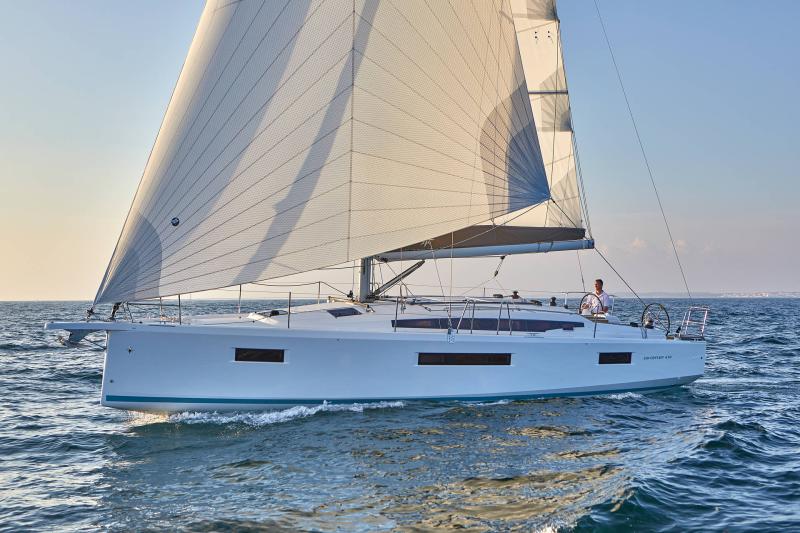
When Jeanneau first introduced the concept on the larger Sun Odyssey 440 and 490, the idea looked almost suspiciously simple: instead of making crew step up out of the cockpit and onto conventional side decks, slope the decks gently down towards the helm so you can effectively walk from cockpit to bow without climbing over anything.
With the Sun Odyssey 410, Jeanneau brought the idea down into a size of yacht that couples and families might realistically sail themselves. Several years after its 2018 debut, the 410 remains in Jeanneau's range in 2026, and that unusual deck arrangement has become less of a novelty and more of a genuinely useful part of the boat.
The question is whether the rest of the yacht is equally convincing.
More Than a Clever Deck
At 12.35 metres overall with a 3.99-metre beam, the Sun Odyssey 410 sits right in the heart of the modern family-cruiser market.
It was designed by Marc Lombard, whose background in performance sailing is obvious in the hull. The bow is relatively full above the waterline, chines run aft along the hull and twin rudders provide grip as the boat heels. Jeanneau combines that with an inverted bow and a beam carried well forward to create considerably more interior volume than you'd expect from a traditional 40-footer.
The result is a boat that looks unmistakably modern without becoming particularly extreme.
Jeanneau offers two- and three-cabin layouts, while the current specification gives a standard draught of around 2.14 metres, fuel capacity of 195 litres and substantial freshwater capacity.
But none of those numbers explains why people remember the 410 after stepping aboard.
It's the deck.
The Walk-Around Design Actually Works
On most yachts, moving from the cockpit to the foredeck involves stepping up onto a relatively narrow side deck beside the coaming.
On the Sun Odyssey 410, the side decks slope gently down towards cockpit level.
It sounds minor.
It isn't.
For children, older sailors or anybody carrying fenders and lines while entering a marina, the difference is immediately noticeable. Instead of climbing out of the cockpit, you simply walk forward.
The recessed deck also leaves you standing behind a substantial bulwark, which makes movement around the yacht feel more secure.
Jeanneau originally introduced the idea on the 440 and 490 before adapting it to the 410, and it remains one of the most distinctive features of this generation of Sun Odyssey yachts.
Purists may argue that conventional side decks are perfectly adequate.
They are.
But once you've spent a weekend repeatedly walking from helm to bow on a 410, the traditional arrangement suddenly feels unnecessarily awkward.
It's a Better Family Boat Because of It
This is where the design starts making real sense.
The Sun Odyssey 410 isn't aimed primarily at somebody chasing tenths of a knot around the cans. It's designed for cruising couples and families, and making movement aboard easier has value every single time the boat leaves the marina.
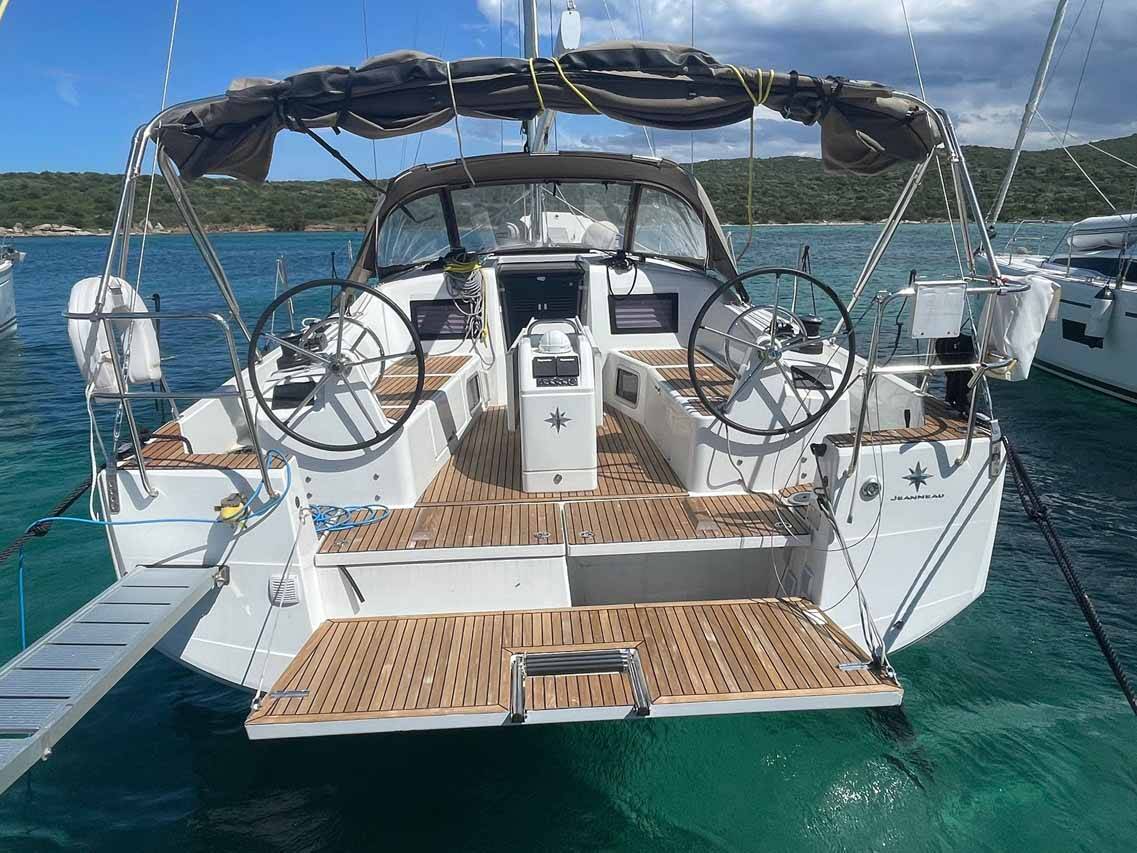
The cockpit is large and relatively uncluttered, with twin wheels positioned aft and the primary sail controls brought back towards the helm.
At anchor, the same space becomes a large outdoor living area.
Jeanneau has also lowered the boom compared with older designs, improving access to the mainsail while helping keep weight lower. Raised cockpit coamings provide a reassuringly protected feeling underway.
The result is a 40-footer that feels physically easier to manage than its dimensions suggest.
That's an underrated quality.
A yacht doesn't become more enjoyable simply because it's larger. It becomes more enjoyable if the extra size doesn't create extra hassle.
And It Can Actually Sail
The danger with modern production cruisers is that interior volume starts driving every design decision.
The Sun Odyssey 410 avoids that better than many.
The Marc Lombard hull has genuine performance behind it, particularly when properly specified.
Yachting World's test of the lifting-keel version recorded around seven knots upwind and nine knots reaching in 15–20 knots of breeze, briefly touching 9.5 knots under a Code sail. The same test praised the boat's form stability, twin-rudder grip and surprisingly direct helm.
Nobody is suggesting it's a Sun Fast.
But it doesn't feel like an apartment that happens to carry sails either.
The broad hull gives plenty of stability, while the twin rudders retain control as the boat heels. With enough wind, the 410 can feel genuinely entertaining rather than simply competent.
That balance between cruising comfort and decent sailing performance is probably its strongest attribute.
Short-Handed Sailing Is Clearly Part of the Brief
A modern 40-foot cruiser needs to work for two people.
The Sun Odyssey 410 generally does.
Most of the primary controls are accessible from the aft section of the cockpit, allowing the helmsperson to manage much of the sailing without repeatedly moving forward.
There are some compromises.
Yachting World's test noted that managing the mainsheet and genoa sheets through the two aft winches requires a little planning during tacks, and some of the deck hardware arrangements can feel less perfectly resolved than the basic cockpit concept.
But the fundamentals are right.
Add an autopilot, furling headsail and suitable mainsail arrangement and the 410 becomes a very realistic yacht for a cruising couple.
The optional bow thruster also makes sense. The broad, relatively light bow can catch the wind during low-speed manoeuvring, particularly astern, and a thruster removes much of the drama from tight marina berths.
Below Decks, Volume Wins Again
The Sun Odyssey 410's broad forward sections pay another dividend downstairs.
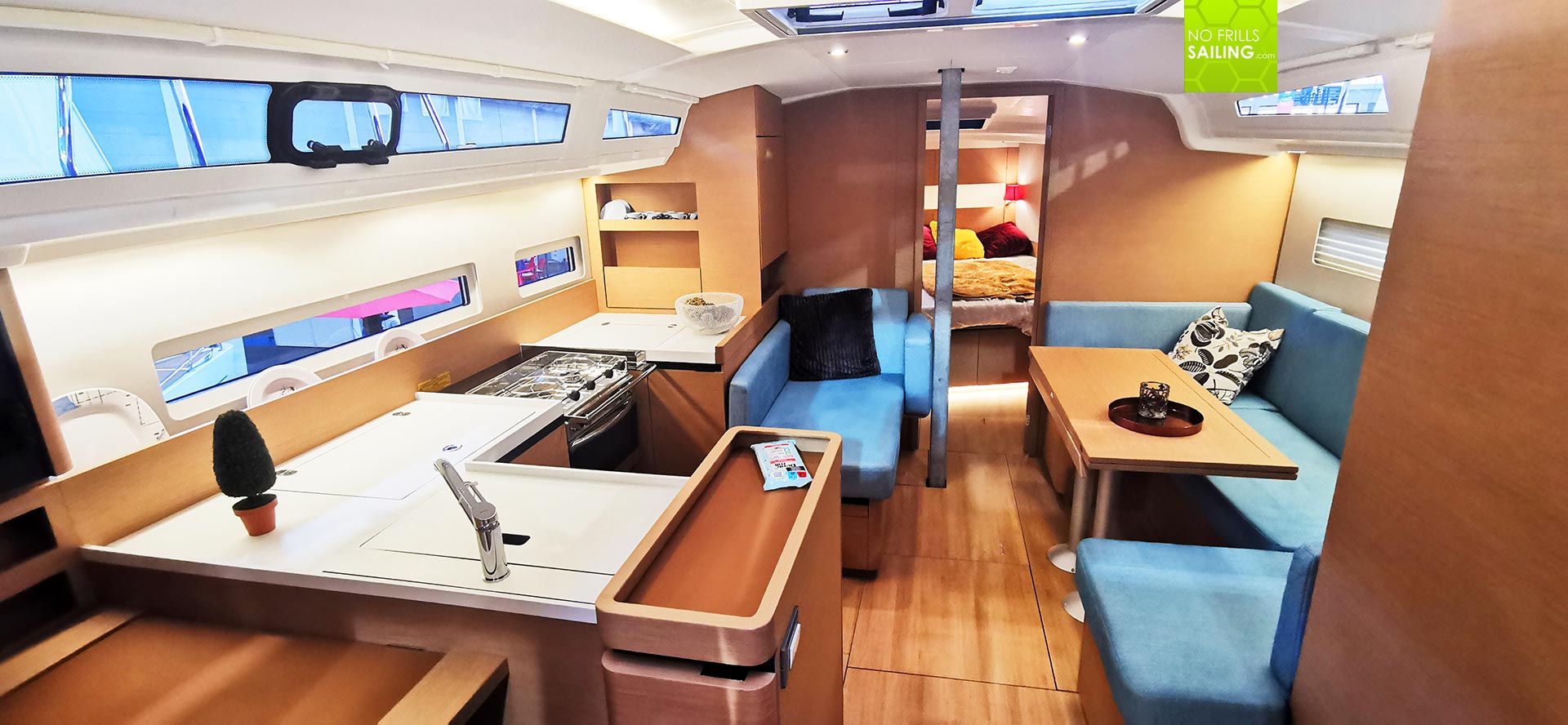
The interior feels large for a yacht of this length.
There is plenty of natural light, a substantial saloon and a proper cruising galley, while the cabins avoid the coffin-like feeling sometimes found in aft accommodation on older 40-foot yachts.
The owner's cabin forward is particularly clever. Rather than using a conventional narrowing V-berth, Jeanneau angles the bed to create something much closer to a proper rectangular mattress.
It's a small detail that becomes important on a two-week cruise.
Two- and three-cabin versions are available, making the choice fairly straightforward. Couples planning longer-term cruising will probably appreciate the additional storage of a two-cabin boat, while families and charter buyers naturally gravitate towards three.
There is plenty of contemporary styling, but it hasn't gone so far towards minimalist design that you lose every useful handhold and storage cupboard.
That matters once the boat starts moving.
The Lifting Keel Is the Interesting Option
One of the Sun Odyssey 410's most unusual specifications is its lifting keel.
Rather than simply offering a conventional shallow-draught alternative, Jeanneau produced a swing-keel system capable of moving from around 1.37 metres to almost three metres.
That gives the yacht genuine deep-keel performance when sailing while allowing access to much shallower anchorages and harbours once the keel is raised.
It's a fascinating option for UK owners cruising places such as the West Country, East Coast or Isles of Scilly, where draught can genuinely dictate where you go.
The downside is complexity.
A fixed keel is about as mechanically uncomplicated as yacht equipment gets. A hydraulically operated lifting system isn't.
For a buyer looking at a used Sun Odyssey 410 with the lifting keel, we'd want the system inspected carefully and would place considerable value on a documented maintenance history.
It's brilliant technology when working properly.
But it's still technology.
What Should You Check on a Used Sun Odyssey 410?
The good news is that even the earliest boats are only from around 2018, so you're generally dealing with something considerably younger than many yachts on the second-hand market.
That doesn't mean condition can be assumed.
Ex-charter boats are common, and usage can vary enormously. A privately owned boat used for six weeks each summer and a charter yacht that has spent several seasons working almost continuously may technically be the same age while having very different lives behind them.
Look closely at the sails, standing rigging, saildrive maintenance, electronics, batteries and general deck hardware.
Pay particular attention to optional equipment. A well-specified 410 with heating or air conditioning, bow thruster, good electronics, upgraded sails and an appropriate electrical system can be a much more desirable yacht than a basic boat that simply carries a lower asking price.
As always, we'd buy condition and maintenance history before becoming obsessed with model year.
Is It a Good First 40-Foot Yacht?
For somebody with suitable experience, yes.
In fact, it's one of the more approachable yachts in this size category.
The wide decks, protected cockpit, twin helms and short-handed control arrangement make the 410 relatively unintimidating once underway.
Marina manoeuvring is where the size becomes more obvious.
Four metres of beam and plenty of windage mean you're still handling a substantial yacht, particularly if the wind gets onto the bow.
Some practical tuition on your own boat would be money well spent.
Once you've got used to it, however, there is nothing particularly complicated about sailing the 410.
And unlike buying something much smaller as a stepping stone, there is enough accommodation and performance here that a couple or family could keep one for years without feeling the need to move up immediately.
Has the Walk-Around Deck Aged Well?
This is perhaps the most interesting question.
When the concept appeared, it looked like something Jeanneau might use for one generation before quietly returning to conventional decks.
Instead, the underlying idea has proved remarkably logical.
It doesn't transform sailing.
It simply removes one slightly awkward part of moving around a yacht.
Those are often the innovations that last.
After a few days aboard, you stop noticing the sloping side decks completely. You simply walk forward.
Then you step onto another boat and wonder why you have to climb out of the cockpit.
That's probably the strongest compliment you can give the design.
The Verdict
The Jeanneau Sun Odyssey 410 is a good example of a production cruiser being innovative where it actually matters.
The walk-around deck gets the attention, but the rest of the boat backs it up.
It has plenty of interior space, a genuinely useful cockpit, manageable sail handling and enough performance that someone who actually enjoys sailing won't feel completely forgotten.
There are compromises. The broad bow creates windage in marinas, some of the sheet handling could be slicker and the lifting-keel version introduces additional complexity.
But none of those fundamentally undermines the boat.
More than seven years after its introduction, the 410 remains part of Jeanneau's range, which says something about how well the basic concept has worked.
For a couple or family looking for a modern 40-foot cruising yacht that's easy to live with and still rewarding to sail, the Sun Odyssey 410 remains one of the stronger choices.
And yes, the walk-around deck really is as useful as it looks.
Jack & Anchor rating: 9/10
Considering a used Sun Odyssey 410?
If you've found a Jeanneau Sun Odyssey 410 for sale, Jack & Anchor's BoatCheck can help investigate the advertised boat, including its specification, vessel details, documentation, listing history, valuation and potential warning signs before you commit.
It isn't a substitute for a professional marine survey, but it can help establish whether a particular yacht deserves the next stage of your time and money.