Most buyers budget for the boat, the berth and the insurance, then treat the survey as a single line: "about a grand". In practice the survey bill has three or four parts that come from different people. The surveyor charges by the foot. The yard charges by the metre to lift the boat out and put it back. An engineer, a rigger or a second trip for a sea trial may be added on top. And most of it is spent before you know whether you will buy the boat at all.
This guide puts real 2026 numbers on each part. We read the published fee pages of six UK marine surveyors and the lifting tariffs of four yards in October 2026, then worked them through for boats of 26ft, 35ft and 40ft. We also looked at what the professional bodies say a survey must cover, so you know what you are paying for and what you are not.
The short answer
- Surveyor's fee. Published pre-purchase rates in our sample run from £15 to £25 per foot of length overall. That is roughly £525 to £875 for a 35ft yacht, with minimum charges of £400 to £700 that matter on smaller boats.
- VAT. Five of the six surveyors we checked say they do not charge VAT or quote VAT-inclusive prices. Do not assume 20% will be added, but do ask.
- Lift out and hold. A short lift, wash and relaunch with the boat held in the slings cost £31 to £46 per metre at the four yards we checked. For a 35ft boat that is about £330 to £490.
- Extras. An engine inspection adds £120 to £395, oil analysis £90 to £150 per engine, a professional rig check about £120 (inc VAT) for a 35ft yacht, and a separate sea trial £400 to £640.
- Realistic all-in budget. A typical 35ft sailing yacht on the south coast comes to about £1,100 to £1,550. A 40ft twin-engined motor cruiser can reach £2,200 to £2,500 once sea trial and engine work are included.
- Timing. In winter many boats for sale are already ashore. That can save the lift, but it also means no sea trial until spring.
What a pre-purchase survey actually covers
The survey that buyers commission is the full condition survey, usually called a pre-purchase survey. It is different from an insurance condition survey, which existing owners commission when their insurer asks, and from a valuation.
The Institute of Marine Surveying (IIMS) publishes a Small Craft Code of Practice for its members, covering craft under 24m. It describes the pre-purchase survey as an inspection to establish the structural condition of the boat. Other items are to be checked on a non-intrusive, visual basis unless the surveyor and client agree otherwise in writing. The code sets out minimum items the survey should cover, and says the report should list limitations, defects, recommendations and a conclusion.
In practice that means hull, deck and superstructure, keel and keel attachment, rudder and steering, skin fittings and seacocks, the visible parts of the engine installation, fuel and water systems, the electrical system, gas installation, deck gear, and safety equipment. Hull moisture readings and hammer testing for delamination are standard on GRP boats. Yachting World's survey guide, which quotes YDSA surveyor Ben Sutcliffe-Davies, says surveyors want to see inside every locker, ideally empty, and that a full survey is usually spread over at least two days.
Just as important is what a standard survey leaves out. The same Yachting World guide notes that:
- a survey does not generally include a gas safety check, which an insurer may want separately;
- rigging is generally looked at from deck level only, so a rigger may be needed to go aloft;
- the engine is assessed visually and on a run, but a full mechanical inspection is a separate job for many surveyors.
The RYA's Lucy Rutter adds that buyers should read the surveyor's terms. She gives the example of a buyer who expected the survey to report on a furling jib, when the terms said clearly that it would not be tested. She also notes that a surveyor's legal duty is to exercise reasonable skill and care in reporting faults that could reasonably be found at the time.
So when you compare quotes, compare scope as well as price. A £15 per foot survey that excludes the engine and a £25 per foot survey that includes an engine run and a short trial are different products.
Published surveyor fees in 2026
These are the published rates for six UK practices, read from their own websites in October 2026. All are per foot of length overall unless stated. We chose firms that publish clear figures. Many good surveyors only quote on request, so treat this as a sample of the market rather than the whole of it.
| Surveyor | Base | Pre-purchase | Insurance condition | Minimum | VAT |
|---|---|---|---|---|---|
| Sharp Marine Surveys | Essex | From £15/ft | £12/ft | £400 pre-purchase, £350 insurance | Not stated |
| Wessex Marine Surveyors | Wiltshire, covering Lyme Regis to Chichester | £15/ft | £14/ft | Not stated | Does not apply |
| European Marine Services | Norfolk | £16/ft GRP, £19/ft wood | £15/ft GRP, £18/ft wood | £400 pre-purchase | Prices include VAT |
| South Coast Marine Surveyors | Southampton | £17/ft | £17/ft | £250 (hull and RIB work) | No VAT charged |
| Anchor House Marine Surveys | Southampton, Portsmouth and Nottinghamshire | £19/ft (£21/ft flybridge motor yachts) | £17/ft (£19/ft flybridge) | Not stated | Not VAT registered |
| AP Marine Surveys | Salcombe | £25/ft under 48ft | £24/ft | £700 pre-purchase, £672 insurance | No VAT |
A few details from the fee pages are worth knowing:
- Sharp states its prices are guidance only and can vary with the boat's size, age, condition, number of engines, design features such as a flybridge, distance, and the boat's value. Its pre-purchase price excludes sea trials, which it books separately at £400 to £600 depending on location.
- Wessex includes travel within 50 miles of its base, which it says covers roughly Lyme Regis to Chichester and the Bristol and Portishead area, then charges £0.30 a mile. It offers 10% off for RNSA and RNLI members and Blue Light card holders.
- European Marine Services charges travel at 60p a mile office to office, with a £60 surcharge for distances of 60 to 120 miles. It says the report takes around three to four working days and that it takes 200 to 300 photographs on each inspection.
- South Coast Marine Surveyors quotes £17 per foot "all inclusive", with travel charged only beyond 50 miles of Southampton. Boats over 60ft are quoted individually. The page carries a 2018 copyright notice, so check that the rate still stands when you call.
- Anchor House says its rates vary with the market and with the boat's volume, complexity, age and machinery. It notes that a motor yacht has more volume than a sailing yacht of the same length, which is why flybridge boats cost more per foot.
- AP Marine Surveys publishes a 2026 season price guide. It adds £2.50 per foot for boats over 48ft and for multihulls, and £4 per foot for steel. Travel is included between Torbay and Plymouth, then £1 a mile. It warns that some marinas charge site fees and parking.
Two patterns stand out. First, the range is narrower than many buyers expect. Most published pre-purchase rates sit between £15 and £19 per foot, with the Salcombe practice higher at £25. Second, VAT is usually not an issue. Many sole-trader surveyors are not VAT registered. The IIMS code says members must state whether their fees include VAT, so if a quote does not say, ask.
What those rates mean for real boats
| Boat length | Sharp (£15/ft) | Wessex (£15/ft) | EMS (£16/ft) | South Coast (£17/ft) | Anchor House (£19/ft) | AP Marine (£25/ft) |
|---|---|---|---|---|---|---|
| 26ft | £400 (minimum) | £390 | £416 | £442 | £494 | £700 (minimum) |
| 30ft | £450 | £450 | £480 | £510 | £570 | £750 |
| 35ft | £525 | £525 | £560 | £595 | £665 | £875 |
| 40ft | £600 | £600 | £640 | £680 | £760 | £1,000 |
On a 26ft boat, minimum charges do most of the work. Sharp's £15 per foot comes to £390, so the £400 minimum applies. AP's £25 per foot comes to £650, so its £700 minimum applies. If you are looking at small boats, the minimum matters more than the per-foot rate.
At 40ft and above, the spread widens and the type of boat starts to count. Anchor House would charge £840 rather than £760 for a 40ft flybridge cruiser. AP adds £2.50 per foot above 48ft. Expect a quote, rather than a list price, for anything large, complex or unusual.
Specialist and partial surveys
Not every inspection has to be a full survey. The same fee pages list cheaper, narrower options:
| Survey type | Published examples | When it makes sense |
|---|---|---|
| Hull and structure only | £12/ft (Wessex, South Coast); £15/ft (Anchor House); £17/ft (AP) | Older or cheaper boats where you will assess the systems yourself or with an engineer |
| GRP osmosis survey | £10/ft, minimum £350 (Sharp); £16/ft, minimum £448 (AP, external hull and osmosis) | Checking a hull with known blistering or an unknown history |
| Pre-inspection viewing | £8/ft, minimum £215 (AP) | A first look before committing to a full survey on a boat that is far away |
| Walk-through valuation | £8/ft, minimum £200 (EMS) | Finance or insurance valuation only |
| Ultrasonic steel thickness | £15/ft, minimum £600 (Sharp) | Steel hulls, narrowboats and barges |
| Catamarans | £10/ft per hull, minimum £650 (Sharp); multihulls add £2.50/ft (AP) | Two hulls, two sets of fittings and often two engines |
A hull-only survey can be good value on a £10,000 boat where an extra £300 to £400 is a real share of the price. On a £150,000 boat, skimping on scope to save a few hundred pounds is a poor trade.
The yard bill: lifting out and holding the boat
A proper pre-purchase survey needs the hull out of the water. The IIMS code says a surveyor must advise the client of any opening up or pressure washing needed, and that the client must be told which transport and lift-out charges fall to the client's account. In short, the buyer pays the yard as well as the surveyor.
Yards price lifting per metre of length overall. This is the step most buyers forget to convert: survey fees are per foot, yard fees are per metre. A 35ft boat is 10.67m.
Survey lift tariffs at four UK yards
| Yard | Service | Rate (inc VAT) | Notes |
|---|---|---|---|
| Lymington Yacht Haven | Lift, wash, hold in slings and relaunch | £31.20/m | One hour maximum, over lunch; overnight hold £85 extra; minimum length 8m |
| Troon Yacht Haven | Lift, hold, relaunch | £31/m (6.1 to 7.8m), £35/m (7.9 to 13.5m), £47/m (13.5m and over) | 50% surcharge one way for silicone or Teflon antifoul |
| Port Solent (Premier) | Lift, wash and launch | £33.50/m (6.5 to 9m), £34.50/m (9.1 to 12m), £35/m (12.1 to 15m) | 10% off 1 October to 31 December; 10% on 1 January to 31 March; hold in slings £190 per hour |
| Val Wyatt Marine, Wargrave (River Thames) | Lift out, hold in slings for inspection or survey, relaunch | £46/m | Pressure wash £25/m extra; a sales boat lift with wash and block off is £81/m |
Sources and dates: Lymington and Troon boatyard rates from 1 April 2026; Port Solent schedule from 1 September 2026; Val Wyatt charges for 1 April 2026 to 31 March 2027. All four state that prices include VAT.
What that means for a 26ft, 35ft and 40ft boat
| Yard | 26ft (7.92m) | 35ft (10.67m) | 40ft (12.19m) |
|---|---|---|---|
| Lymington, lift, wash and hold | £249.60 (8m minimum) | £332.84 | £380.39 |
| Troon, lift, hold and relaunch | £277.37 | £373.38 | £426.72 |
| Port Solent, lift, wash and launch | £265.48 | £368.05 | £426.72 |
| Port Solent, same, October to December (10% off) | £238.93 | £331.24 | £384.05 |
| Port Solent, same, January to March (10% on) | £292.03 | £404.85 | £469.39 |
| Val Wyatt, survey lift in slings | £364.54 | £490.73 | £560.83 |
| Val Wyatt, survey lift plus pressure wash | £562.66 | £757.43 | £865.63 |
Yards measure boats in their own way and may round up, so treat the pence as illustrative. The pattern is the useful part: a short survey lift costs roughly £250 to £500 for a typical 26ft to 40ft boat, and a pressure wash can add a lot if it is not included.
When the boat has to stay out longer
A hold in the slings over lunch is enough for the hull part of many surveys. It is not enough if the surveyor needs to check moisture readings on a hull that has been in the water all season. GRP that has just come out often reads wet on the surface, and a surveyor may want the boat to dry for a while before taking readings they can rely on. It is also not enough if there is serious fouling to clear, or if the surveyor wants to remove a skin fitting or look closely at the keel joint.
Then you are paying for a full lift out, block off, storage and relaunch. At Port Solent, a 35ft boat would cost:
- lift, wash and block off: £45.25/m, or £482.73
- launch: £33.50/m, or £357.38
- storage ashore up to eight weeks: £11.20/m per week, or £119.48 for a week
That totals about £960 for one week ashore, before any seasonal adjustment. At Lymington, a lift out, wash and block off is £40.80/m and a launch is £29.35/m. That comes to about £748 for a 35ft boat before storage. Both are well over double the cost of a short lift, so agree with the surveyor in advance what the hull actually needs.
At Lymington the overnight option is cheaper. The tariff offers an overnight hold in the slings for £85 on top of the £31.20/m lift. If one night is enough, that can cost far less than blocking off.
Small print that changes the yard bill
- Antifoul type. Troon adds 50% to lifting charges one way for boats with any form of silicone or Teflon antifoul.
- Roller sails. Lymington requires roller mainsails and headsails to be removed before lifting. On a boat you do not own, that is the seller's job, and it needs arranging in advance.
- Moving the boat to the hoist. Lymington charges £75 each way to collect and deliver a boat within the marina, or £100 from the Lymington River. If the seller cannot move the boat, someone has to.
- Fouling. Port Solent charges pressure washing at 1.5 times the normal rate for heavily fouled boats.
- Minimum lengths. Lymington charges at least 8m; Port Solent 6.5m; Troon 6.1m. A 6m sports boat is charged as a bigger one.
The extras: engines, rigs and sea trials
The surveyor's fee and the lift are the core. The extras are where budgets drift, and where the most expensive faults tend to hide.
| Extra | Published examples | Notes |
|---|---|---|
| Engine test or inspection | £120 per engine with a survey, £250 without (Wessex); from £295 single and £395 twin (AP, engine and drive inspection) | Check whether this is a run-up check or a full inspection |
| Oil analysis | £150 per engine (Sharp); £90 per engine at the time of inspection or £150 standalone, plus £60 for a second engine (EMS) | Lab analysis of a sample for signs of wear, coolant or fuel in the oil |
| Sea trial | £400 to £600 booked separately (Sharp); £16/ft, minimum £432 (AP, with report); minimum £180 for two hours, inland only, as part of a survey (EMS) | On a 35ft boat AP's rate is £560 |
| Professional rig check | £80 + VAT up to 25ft, £100 + VAT up to 35ft, £120 + VAT up to 45ft, £150 + VAT up to 55ft (Petersen Custom Rigging, 2026; ketches add 50%) | A 70-point insurance-approved report; £120 inc VAT for a 35ft sloop |
| Valuation | Free with a survey, £250 standalone (Wessex); £80 at inspection (EMS); £65 at the end of a survey (AP) | Needed for finance and to set your insured value |
| Travel | Free within 50 miles then £0.30/mile (Wessex); 60p/mile (EMS); £1/mile beyond South Devon (AP) | A 100-mile trip each way at £1/mile is £200 |
Engines
On a motor cruiser, engines and drives can be worth a large share of the boat, and they are the hardest part to judge from a walk round. A surveyor's run-up check will spot leaks, smoke, poor starting and overheating. It will not tell you much about wear inside the engine. Oil analysis is a cheap way to get a look inside: at £90 to £150 per engine, it costs far less than any repair it might reveal. For a twin-engined boat, or any engine you have doubts about, an inspection by a marine engineer who knows that make is worth considering. Some surveyors include this, others refer it on.
Rigging
Because surveyors generally check rigging from the deck, a sailing yacht with wire of unknown age or a history of hard use needs a rigger aloft. Our own guide to UK yacht riggers explains why insurers ask about the age of standing rigging. At around £120 inc VAT for a 35ft yacht at Petersen's published tariff, a rig check is one of the cheapest extras you can buy, and a rigger's report helps settle a negotiation over the cost of new wire. Allow for crane time if the mast has to come down.
Sea trials
The RYA's buying guidance suggests arranging a sea trial once the paperwork is in order, and says the sale agreement should let you withdraw if the boat does not meet expectations on the trial or after the survey. Many buyers do their own trial with the seller or broker, which costs nothing beyond fuel and time. A surveyor attending is more useful on a motor cruiser, where engine temperatures, maximum revs and behaviour under load tell you a lot. The cost is significant: £400 to £640 on our examples.
Three worked examples
These examples combine the published figures above. They show how the pieces add up. They are not quotes.
Example 1: 26ft (7.92m) GRP sailing yacht, Essex
A 1990s family cruiser with a single small diesel, priced at around £15,000.
| Item | Cost |
|---|---|
| Pre-purchase survey, Sharp (£15/ft, minimum £400) | £400 |
| Lift and hold, at a typical £31 to £35/m rate | £250 to £280 |
| Oil analysis, one engine | £150 |
| Sea trial | Done by buyer with seller: £0 |
| Rig check | Optional; around £96 inc VAT at Petersen's 2026 rate for a 25ft yacht |
| Total | about £800 to £930 |
On a £15,000 boat, that is around 5% to 6% of the price. That feels high, but the faults the survey looks for are the expensive ones on a boat this age: wet decks, a keel joint that weeps, seacocks that need replacing. A hull-only survey at £12/ft from the firms that publish that rate would save money if you are confident about the engine and systems.
Example 2: 35ft (10.67m) GRP sailing yacht, Solent
A 2008 production cruiser at around £70,000, lying at Lymington.
| Item | Cost |
|---|---|
| Pre-purchase survey, Wessex (£15/ft) | £525 |
| Engine test with survey (Wessex) | £120 |
| Lymington lift, wash, hold and relaunch (£31.20/m) | £332.84 |
| Overnight hold, if the surveyor wants it | £85 |
| Rig check, Petersen 2026 rate (£100 + VAT) | £120 |
| Valuation with survey (Wessex) | £0 |
| Total | about £1,100 to £1,185 |
Now change the surveyor. Anchor House at £19/ft would charge £665. AP Marine at £25/ft would charge £875 plus travel at £1 a mile beyond South Devon. With the same lift and extras, the total rises to about £1,240 to £1,530 before travel. Switch the yard to Val Wyatt's Thames survey lift with a pressure wash and the lift alone becomes about £757.
Example 3: 40ft (12.19m) twin-diesel flybridge motor cruiser, south coast
A 2006 flybridge cruiser at around £180,000, lying at Port Solent.
| Item | Cost |
|---|---|
| Pre-purchase survey, Anchor House flybridge rate (£21/ft) | £840 |
| Oil analysis, two engines (EMS rate: £90 plus £90 at inspection) | £180 |
| Engine and drive inspection, twin (AP, from £395) | £395 |
| Port Solent lift, wash and launch, 12.1 to 15m band (£35/m), in November with 10% off | £384.05 |
| Sea trial with surveyor (Sharp range) | £400 to £600 |
| Total | about £2,200 to £2,400 |
Using AP Marine for the whole job gives a different shape: £1,000 survey, £395 twin engine and drive inspection, and a £640 sea trial with report, plus the lift. That comes to about £2,420 before travel. Done between January and March, the Port Solent lift for this boat would be £469.39 rather than £384.05.
For a boat at this price, even £2,500 is under 1.5% of the asking price. The engines alone could need more than that in work.
Who pays when the deal falls through
The buyer pays for the survey whether or not the purchase goes ahead. That is the trade-off of buying "subject to survey": you spend money to keep the right to walk away or renegotiate.
The RYA's boat buying guidance recommends having the boat surveyed after viewing it and having your offer accepted, and notes that the report may identify problems that justify renegotiating the price. Its checklist asks whether the offer is subject to survey or sea trial, and whether you have found a suitable surveyor to check the boat, engine and equipment included in the sale.
The IIMS code adds two points that affect the bill:
- A surveyor may make a reasonable charge for cancellation, or if the boat is not ready when they arrive. If the seller has not emptied the lockers, removed the sails or booked the lift, you may pay for a wasted trip.
- A surveyor must not give up the fee because parts of the boat were inaccessible. You pay for the survey even if the surveyor could not see everything, which is another reason to make sure the boat is ready.
The code also says the client should be advised to get several estimates for any recommended work before the purchase is completed. That is how the report becomes a negotiating tool. "Deck moisture around the stanchion bases" means little to a seller. Two written quotes for the repair are much harder to dismiss.
Choosing a surveyor: what to check beyond price
The two main professional bodies for UK small craft surveyors are the IIMS and the Yacht Designers and Surveyors Association (YDSA). Both publish codes of practice and searchable member lists.
- Independence. The IIMS code says members must not take commissions from the vendor, broker or yard. Noble Marine's buyer's guide also says to use a surveyor independent of the seller and broker. Instruct and pay your own surveyor, and make sure the report is addressed to you.
- Insurance. The IIMS code requires professional indemnity cover. The YDSA requires all members to hold professional indemnity and public liability insurance. Its membership page sets a minimum of £100,000 for each claim or £250,000 in aggregate. On an expensive boat, ask what cover the surveyor actually holds.
- Complaints. The YDSA states that it cannot adjudicate individual complaints against members. That makes the surveyor's own insurance, and your written terms, all the more important.
- Relevant experience. A surveyor who mainly inspects GRP production boats may not be the right choice for a wooden classic, a steel barge or a high-performance catamaran. Ask what they usually survey.
- Scope in writing. Get the scope, exclusions and fee in writing before booking. Check whether the fee includes an engine run, moisture readings, a sea trial, valuation and travel.
- Report time. European Marine Services quotes three to four working days for its report. If your sale agreement has a deadline, check that the surveyor can meet it.
Our comparison of UK marine surveyors lists practices by area, with notes on what each covers.
The insurance survey: a separate cost for later
A pre-purchase survey is for you. An insurance condition survey is for the underwriter. Noble Marine points out that there is no MOT-style legal requirement for private boats in the UK. Insurers, however, often want a condition survey before covering an older boat, and some ask for it to be repeated. The RYA, quoted in Yachting World, advises buyers to check with their broker whether a survey is required and notes that some policies ask for regular surveys, for example every five years. Age thresholds vary by insurer and hull type, so check the wording rather than relying on a rule of thumb.
Two practical points follow:
- Ask your insurer before you book. If the insurer will accept a recent pre-purchase survey, you may avoid paying for a second survey within weeks of buying.
- Budget for the next one. Insurance condition surveys in our sample cost £12 to £24 per foot, plus a lift. For a 35ft boat that is £420 to £840 before the yard bill. If the policy asks for one every five years, that is an ownership cost to plan for.
The RYA also warns that some buyers who skipped a pre-purchase survey later had to commission one for insurance, only to find problems after completion. On a private sale, caveat emptor applies, so there is little legal recourse. Our yacht insurance guide explains how underwriters look at age, construction and survey history when they quote.
Surveying in winter: cheaper lift, harder trial
It is late October, and a lot of boats for sale are coming ashore for the winter. That changes the survey calculation.
The advantages. If the boat is already ashore and blocked off, the hull can be surveyed without paying for a lift. The hull will also have had time to dry, which helps with moisture readings on GRP. Port Solent's 10% winter discount on lifts from 1 October to 31 December cuts the cost if a lift is needed. Yards are usually less busy than in spring, which makes booking easier.
The drawbacks. A boat on the hard cannot be sea trialled. An engine can only be run briefly on a water supply, which says little about how it performs under load. Batteries may be flat, systems drained and sails ashore. And from 1 January Port Solent's rates rise 10% as the spring rush starts.
A common approach is to survey ashore in winter and make the sale agreement conditional on a satisfactory sea trial at launch. The RYA's guidance supports writing a right to withdraw into the agreement. If you take that route, agree in writing who pays for the launch, and what happens to any deposit if the sea trial shows a problem.
Buying a boat that is already ashore also means taking on the yard's storage bill from a set date. Our guide to winter boat storage costs sets out what UK yards charge for a season ashore.
A practical checklist before you book the survey
- Get your offer accepted in writing, subject to survey and sea trial. The RYA recommends surveying after the offer is accepted, and the agreement should let you withdraw or renegotiate.
- Choose and instruct your own surveyor. Check IIMS or YDSA membership and professional indemnity cover, and get the scope and fee in writing.
- Ask about VAT, travel and minimum charges. These can change the total more than the per-foot rate does.
- Decide on the extras. Consider oil analysis on any diesel, a rig check on any yacht with wire of unknown age, and a full engine inspection on twin-engined motor boats.
- Book the lift with the yard. Ask what is included: wash, time in the slings, overnight hold or block off. Check for antifoul surcharges and minimum lengths.
- Ask the seller to prepare the boat. Empty lockers, remove roller sails if the yard requires it, charge the batteries, and leave keys and service records on board.
- Ask your insurer whether it will accept the pre-purchase survey so you are not paying for two.
- Attend if you can. Follow the surveyor round, and ask which findings are urgent, which can wait, and roughly what each will cost.
- Get estimates for the recommended work before you go back to the seller.
- Do the desk checks as well. A survey looks at condition. It does not prove who owns the boat.
A survey is half the picture
A surveyor tells you about the boat's condition. They do not check whether the seller owns it, whether there is finance outstanding, or whether it has been reported stolen. The RYA notes that registration on Part 3 of the UK Ship Register (the Small Ships Register) is not proof of ownership. Our first boat buying guide covers identity, ownership, VAT status and compliance checks in detail.
If you want those checks done for you before spending money on a survey and a lift, BoatCheck is our independent, desk-based history and identity report on a boat you are considering. It looks at identity, theft records, registration, previous listings and market value. Many buyers find it sensible to run that check first. If it raises concerns, you have saved the cost of a survey. If it comes back clean, you can book the surveyor knowing the deal is worth pursuing.
Sources
Surveyor fees and yard tariffs were read from the firms' own published pages and price lists in October 2026. Prices change, so check with the surveyor or yard before booking.
- Sharp Marine Surveys: prices
- Wessex Marine Surveyors: marine survey costs
- European Marine Services: survey fees
- South Coast Marine Surveyors: fees and costs
- Anchor House Marine Surveys: survey costs
- AP Marine Surveys: fees, 2026 season price guide
- Petersen Custom Rigging: rig checks and 2026 tariff
- Yacht Havens: Lymington berthing and boatyard rates and Troon berthing and boatyard rates
- Premier Marinas: Port Solent boatyard charges from 1 September 2026 (PDF)
- Val Wyatt Marine charges 2026/27 (PDF)
- IIMS: Small Craft Code of Practice
- YDSA: Code of Practice, membership requirements and find a surveyor
- RYA: Boat buying made easy
- Yachting World: Second hand boats, getting a yacht survey (Will Bruton, 2022)
- Noble Marine: surveyor's guide
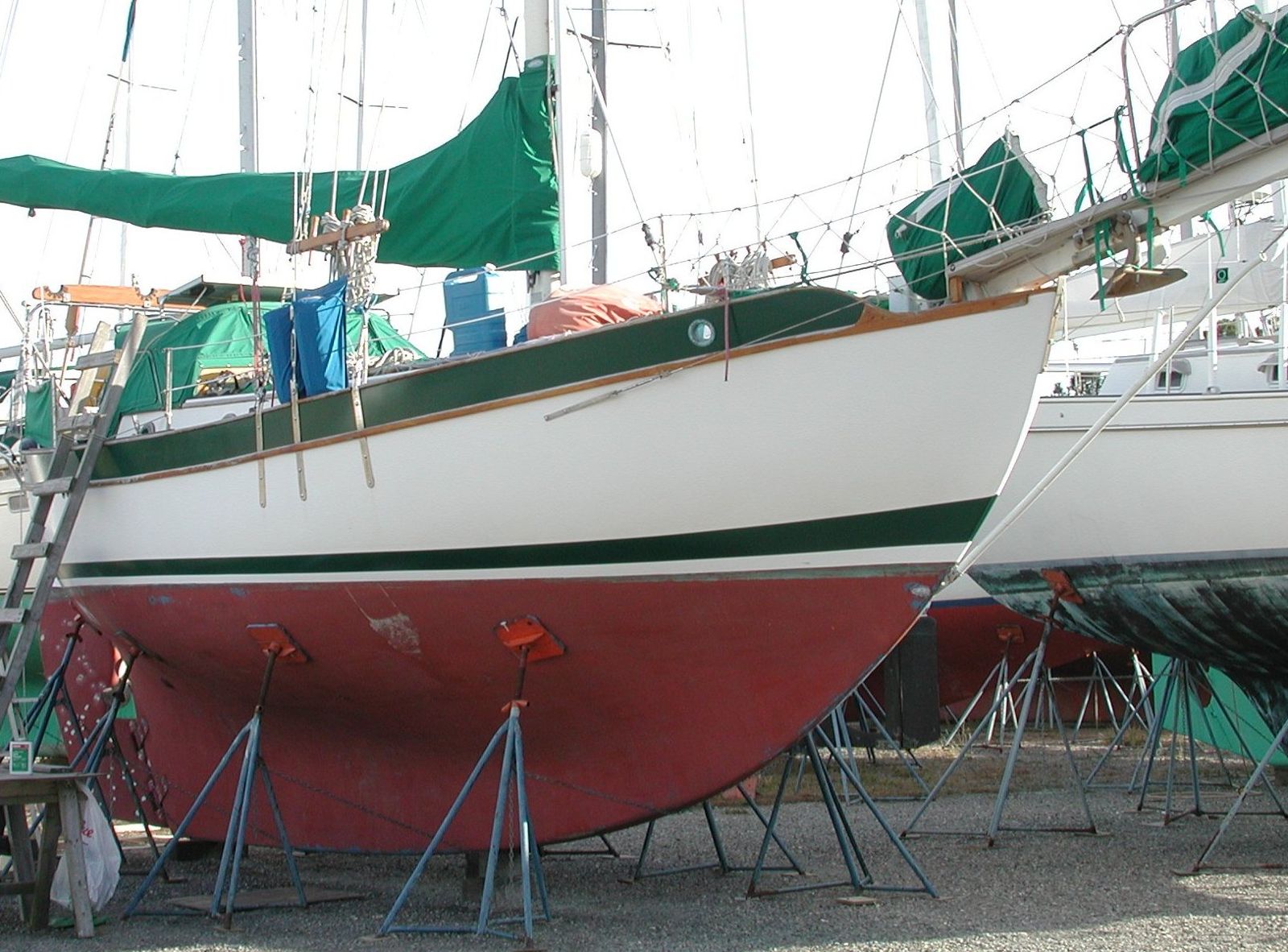
Header photo: a yacht on stands in a boatyard, by Johantheghost, via Wikimedia Commons, licensed under CC BY-SA 3.0. Resized from the original.