Every autumn UK owners face the same decision: leave the boat in the water for the winter, or pay to have it lifted and stored ashore. The answer depends on the boat, the marina and what you plan to do with the boat between November and March. The price depends on all three, and it is hard to compare because marinas sell winter packages in different shapes. Some quote six months per metre, some quote a flat fee for four months, and some quote two months.
To make the comparison useful, we read the 2026/27 winter tariffs that a range of UK marinas and boatyards have published, and turned them into like-for-like costs for an 8m, a 10m and a 12m boat. Every figure below comes from a published price list, checked in late October 2026, and includes VAT unless we say otherwise. Prices change and offers sell out, so treat the tables as a planning guide and confirm with the marina before you book.
The short answer
For a 10m boat on the published 2026/27 rates we found:
- Six months afloat ranged from £1,485 at Troon Yacht Haven to £2,140 at Plymouth Yacht Haven.
- Six months ashore as a package (lift, storage and relaunch bundled) ranged from £1,950 at Troon to £2,630 at Val Wyatt Marine on the Thames.
- At the three Clyde marinas in our sample, coming ashore for the winter cost £450 to £465 more than staying afloat for a 10m boat.
- Buying the same six months ashore as separate items at a south coast yard, at non-berth holder rates, came to more than £3,200 before cradle hire.
- Short winter berthing deals on the south coast look cheap as a headline but cost far more per month than a six-month Scottish package.
The detail behind each of those points follows.
How winter packages are sold
Before comparing prices it helps to know what you are actually buying. The packages we read fall into four types.
| Package type | What it usually includes | Examples in this guide |
|---|---|---|
| Six months afloat | A berth from 1 October to 31 March, usually with water and access to power | Troon, Largs, Kip, Plymouth |
| Six months ashore, bundled | Lift out, pressure wash, storage on the hard and relaunch, sometimes mast handling | Troon, Largs, Kip, Fambridge, Val Wyatt |
| Afloat with a short spell ashore | A winter berth plus a set number of days or a week on the hard | Plymouth "Wet & Dry", Premier Winter Package |
| Short winter berthing | A flat fee for two or four months afloat | MDL winter offers, Lymington four-month package |
The second type is where the real differences hide. "Ashore" can mean the lift, wash, storage and relaunch only, or it can also include taking the mast down and putting it back up, or cradle hire. Those extras can add several hundred pounds to a yacht's winter, so we list them separately below.
Six months afloat: 2026/27 rates
These are the six-month afloat prices for 1 October 2026 to 31 March 2027, per metre of length overall (LOA), with worked totals.
| Marina | Rate per metre | 8m boat | 10m boat | 12m boat |
|---|---|---|---|---|
| Troon Yacht Haven, Ayrshire | £123 (6.1m to 7.8m), £148.50 (7.9m to 13.5m) | £1,188 | £1,485 | £1,782 |
| Kip Marina, Inverkip | £160 | £1,280 | £1,600 | £1,920 |
| Largs Yacht Haven | £162 (6.1m to 7m), £163 (7.1m to 12.1m) | £1,304 | £1,630 | £1,956 |
| Plymouth Yacht Haven | £214 | £1,712 | £2,140 | £2,568 |
Notes on the table:
- Troon's 8m figure uses the 7.9m to 13.5m band, so a boat of exactly 7.8m would pay the lower £123 rate.
- Largs also sells its six-month winter period starting on 1 November and running to 30 April, which suits owners who sail into late October.
- Plymouth Yacht Haven's winter page does not state whether its prices include VAT, so check before you compare it directly with the others.
Fambridge Yacht Haven on the River Crouch sells winter afloat by the month instead: £40 per metre per month between 1 November and 31 March, with 10% off if you pay four or five months up front. Five months for a 10m boat paid in advance works out at £1,800.
Six months ashore: bundled packages
| Marina | Rate per metre | What the package includes | 8m boat | 10m boat | 12m boat |
|---|---|---|---|---|---|
| Troon Yacht Haven | £155.50 (6.1m to 7.8m), £195 (7.9m to 13.5m), £215 (over 13.5m) | Lift out, pressure wash, storage, launch | £1,560 | £1,950 | £2,340 |
| Kip Marina | £205 (up to 7m), £206 (up to 12m), £208 (12m and over) | Lift out, relaunch, mast removal and re-stepping | £1,648 | £2,060 | £2,472 |
| Largs Yacht Haven | £207 (6.1m to 7m), £208 (7.1m to 12.1m), £225 (12.2m and over) | Lift, wash, mast down, storage, mast up, launch | £1,664 | £2,080 | £2,496 |
| Fambridge Yacht Haven | £225 | Lift, launch, cradle or stand hire and relaunch, 1 October to 31 March | £1,800 | £2,250 | £2,700 |
| Val Wyatt Marine, River Thames | £263 (outside), £414 (undercover) | Six months hardstanding with lift, chock and relaunch | £2,104 | £2,630 | £3,156 |
For the 12m column we used Kip's "up to 12m" rate; a boat measured at more than 12m pays £208 per metre, or £2,496.
A few points stand out.
The mast makes Troon less of a bargain for yachts. Troon has the lowest headline ashore price, but its package does not mention the mast. Its boatyard price list charges a flat £180 to step or lower the mast of a boat between 7.9m and 13.5m, so taking it down in autumn and stepping it again in spring adds £360. That brings a 10m yacht to £2,310 for the winter, more than the Largs and Kip packages, which both include mast handling. For a motorboat or a yacht that stays rigged, Troon remains the cheapest of the five.
Kip's package has conditions worth reading. Kip's lift, relaunch and mast work are non-refundable and must be used by 31 March 2027, so if you change your plans part way through the winter you lose them. The package excludes mast preparation and rig tuning. All sails must come off before the lift. A yacht ashore for more than five weeks must have its mast removed, and if you want to keep it stepped for a shorter period you need confirmation from your insurer.
Fambridge includes cradle hire. Fambridge's price includes the cradle or stands. At yards where it is extra, cradle hire adds a weekly charge: £25 a week for a medium cradle at Troon and £24 a week at Lymington. Across 26 weeks that is £624 to £650, which matters if you do not own a cradle.
Fambridge also sells a shorter ashore period. Five months ashore from 1 November costs £187.50 per metre, or £1,875 for a 10m boat.
Undercover storage costs about 57% more. At Val Wyatt, undercover winter storage is £414 per metre against £263 outside. For a 10m motor cruiser that is an extra £1,510 for the winter. Whether that is worth paying depends on what it saves you in spring cleaning, cover wear and gelcoat and canvas care.
The real cost of coming ashore
The fairest test is to compare the afloat and ashore prices at the same marina, because location, facilities and staff costs are then held constant.
| Marina (10m boat) | Six months afloat | Six months ashore package | Extra cost to come ashore |
|---|---|---|---|
| Troon | £1,485 | £1,950 | £465 (or £825 for a yacht that also needs the mast lowered and stepped) |
| Largs | £1,630 | £2,080 | £450, mast handling included |
| Kip | £1,600 | £2,060 | £460, mast handling included |
On these figures, the decision on the Clyde comes down to about £450 to £465 for a 10m boat. That is less than many owners expect, and it shrinks further when you remember that a boat wintered afloat usually still needs lifting at some point to antifoul and check the underwater fittings.
Here is that sum at Troon, using its published boatyard rates for a 7.9m to 13.5m boat:
- Lift out with wash: £35 per metre, so £350.
- Launch: £28 per metre, so £280.
- Together: £630.
A 10m boat that winters afloat at Troon (£1,485) and then comes out in spring for a lift and relaunch would pay £2,115 before any storage days. The six-month ashore package is £1,950. If you would be lifting anyway, the ashore package is £165 cheaper and you get the winter on the hard included.
The sum looks different if you use the boat through the winter. Owners who sail in the quieter months have a good reason to stay in, and the RYA's own winterising advice puts it bluntly: the best way to winterise a boat is to continue to use it.
Short winter deals and the price per month
Some of the best-known winter deals on the south coast are for shorter periods, so their headline prices are not comparable with six-month packages. Converting everything to a cost per month makes the difference clear.
| Package (10m boat) | Length of package | Price | Cost per month |
|---|---|---|---|
| Troon, six months afloat | 6 months | £1,485 | £248 |
| Kip, six months afloat | 6 months | £1,600 | £267 |
| Largs, six months afloat | 6 months | £1,630 | £272 |
| Plymouth Yacht Haven, six months afloat | 6 months | £2,140 | £357 |
| Fambridge, monthly afloat paid up front | 5 months | £1,800 | £360 |
| Lymington Yacht Haven, winter package (up to 10.1m) | 4 months | £1,700 | £425 |
| MDL Ocean Village, winter offer (8.1m to 10m) | 2 months | £1,200 | £600 |
| MDL Hamble Point, winter offer (8.1m to 10m) | 2 months | £1,500 | £750 |
The Lymington package runs from 31 October 2026 to 1 March 2027 and is a flat £1,700 for boats up to 10.1m, or £2,130 up to 12.2m. Electricity is extra at the published rate, and you supply or buy a metered cable.
The MDL offers are for two consecutive months between 1 November 2026 and 31 March 2027 (at Woolverstone, only 1 November to 31 December 2026). Prices vary a lot between MDL sites:
| MDL marina | Up to 8m | 8.1m to 10m | 10.1m to 12.5m |
|---|---|---|---|
| Hamble Point, Mercury Yacht Harbour, Port Hamble | £1,000 | £1,500 | £2,300 |
| Ocean Village, Southampton | £920 | £1,200 | £1,800 |
| Torquay | £950 | £1,150 | £1,550 |
| Brixham | £850 | £1,100 | £1,350 |
| Bray, Windsor, Penton Hook (Thames) | £550 | £875 | £1,100 |
| Chatham | £650 | £800 | £1,000 |
Shamrock Quay uses a slightly different top band (10.1m to 12m, £1,500), and Cobb's Quay in Poole uses different length bands again (£1,000 up to 9m, £1,300 for 9.1m to 11m).
A per-month figure is not the whole story. A two-month deal suits an owner who needs somewhere to sit while waiting for a yard slot, or who keeps the boat on a swinging mooring for the rest of the winter. It is poor value as a substitute for a full winter berth. On a per-month basis, a winter berth on the Hamble costs about three times as much as one at Troon.
Afloat with a short spell ashore
Two operators in our sample sell a middle option for owners who want to stay in the water but need a few days on the hard for maintenance.
Plymouth Yacht Haven "Wet & Dry". Six months from 1 October to 31 March costs £280 per metre, against £214 for afloat only. The extra £66 per metre (£660 for a 10m boat) buys one week ashore, including the lift, wash off, chocks or cradle, outside storage and relaunch. The week has to be booked at the start of the contract and taken before 28 February.
Premier Marinas Winter Package. Premier sells six months of berthing from 1 October 2026 to 31 March 2027 with 28 days ashore included, at 16 south coast marinas. Its flexible winter berthing starts from 30 days between 1 November 2026 and 31 March 2027, and includes up to 28 days ashore if you pay for three or more months in advance. The terms say the storage ashore does not include the lift and launch, which are charged separately. Premier does not publish package prices online, so you need a quote based on your LOA.
The lift and launch at a Premier yard are not trivial. At Port Solent's boatyard, from 1 September 2026, for a boat between 9.1m and 12m:
- Lift, wash and block off is £45.25 per metre.
- Launch is £33.50 per metre.
- For a 10m boat that is £452.50 to come out and £335 to go back in, a total of £787.50 at list price.
Port Solent also prices by season. Lifts and launches are 10% cheaper between 1 October and 31 December and carry a 10% premium between 1 January and 31 March. A 10m boat lifted in November and launched in March would pay about £407 out and £369 back in. If your spring work can wait until April, you avoid the premium on the launch.
Port Solent's Pit Stop package is aimed at boats that need a short maintenance stint. You are lifted on a Friday and launched on the Monday ten days later, with two weekends ashore. For a boat between 9.1m and 12m the package is £67.50 per metre plus £114.25 for the storage, so £789.25 for a 10m boat.
Buying it all separately: a south coast example
Not every yard sells a winter ashore bundle, and an annual berth holder is often better off on the yard's standard rates. Lymington Yacht Haven's boatyard price list, effective from 1 April 2026, shows how the sum works. The minimum chargeable length is 8m.
| Item (10m boat) | Published rate | Cost |
|---|---|---|
| Lift out, wash and block off | £40.80 per metre | £408.00 |
| Storage ashore for 182 days, non-berth holder | £1.42 per metre per day | £2,584.40 |
| Launch from hard standing | £29.35 per metre | £293.50 |
| Total, non-berth holder | £3,285.90 | |
| Storage ashore for 182 days, annual berth holder (rate applies 1 September to 30 April) | £0.70 per metre per day | £1,274.00 |
| Total, annual berth holder | £1,975.50 |
We used 182 days because that is the number of days from 1 October 2026 to 31 March 2027. Cradle hire, if you need it, is another £24 a week, or £624 for 26 weeks.
The gap between those two totals is the point. A visiting boat buying storage by the day at a busy south coast yard pays more than £3,200 for a six-month winter ashore. The same yard's annual berth holders pay less than £2,000. If you are choosing an annual berth for next season anyway, winter storage terms belong in that comparison. We cover the annual side in our guide to berthing costs in the UK and Spain.
The extras that change the bill
Headline per-metre prices rarely tell the whole story. These are the extras we found in the 2026/27 price lists, and they are worth checking at any marina you are considering.
| Extra | What we found |
|---|---|
| Foul-release antifouling | Troon and Lymington add a 50% surcharge to the lifting charge (one way only) for boats with any form of silicone or Teflon antifoul |
| Mast lowering and stepping | £110, £180 or £220 flat at Troon depending on length, assuming the mast is reasonably prepared; owners are expected to tune their own rigging. Included at Largs and Kip, excluding preparation and tuning at Kip |
| Sails | Kip requires all sails off before lift-out; Lymington requires roller mainsails and all headsails off before lifting |
| Cradle hire | £25 a week (medium) or £40 a week (large) at Troon; £24 a week at Lymington, or £36.40 a week for an extra large cradle |
| Wide-beam boats | Port Solent charges 1.5 times the published rate for wide-beam boats |
| Short notice | Port Solent charges £95 for new bookings or changes with less than five working days' notice, and a 50% premium for emergency and same-day bookings |
| Pressure washing outside a package | £11.50 per metre at Port Solent (1.5 times for heavily fouled boats); £25 per metre at Val Wyatt |
| Electricity | 32.75p per unit at Port Solent; at Val Wyatt, 22p per unit plus a £25 quarterly standing charge, both before VAT |
| Winter cover fitting | Val Wyatt charges £144 to fit an owner's cover over the canopy, check it through the winter and remove it in spring, or £560 where the canopy comes off and a ridge pole is fitted |
| Use-it-or-lose-it | Kip's included lifts and mast work are non-refundable and expire on 31 March 2027; Plymouth's included week ashore must be used before 28 February |
Electricity is worth a rough estimate if you plan to run a dehumidifier or a frost heater. As an illustration only: a dehumidifier drawing 200 watts for eight hours a day uses 1.6kWh a day. At Port Solent's 32.75p per unit, that is about 52p a day, or about £95 over 182 days. Your own appliance's rating and running hours will differ, so check the label.
What your insurer expects
Insurance conditions can matter more than the storage bill, because breaking one can leave a claim unpaid. Navigators and General, a UK marine insurer, has published laying-up advice through Practical Boat Owner, and several points in it are worth acting on:
- Frost damage cover depends on preparation. Following the manufacturer's guidance to winterise machinery and water systems is expected, and failing to do so is likely to invalidate any frost damage cover you have. Frost cover is not a standard extension with every insurer.
- Lay-up dates are conditions. If your policy says the boat must be ashore by a certain date, you must comply. If the lift is delayed by weather, tides or a crane fault, tell your insurer and ask for an extension.
- There are no days of grace. If a policy is not renewed in time, cover stops.
- Canvas and sails left on are a common exclusion. Canopies, dodgers and sails split by the wind are excluded on most policies, so take them off and store them dry.
- Outboard security. Failing to fit an anti-theft device to an outboard left on board may invalidate the policy.
- Masts ashore. In an exposed yard, try to have the mast taken down, and expect some yards to insist on it. Kip's rule is a written example of this.
- Electrical fire risk. N&G reports devastating fires from faults in shore-powered devices such as chargers, heaters and dehumidifiers left running. Secure the unit, keep filters clean, protect the supply and avoid overloading circuits.
Read your own schedule for the laid-up period, whether it is afloat or ashore, and what it requires during that time. If you are reviewing cover at the same time, our marine insurance directory lists UK providers.
A winterising checklist from the published guidance
The list below draws on the RYA's guidance on winterising a diesel engine and its winterising tips from its Sail and Motor Cruising Chief Instructor, Vaughan Marsh, alongside the N&G advice above. Follow your engine manufacturer's handbook first if it differs.
Engine (diesel)
- Clean the engine and look for leaks, using a light and a mirror to see behind things. Dry the bilges.
- Fill the fuel tank to limit condensation, which encourages diesel bug.
- Change the engine oil and oil filter. Old oil holds acidic combustion by-products that shorten engine life.
- Check gearbox or outdrive oil and replace it if it looks cloudy or milky.
- Drain the raw water system and refill it with a strong solution of fresh antifreeze, then run the engine to circulate it. Draining alone is unlikely to remove all the water.
- Check the water pump impeller and consider replacing it in spring.
- Remove the air filter, block the intake and exhaust with an oily rag, and put a warning on the control panel.
- Remove the batteries if you can, keep them warm and dry, and charge them every four to six weeks.
- Relax or remove the belts.
- Write down everything you did so you can reverse it in spring.
If you would rather have it done for you, many engineers offer winterisation as a fixed job. Our marine engineering directory lists firms by area.
If the boat stays afloat
- Run the engine reasonably often, preferably in gear.
- Use thermostatically controlled heaters set above freezing, in the cabin and engine bay.
- Run a dehumidifier, drained into the sink.
- Keep an eye on the power supply. A smart plug with a SIM card can alert you to a power cut or a drop in temperature.
- Drain and isolate the external shower.
- Add extra mooring lines, then visit often to adjust them and move chafe points.
- Check hull fittings for leaks and corrosion, and check the stern gland.
If the boat comes ashore
- Ask the yard to set the bow slightly up so rain runs off the decks and cockpit drains work.
- Fit covers that keep water out but let air through, and do not tie them to shores or cross-bracing.
- Drain the whole freshwater system, including the tank, pump, calorifier, filters and every tap, especially shower mixers.
- Check antifreeze strength in any wet heating system with a tester.
- Take food, bedding, cushions and clothing home. Prop the fridge door, lockers and drawers open for ventilation.
- Take off electronics, the outboard, tender and liferaft.
- Take out halyards, leaving mouse lines, and inspect the rig while the mast is down.
- Ask the yard to cross-brace wooden shores.
- Tag the wheel and engine controls with a reminder to check seacocks, impellers and transducers before launch.
Whichever you choose, the boat still needs regular visits. N&G's advice is not to assume that renting yard space includes anyone checking on your boat.
Which option suits which boat
Based on the published prices and terms above:
- A yacht you will not use until spring, kept in Scotland. A bundled ashore package that includes mast handling (Largs or Kip in our sample) is close to the cost of staying afloat and avoids the separate spring lift.
- A motorboat or rigged yacht you will not use. A package without mast charges, such as Troon's, is the cheapest ashore option we found. If you want the boat under cover, Val Wyatt on the Thames publishes an undercover winter price, Port Solent lists undercover storage at £4.60 per metre per day, and Fambridge offers indoor storage, though its winter page does not price it separately.
- A boat you want to use on good winter days. Stay afloat, budget for heating and a dehumidifier, and book a short haul-out for antifouling. Plymouth's Wet & Dry and Port Solent's Pit Stop both price this.
- A boat on a swinging mooring that needs a few weeks in a marina. A two-month MDL deal or the Lymington four-month package fits, but compare it with the cost per month of a full winter berth.
- A trailer boat or a fast motorboat. Dry stack storage lets you keep using the boat with a launch on request. Premier advertises undercover dry stack at Trafalgar Wharf for motorboats and RIBs up to 14m, with launches typically on an hour's notice through its app. MDL quotes winter dry stack storage at Saxon Wharf at £225 a month for boats up to 9m, for up to four months, but that includes only one lift out and relaunch, so it suits storage rather than regular use. Our dry stack directory lists other sites.
Before you book
- Measure your LOA properly. Yards bill on it, and some measure it themselves: Val Wyatt, for example, charges on the overall length including all protrusions at bow and stern, rounded up to the nearest 0.1m.
- Check whether the quoted price includes mast handling, cradle hire and a pressure wash.
- Tell the yard about any foul-release antifoul before they quote.
- Confirm the dates. Some packages start on 1 October, others on 1 November, and short deals have fixed windows.
- Read your insurance schedule for laid-up conditions and frost cover, and confirm any changes in writing.
- Ask what security the yard has (access control, CCTV and patrols), as N&G suggests.
- Book early. Several of the offers above are limited by space, and Lymington allocates its winter berths on a first come, first served basis.
If you are still deciding where to go, our directory of UK boatyards lists yards with lifting and storage ashore, so you can shortlist several near your home port and ask each for a 2026/27 winter quote.
Sources
All tariffs were read from the operators' published pages and price lists in October 2026.
- Yacht Havens: Troon winter berthing and Troon berthing and boatyard rates; Largs winter berthing; Fambridge winter berthing; Plymouth winter berthing; Lymington berthing and boatyard rates
- Kip Marina winter prices 2026/27 (PDF)
- Val Wyatt Marine charges 2026/27 (PDF)
- Premier Marinas winter berthing and Port Solent boatyard price list (PDF)
- MDL Marinas winter offers
- RYA: Winterising your boat engine and Winterising top tips
- Practical Boat Owner: Insurance tips for laying up, advice from Navigators and General
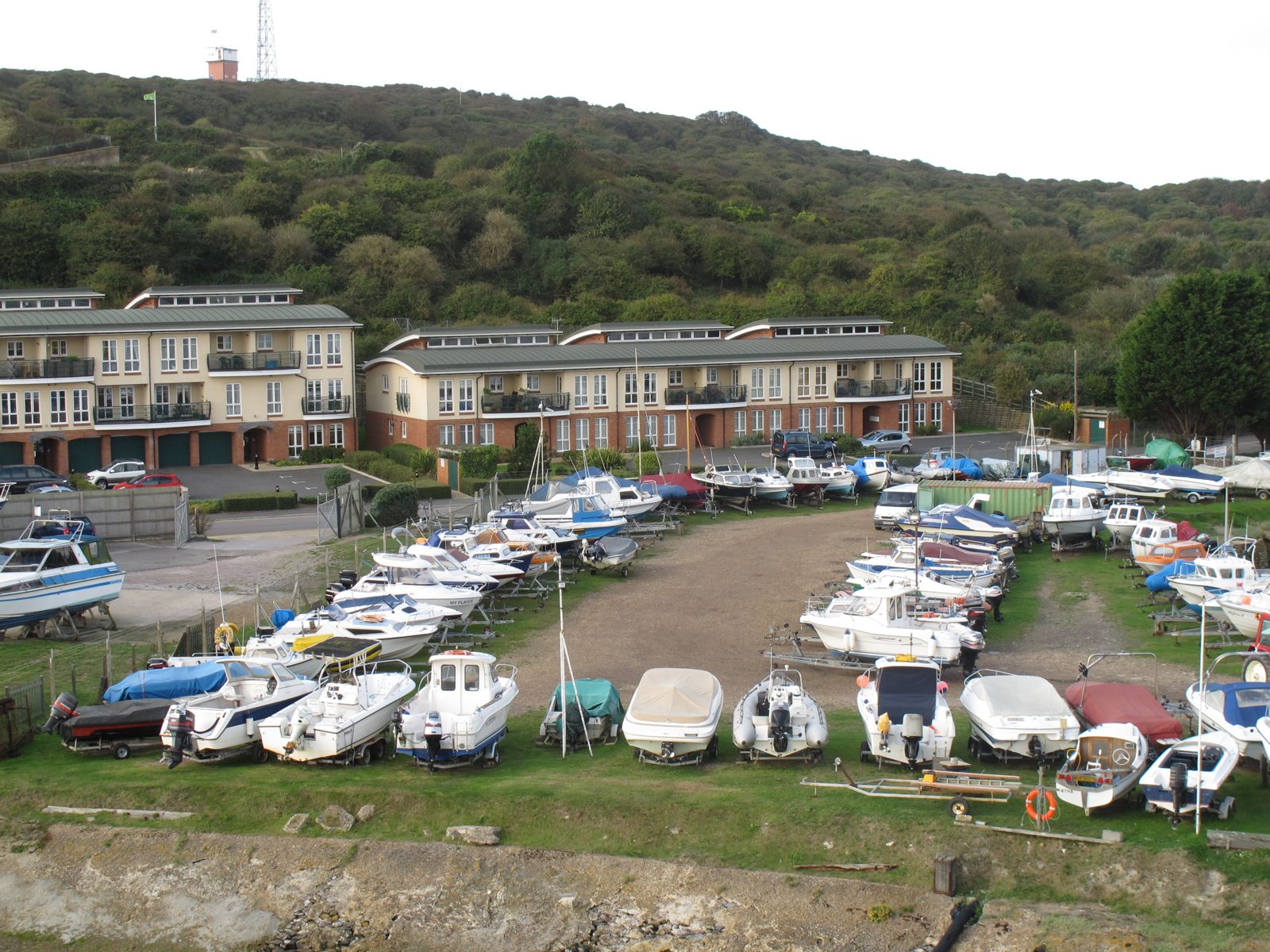
Header photo: boats stored ashore at the boatyard, Newhaven Harbour, by David Hawgood, via Wikimedia Commons (from Geograph), licensed under CC BY-SA 2.0. Resized from the original.