Tides, harbours, hazards and the best weekend routes in Britain's busiest stretch of sailing water.
The Solent is one of the best places in Britain to own a boat.
It is also one of the easiest places for a new owner to become overconfident.
Between the Isle of Wight and the Hampshire coast you have dozens of marinas, sheltered passages, historic harbours, excellent sailing and enough destinations to fill an entire season without travelling particularly far. But you also have strong tides, ferries, naval traffic, container ships, racing fleets and some surprisingly complicated bits of pilotage.
That combination is exactly what makes cruising the Solent so rewarding. It gives new boat owners the chance to build real experience without needing to disappear offshore for days at a time.
Learn the tides, respect the commercial traffic and choose your weather, and the Solent becomes an enormous playground.
Why the Solent Is So Good for New Boat Owners
The geography does much of the work.
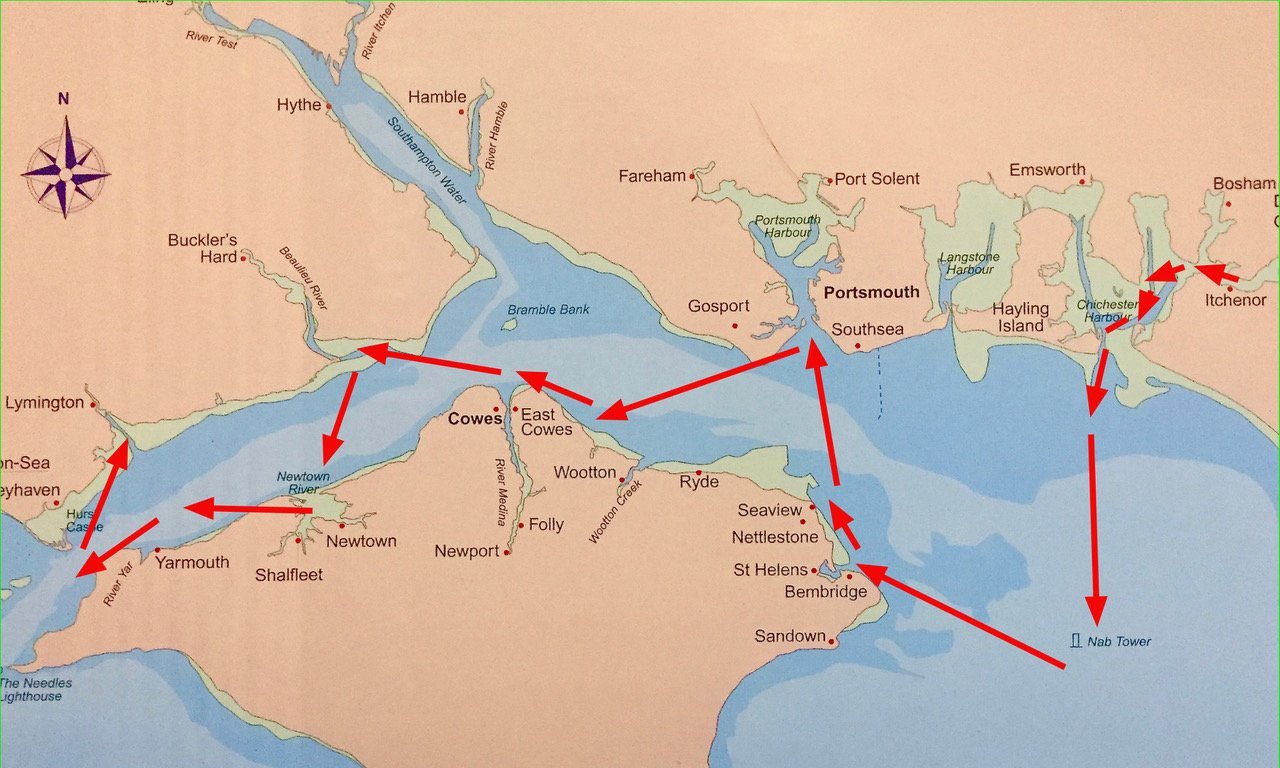
The Isle of Wight provides shelter from the English Channel, while the mainland coast gives you Southampton Water, Portsmouth Harbour, Chichester Harbour and a string of smaller destinations.
That means a relatively short passage can feel like a proper trip.
Leave Hamble in the morning and you can be having lunch in Cowes shortly afterwards. From Lymington, Yarmouth is almost directly across the water. From Portsmouth, Bembridge or Cowes can make an easy weekend destination.
At the same time, there is enough going on to teach you quickly.
The King's Harbour Master describes the Solent as one of Europe's busiest waterways, mixing commercial, military and recreational traffic.
That sounds intimidating, but it is also why the area produces confident sailors and motorboat skippers. You learn to keep a proper lookout, understand tidal streams and think ahead.
The First Thing to Understand: The Tide
You can cruise the Solent without becoming a tidal mathematician, but ignoring the tide will make your boating unnecessarily difficult.
Streams regularly reach several knots, particularly towards the western Solent around Hurst and the Needles.
On a sailing yacht making five knots through the water, a three-knot adverse tide is the difference between making comfortable progress and wondering why the same buoy has been beside you for half an hour.
Even on a motorboat, pushing against the tide wastes fuel and can make short, steep seas considerably less comfortable.
The basic principle for a new owner is simple: use the tide whenever you reasonably can.
A passage from Cowes towards Yarmouth is much more pleasant when the stream is helping rather than fighting you.
Where the Solent gets more interesting is that the tidal pattern isn't simply "east for six hours, west for six hours". Local streams, eddies and timing differences around the Isle of Wight complicate things.
That doesn't mean you need to memorise everything. Use a current tidal atlas or navigation app and check the expected stream before leaving.
After a season, you'll begin instinctively planning weekends around it.
Cowes: The Obvious First Destination
For a first overnight trip in the Solent, Cowes is difficult to beat.
The approach is straightforward, there are several marina options and the town is built around boating.
It also feels like you've actually gone somewhere, despite being only a relatively short trip from Southampton Water, Hamble or Portsmouth.
Cowes is particularly useful for new owners because you get exposure to ferry traffic and busy harbour movements without particularly demanding pilotage.
Just don't become casual around the ferries.
Large commercial vessels and fast passenger services have limited room to manoeuvre and will cover distance much faster than you might expect.
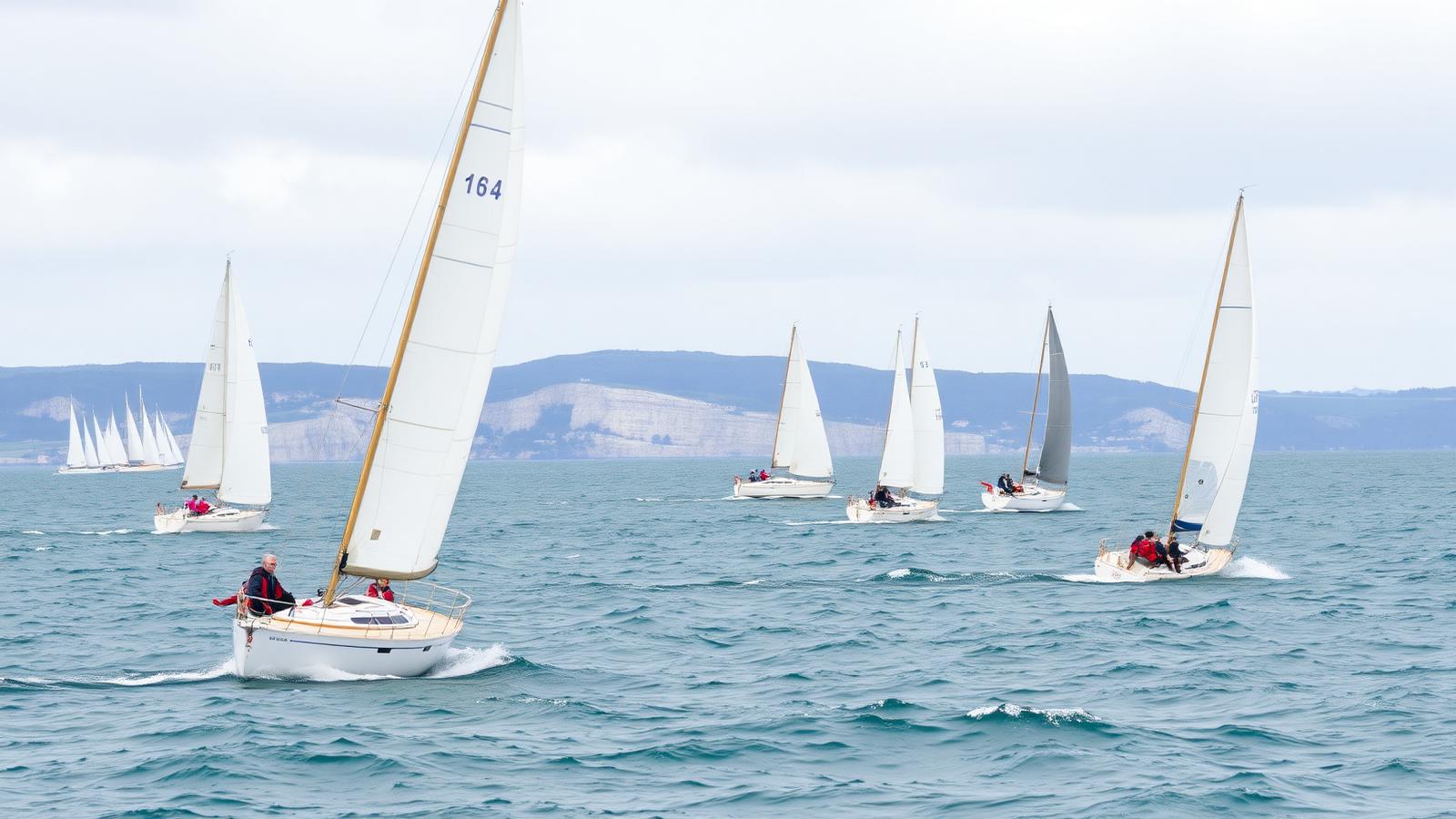
Cowes is also at the centre of the Solent's racing culture. During major events the amount of recreational traffic can be extraordinary. The 2026 Round the Island Race, for example, was expected to put up to 800 racing yachts on the water and required specific central-Solent traffic restrictions.
On an ordinary weekend, however, Cowes remains one of the easiest and most enjoyable overnight stops in southern Britain.
Yarmouth and the Western Solent
If Cowes is where you start, Yarmouth is probably where you go next.
The western Solent feels slightly more adventurous.
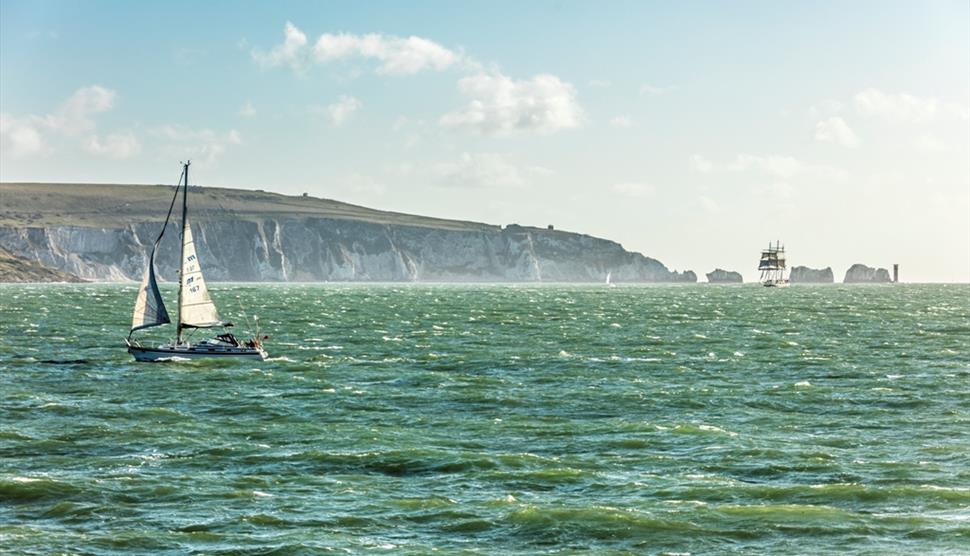
Lymington sits directly across from Yarmouth, while the Needles are visible further west and the coastline begins to open towards the Channel.
Yarmouth itself is compact, attractive and ideally positioned for exploring the west of the Isle of Wight.
The passage also introduces you to stronger tidal streams.
As you approach Hurst Castle and the western entrance to the Solent, tidal rates increase significantly and wind-against-tide conditions can produce uncomfortable water surprisingly quickly.
This is one of the great lessons of Solent cruising: perfectly reasonable wind conditions can still produce an unpleasant sea if they're opposed by a strong stream.
For a first trip towards the Needles, choose a sensible forecast and plan the tide properly.
Do that and it is one of the best days out you can have on a boat in Britain.
The Needles: Spectacular, but Don't Treat Them Like a Theme Park
Everyone wants to take their boat past the Needles eventually.
And they should.
The lighthouse beneath the white cliffs is one of Britain's great boating landmarks.
But the Needles Channel deserves respect.
The combination of strong tidal streams, shallow areas and exposure to Channel swell can create difficult conditions. What appears calm from inside the western Solent may be markedly different once you get beyond Hurst.
For a new owner, there is absolutely nothing wrong with turning around.
The Needles will still be there next weekend.
Pick a settled day, understand where the tide is taking you and treat the trip as a proper passage rather than simply following another yacht because it looks as though they know where they're going.
Portsmouth Harbour: Busy but Brilliant
Entering Portsmouth Harbour by boat for the first time is memorable.
You have naval ships, ferries, the historic dockyard and the Spinnaker Tower all concentrated around one relatively narrow entrance.
It can also look considerably more intimidating on the chart than it feels once you understand the system.
Portsmouth is tightly controlled because of its commercial and military traffic. Current King's Harbour Master guidance includes defined VHF reporting procedures for vessels intending to use the main navigation channel, and the rules are periodically updated through General Directions and Local Notices to Mariners.
Recreational vessels therefore need to check the latest harbour instructions rather than relying on something remembered from a course five years ago.
The harbour also has speed restrictions. The King's Harbour Master currently specifies a 10-knot limit within Portsmouth Harbour and in defined areas close to shore.
Once inside, though, Portsmouth and Gosport provide excellent marina options and enough restaurants, pubs and attractions to make a weekend worthwhile even if the weather deteriorates.
Southampton Water and the Big Ships
If your boat is based around Hamble, Ocean Village, Hythe or the upper Solent, you'll quickly become accustomed to Southampton's commercial traffic.
Container ships and cruise liners can appear to move almost absurdly slowly.
They aren't.
The combination of their size and distance can make it difficult to judge their speed.
The simplest rule is not to put yourself in a situation where you're wondering whether you'll cross ahead.
If you're unsure, go behind.
The Solent's traffic services coordinate movements across much of the central and eastern area, reflecting the volume of commercial traffic passing through these waters.
Large vessels also create wash and hydrodynamic effects that matter to smaller boats. Portsmouth's harbour authority specifically warns about the effects of wash on small craft and anchored vessels.
Give ships room and never assume they can simply alter course around you.
Beaulieu River: One of the Solent's Best Overnight Stops
After Cowes and Yarmouth, Beaulieu River should be high on the list.
The approach requires a little more attention than sailing into a major commercial harbour, but that is part of the attraction.
Once inside, the river feels almost completely removed from the busy Solent outside.
Buckler's Hard provides marina facilities in beautiful surroundings and makes an excellent overnight destination for a couple or family.
For a new skipper, this is also a good introduction to more careful pilotage.
Check depths, follow the buoyage and don't assume the route you watched another yacht take at high water will work for you several hours later.
It is precisely the sort of trip that builds confidence without requiring a long passage.
Newtown Creek: The Anchorage to Work Up To
Newtown Creek on the Isle of Wight's northwestern coast is another Solent classic.
Unlike a marina weekend, coming here feels much more like proper cruising.
You arrive, find somewhere appropriate to anchor or pick up a mooring, switch the engine off and suddenly the busiest sailing area in Britain feels very quiet.
The entrance and available depth deserve proper attention, particularly for deeper-draught yachts.
It can also become extremely popular in good weather.
Arriving early makes life considerably easier.
Newtown is an ideal place to practise anchoring properly rather than simply dropping the hook and hoping.
Check the depth and predicted tidal range, put out appropriate scope and make sure you're genuinely secure before opening the wine.
Bembridge: Worth the Planning
Bembridge at the eastern end of the Isle of Wight is one of the Solent destinations where tide planning becomes particularly important.
Access is constrained by depth, making arrival and departure dependent on the boat's draught and state of tide.
That slightly restricted access is also part of its appeal.
Once you're in, Bembridge provides a very different weekend from Cowes.
It feels more like visiting a coastal village by boat than arriving at a major yachting centre.
For new owners it is an excellent next step once you've become comfortable with straightforward marina entrances.
Plan the passage carefully rather than trying to squeeze in at the edge of the tidal window.
Chichester Harbour: Worth Going East For
At the eastern end of the cruising ground, Chichester Harbour opens up another enormous area to explore.
It offers sheltered sailing, beautiful scenery and destinations such as Itchenor and Bosham.
The harbour entrance deserves respect in poor conditions, particularly when strong tidal flow meets wind and waves.
But in settled weather Chichester is superb.
If your boat is based in Portsmouth or the eastern Solent, it makes an obvious weekend destination. From further west, it can become part of a longer Solent cruise.
Three Great First-Season Weekend Routes
For your first few trips, there is no need to make things complicated.
From Hamble or Southampton, a classic weekend is Hamble to Cowes on Saturday, then back via lunch in Osborne Bay on Sunday.
Once you're more confident, try Lymington to Yarmouth, with a run towards Hurst or the Needles if weather and tide allow.
From Portsmouth, Bembridge or Cowes makes an excellent first overnight destination, while Chichester gives you another option without committing to a long offshore passage.
The beauty of the Solent is that none of these needs to feel like a major expedition.
You can gradually increase the difficulty as your confidence grows.
The Hazards New Owners Actually Need to Worry About
The Solent has plenty of navigational features to learn, but for most new owners the biggest risk isn't some obscure rock lurking beneath the surface.
It's distraction.
There may be a ferry approaching, three racing yachts crossing, someone asking where the fenders are and a navigation alarm beeping at exactly the same moment.
Good skippering is largely about staying ahead of the boat.
Know where you're going before leaving the berth. Get ropes and fenders ready before entering the marina. Check the tide before you reach the difficult part.
Keep a proper lookout.
The commercial authorities responsible for the area repeatedly emphasise traffic awareness because ferries, hovercraft, naval vessels and some of the largest commercial ships afloat all share the Solent with recreational craft.
The Solent isn't dangerous because it is busy.
It becomes dangerous when people stop paying attention to how busy it is.
Don't Be Afraid of the Radio
For many new boat owners, using the VHF feels strangely intimidating.
It shouldn't.
Listen before transmitting, think about what you're going to say and keep it concise.
In areas such as Portsmouth, knowing the correct reporting and working channels is important, and current harbour guidance should always be checked before passage.
The radio is there to make things safer, not to test whether you can sound like a professional ship captain.
The Best Advice for Your First Solent Season
Don't rush it.
Your first summer doesn't need to include a Channel crossing, circumnavigation of the Isle of Wight and night entry into every harbour on the chart.
Spend the first few weekends learning your own boat.
Find out how quickly it stops, how it behaves astern, how much wind catches the bow and how long it actually takes you to prepare for entering a marina.
Then explore.
Cowes becomes Yarmouth. Yarmouth becomes the Needles. Portsmouth becomes Chichester. Eventually the Isle of Wight stops feeling like the boundary of your cruising ground and starts feeling like the shelter inside it.
That's when owning a boat in the Solent really becomes interesting.
The Verdict
For a new boat owner, there may be no better cruising ground in Britain than the Solent.
There are easier places to sail and quieter places to anchor, but few offer the same concentration of destinations, facilities and opportunities to build experience.
You can have breakfast in Hamble, lunch at anchor off the Isle of Wight and dinner in Cowes without ever being particularly far from help.
At the same time, the tides, commercial traffic and changing conditions mean the Solent never lets you become completely lazy.
And that's probably why so many British sailors learn here.
The Solent teaches you something every weekend.
Exploring the Solent this season?
Jack & Anchor's Marina Directory can help you compare marinas around the Solent and Isle of Wight, while the Marine Services Directory can help you find local engineers, riggers, surveyors and other marine specialists.
If you're still looking for your first yacht or motorboat, browse Boats for Sale or use BoatCheck to investigate a used boat before committing to the purchase.