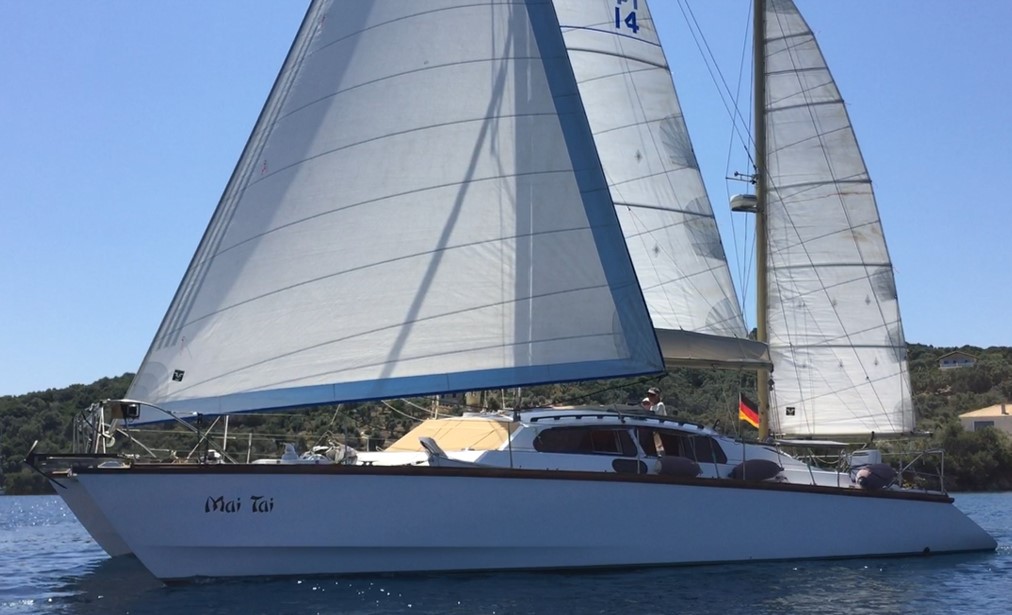

The Bavaria 36 built from 2002 is an 11.40m J&J Design family cruiser with a fractional rig, a saildrive and a choice of two or three cabins. It was one of the cheapest new 36 footers of its day, it sold in large numbers to private owners and charter fleets, and it now sits in the price band where many people buy their first proper cruising yacht. On 20 November 2026 we found UK-priced examples asking between £39,950 and £60,000, and euro-priced boats in the Mediterranean and northern Europe from €22,000 to €78,000. This review explains which "Bavaria 36" you are actually looking at, what the published tests said, which faults owners and surveyors report, what a year of ownership costs, and what the current asking prices tell you.
Jack & Anchor has not sailed a Bavaria 36. Our handling notes come from Vanessa Dudley's test of the new boat for Trade-A-Boat, published on boatsales.com.au on 1 November 2002, and from Dick Durham's used-boat review in Yachting Monthly (4 July 2010). Specifications come from Bavaria's own owner's manual for the 2002 and 2003 boats, Sailboatdata and the boatparts.app model history, which is built from archived Bavaria brochures and data sheets. Faults come from owners and surveyors writing on the YBW forum, the Bavaria Owners Association forum, the bavariayacht.org owners' forum, and a published keel repair report by a UK surveyor. Owner reports are individual accounts and we say who wrote what. Asking prices were checked on 20 November 2026 and are listed with their sources.
The short answer
| Question | Short answer | Main source |
|---|---|---|
| What is it? | An 11.40m (hull 10.96m) fractional sloop with a saildrive, designed by J&J Design and built in Giebelstadt, Germany | Bavaria owner's manual; Sailboatdata |
| Years built | 2002 to 2004 in Bavaria's own lists, revised for 2004 and sold in North America as the 36 Cruiser until 2005 | Sailboatdata; boatparts.app |
| Not to be confused with | The 11.55m Bavaria 36 of 1998 to 2000 (renamed the Bavaria 37) and the unrelated Cruiser 36 of 2010 to 2013 | Sailboatdata; Martin Leaning; boatparts.app |
| Layouts | Two cabins with a big heads and cockpit locker, or three cabins with the heads moved forward | Trade-A-Boat test, 2002 |
| Engine | Volvo Penta MD2020 (19hp) as listed standard in Germany; many boats have the 29hp MD2030 | Owner's manual; Trade-A-Boat |
| Who it suits | Couples and families coastal cruising and making Channel or short offshore hops | Yachting Monthly; Trade-A-Boat |
| Who it doesn't suit | Anyone wanting a heavy offshore boat, a mainsheet at the helm, or a boat with no saildrive to maintain | Trade-A-Boat; owners |
| UK-priced asking prices, 20 Nov 2026 | £39,950 to £60,000 across five adverts, with two UK-based boats at £42,500 and £45,000 | Rightboat and Jack & Anchor listings |
| Top survey checks | Keel joint and floor grid after any grounding, saildrive diaphragm age, standing rigging age, holding tank, engine hours on ex-charter boats | Surveyor report; owners' forums; Volvo Penta |
Which Bavaria 36 is it?
This is the first thing to settle, because three different boats have carried the name and adverts mix them up. On 20 November 2026 Rightboat's Bavaria 36 page showed 15 boats under three labels, "Bavaria 36", "Bavaria 36 Cruiser" and "Bavaria Cruiser 36", built anywhere from 1999 to 2012.
| Boat | Years | Length overall | Designer | Rig | Notes |
|---|---|---|---|---|---|
| Bavaria 36 (first) | 1998 to 2000 | 11.55m | J&J Design | Fractional, two spreaders (Martin Leaning); masthead (Sailboatdata) | Renamed the Bavaria 37 in 2000 |
| Bavaria 36 (this review) | 2002 to 2004, revised 2004 | 11.40m, hull 10.96m | J&J Design | Fractional, double spreaders | Sold in the US as the 36 Cruiser until 2005 |
| Bavaria Cruiser 36 | 2010 to 2013 | About 11.30m | Farr Yacht Design | Single spreader | Heavier, different hull and interior |
The 2002 boat is the one most UK buyers in the £40,000 to £60,000 bracket will meet. The quickest checks are the builder's plate and the hull identification number on the transom. The hull identification number is moulded into the starboard side of the transom, and Bavaria's manual says the builder's plate and declaration of conformity identify the exact boat. Ask for both, and for the year of build on the original paperwork, because the boat was quietly revised during its life.
Sailboatdata's notes and boatparts.app both say the 2002 and early 2003 boats were lighter, at about 4,700kg with 1,340kg of ballast, a 90 litre fuel tank and a standard draught of 1.55m. From 2004 the published figures rise to about 5,500kg and 1,500kg of ballast, with a 150 litre fuel tank and 1.65m draught. Bavaria's own manual, with a declaration of conformity signed on 30 April 2003, sits between the two: 5,000kg empty including safety equipment, 1,600kg of ballast on the normal keel, 1,560kg on the deep keel, and a 150 litre fuel tank. In practice, when an advert quotes a weight or tankage, ask which year's data sheet it came from.
The length causes confusion too. Yachting Monthly's 2010 review quoted 10.96m, which is the hull length. Overall length including the stern platform is 11.40m. Marinas and yards usually charge on overall length, so budget on 11.40m, or about 37ft 5in.
Specifications
| Item | 2002 to mid-2003 | 2004 to 2005 | Bavaria manual, April 2003 |
|---|---|---|---|
| Length overall | 11.40m | 11.40m | 11.40m |
| Hull length | 10.96m | 10.96m | 10.96m |
| Waterline | 9.40m | 9.40m | 9.39m |
| Beam | 3.60m | 3.60m | 3.59m |
| Draught, standard keel | 1.55m | 1.65m (German data sheet) or 1.55m (US brochure) | About 1.60m |
| Draught, deep keel | 1.95m | 1.95m | About 1.91m |
| Displacement | About 4,700kg light | About 5,500kg light | 5,000kg empty with safety kit; 6,530kg fully loaded with crew |
| Ballast | About 1,340kg | About 1,500kg | 1,600kg (standard keel), 1,560kg (deep) |
| Fuel | 90 litres | 150 litres | 150 litres |
| Water | 2 x 150 litres | 2 x 150 litres | 2 x 150 litres |
| Holding tank | Optional | Optional | Optional, about 80 litres |
| Engine | MD2020 19hp or MD2030 29hp, 120S saildrive | MD2030 in US boats | MD2020 14kW or MD2030 21kW |
| Mainsail | 31m² battened or 27m² in-mast furling | 30.9m² battened or 26m² furling | 31m² battened or 27m² furling |
| Genoa | About 36m² | About 36.8m² | About 36m² |
Sources: Sailboatdata, boatparts.app, Bavaria owner's manual. The keel options are a cast iron standard keel and a deeper lead keel, according to the Trade-A-Boat test and boatparts.app.
Construction and layout
Vanessa Dudley's 2002 test describes solid GRP up to the waterline, a GRP and foam sandwich for the topsides and deck, extra laminate around the keel joint, and Kevlar in the bow for impact resistance. A structural grid takes the keel loads, and floors, stringers and bulkheads are glassed in. Bavaria offered a five-year osmosis warranty, which is long gone on any boat now for sale. The interior was built as modules and dropped into the hull, which is how Bavaria could offer two- and three-cabin versions on the same line.
The two-cabin boat has a large double cabin forward, one double aft to port, and a big heads to starboard of the companionway with a wet locker. That arrangement leaves room for extra cockpit locker space aft. In the three-cabin version the heads moves forward of the mast and a second aft cabin takes the locker space. One three-cabin advert we read, for a 2002 boat on the Medway, describes the forward heads as having two doors, one into the forward cabin and one into the saloon.
The saloon has settees either side of a central drop-leaf table seating six, a linear galley to port with a cooker, oven, fridge and twin sinks, and a forward-facing chart table to starboard. Adverts quote headroom of about 6ft 1in (1.85m) to 2m. Joinery is mahogany. Dudley found it "cosy but subdued" and listed the dark interior among her lows.
On deck, halyards and reefing lines come back to the coachroof, where the mainsheet and traveller also sit, in front of the companionway. The primary winches are on the cockpit coamings, the cockpit floor and seats are teak, and there is a single wheel on a large moulded pedestal. Bavaria's manual lists a deck-stepped mast with 18 degree swept double spreaders, two upper, two intermediate and two lower shrouds, a forestay on a furler and a permanent backstay with a bridle and tackle, all in 1x19 wire.
How it sails, according to the published tests
Dudley sailed a two-cabin boat with the deep lead keel and the 29hp engine on Pittwater, near Sydney, in 10 to 15 knots on flat water. She found it balanced enough to steer itself to windward for minutes at a time, rounding up gently in gusts and bearing away again as the breeze eased. Her complaints were the mainsheet on the coachroof, out of reach of the helmsman behind a large pedestal; cockpit locker hinges that stood proud enough to catch skin and clothing; a long reach to the wheel when sitting out on the coaming; and the effort needed on the genoa winches under load. She described the boat as a bigger, roomier replacement for Bavaria's 34.
Dick Durham's Yachting Monthly review in 2010 rated the boat 79%, tested one at £48,000 and gave a price guide of £48,000 to £76,000 at the time. His conclusion was that she is "as pretty and seamanlike as many boats that cost twice as much", that the Bavaria name carried "a perceived snobbery" and keel worries that had "unfairly stigmatised" it, and that for a family sailor who does not need to be "a breast-beating offshore adventurer, this is an excellent cruising yacht". The full article is no longer on Yachting Monthly's site; only the summary and verdict are.
On the YBW forum in April 2010 a sailor posting as photodog, who had sailed the 36 and its sister models, called the post-2001 boat "quick and fun" with the deep keel and fully battened main, and a better sailor than the Beneteau Oceanis 361 or Jeanneau Sun Odyssey 37 of the time. He also criticised the cockpit coaming angles on long passages and said an angle of vanishing stability of 112 degrees "would make me a bit nervous" about long offshore cruising. We could not find that figure in any Bavaria document, so treat it as one sailor's number. Bavaria certified the boat as Category A under the Recreational Craft Directive, according to its manual.
Under power and in the marina
The engine sits under the companionway steps with a removable panel from the aft cabin, driving a Volvo Penta 120S saildrive with a 2.48:1 reduction and a two-bladed fixed propeller as standard. Bavaria's German lists show the 19hp two-cylinder MD2020 as standard, while many boats sold in the UK and Australia have the 29hp three-cylinder MD2030. Dudley's test boat had the bigger engine and the dealer said it "goes like the clappers" under power. Some boats have since been re-engined: one 2002 advert in Corfu lists a new Volvo Penta engine in 2018, and a 2002 boat in Italy lists a Volvo Penta D1-30.
The saildrive is quieter and simpler to align than a shaft, but it brings one recurring cost, covered below. The manual also carries a warning about lifting: the aft sling must go in the area of the saildrive, so tell the yard the boat has a leg before it is lifted.
Known weak points and buying checks
Keel joint and floor grid
This is the issue behind the "keel problems" that Yachting Monthly mentioned, and the place to spend most of your survey attention. The fear around Bavaria keels in the 2000s came mainly from a different boat. In May 2005 a Bavaria 42 Match lost its keel during a regatta in Croatia and a Hungarian sailor died. In a statement reported by YACHT on 8 May 2005, Bavaria said it believed the boat had grounded beforehand, but that because a technical cause could not be ruled out it would inspect every 42 Match and retrofit the keel laminate and fastening. That was not the 36, but it shaped how buyers and surveyors looked at the whole range.
For the 36 itself the reports are about grounding damage and repairs:
- On the bavariayacht.org forum, an owner who bought a 2003 boat found cracks in the floor grid at the aft end of the keel. Another member said the photos suggested a severe grounding or a lifting accident and that it was "not a DIY repair". The owner later found the first owner had grounded the boat and a yard had glued one part of the grid rather than relaminating it.
- On the same thread another owner described buying a 2005 boat after a surveyor found a crack and an earlier repair. Sounding the grid with the floorboards up revealed larger areas of delamination, and the repair involved regrinding and retabbing about a third of the grid joints in the cabin area and dropping and rebedding the keel.
- On the Bavaria Owners Association forum in November 2017, joint owners of a 2005 deep-keel Bavaria 36 reported lateral keel movement found after a grounding. The insurer's surveyor blamed delamination "due to inadequate design or manufacture", a view another member disputed. In August 2018 they reported that after more than three months of negotiation the insurer paid for the repair and they paid for "improvement/strengthening", splitting the yard bill equally.
- A UK surveyor, yachtsurveys.co.uk, publishes a sample repair report for a Bavaria 36 keel from June 2017. With the keel off, the surveyor found brittle bedding compound up to 10mm thick at the ends with voids in it, two keel studs with thread damage from overtightening, nuts friction-welded together, and small cracks in the flowcoat of the keel matrix. The fix used 10 to 12 alternating layers of chopped strand and biaxial cloth to rebuild the grid to hull bond, then rebedded the keel and torqued the nuts in two stages.
What to do with that: look for rust weeping or cracked filler at the keel to hull joint, especially at the aft end; lift every floorboard and look for cracks in the grid, flowcoat crazing near the limber holes, and any sign of new laminate or filler; ask the seller directly about groundings and insurance claims; and ask your surveyor to sound the grid. A reply on the bavariayacht.org forum about leaking keel studs notes that hull delamination is best checked with the boat in the water or hanging in the slings, not resting on its keel. If you find a repair, ask for the yard invoice and, ideally, a surveyor's sign-off.
Saildrive diaphragm
Volvo Penta's service schedule for its saildrives says the rubber seal between the drive and the hull should be inspected at each service and replaced every 84 months, which is seven years. Many owners regard that interval as conservative. On YBW in November 2025, one contributor who said he had worked on early saildrive development called it "expedient marketing", and another owner said his 1995 boat's seal was "well overdue" when he changed it in 2012 and looked fine. Insurers and surveyors tend to go by the manufacturer's interval, however, and if the seal is out of date you may be asked to change it.
The cost is real. One YBW member reported in November 2025 that Fox's engineers replaced the diaphragm on his 120 Volvo saildrive, the same family fitted to the Bavaria 36, for £1,873 including VAT, which also covered a shaft sleeve, a new propeller modified for a rope cutter, an anode and a sea trial. Another member priced the genuine Volvo parts for the job at about £513 including VAT. Of the UK-priced adverts we read, the Troon boat and the Samos boat list the diaphragm or saildrive as renewed in 2021, while the Medway boat is priced lower because its "saildrive gaiter" and standing rigging are due for replacement.
Standing rigging
Riggers and surveyors generally put the working life of wire rigging at 10 to 15 years, as our standing rigging replacement costs guide explains, so on a boat built in 2002 to 2004 the original wire should be long gone. If the advert gives no date for new rigging, assume it is due. Martin Leaning Masts & Rigging does not publish a guide for this exact boat, but it gives £2,405 to £2,623 including VAT for 7mm 1x19 standing rigging on the closely related 1998 to 2000 Bavaria 36, which it lists as a fractional two-spreader rig. Treat that as a guide and get a quote from a rigger who has measured the mast, because stay lengths and fittings differ between the two boats, and Bavaria's manual for the 2002 boat lists upper, intermediate and lower shrouds plus a backstay with a bridle.
Holding tank, lockers, stanchions and fittings
The YBW contributor photodog reported holding tanks on early boats that did not drain properly at sea, especially on three-cabin boats, while suggesting user habits played a part. He also said the push-button catches on locker doors were cheapened after 2002 and jam more often. Another sailor on the same thread, who sails a 1999 Bavaria 36 in the south of France, criticised the light bow roller and stanchions. Another Bavaria owner on the thread argued that the stanchions are designed to give on impact rather than tear a chunk out of the deck. On a viewing, push hard on each stanchion base and look for cracked gelcoat around it, and check that the bow roller is not bent.
Ex-charter history and engine hours
Many of these boats spent their early years in charter fleets. A Montenegro advert for a 2002 boat shows 2,863 engine hours, and the Samos boat has about 2,600. The Medway boat has about 2,065. Hours alone do not condemn an engine, but a well serviced MD2030 with 2,500 hours and records is a better buy than one with half the hours and no history. Ask for the service file, look at the condition of the cabin soles and hinges, and check whether the boat still has its original sails.
Survey checklist
| Check | Why | What a good answer looks like |
|---|---|---|
| Keel to hull joint, outside | Grounding damage shows first at the aft end | Fair joint, no weeping, no fresh filler without an invoice |
| Floor grid, inside | Cracks and delamination reported by owners and surveyors | No cracks or new laminate; or a documented repair with surveyor sign-off |
| Keel studs and nuts | Thread damage and overtightening found in one surveyor's report | Clean, dry, uncorroded studs; no rust staining in the bilge |
| Saildrive diaphragm date | Volvo Penta interval of seven years | Renewed within seven years, with an invoice |
| Standing rigging date | Original wire is now over 20 years old | Replaced in the last 10 years, with an invoice |
| Engine model and hours | MD2020 and MD2030 were both fitted; some boats are re-engined | Service history; no smoke; correct revs under load |
| Holding tank and heads | Early drainage problems reported | Tank drains and pumps out; no smell in the heads |
| Stanchions and bow roller | Light fittings reported by owners | Firm bases, no cracked gelcoat, straight roller |
| HIN and builder's plate | Confirms which 36 and which year's specification | Matches the advert and the paperwork |
| VAT and RCD papers | Many boats are in the EU or outside it | Proof of VAT status and the original declaration of conformity |
Our boat survey costs guide explains what a full pre-purchase survey costs on a boat of this size and what it should cover. If you are still deciding whether a particular boat is worth surveying, BoatCheck gives you an independent first look at the advert, the price and the boat's history before you spend money on a surveyor.
Running costs
The worked figures below are for a Bavaria 36 kept in a south coast marina and maintained by a yard. They use published 2026 price lists checked on 20 November 2026. Your marina, yard and boat will move the totals, but this gives the order of magnitude.
| Cost | Worked figure | Basis |
|---|---|---|
| Annual berth, Chichester Marina, paid in full | £8,242.20 | 11.1m to 12.0m band at £723 per metre, on 11.40m; Premier Marinas 2026/27 |
| Chichester Harbour Conservancy annual dues | £176.27 | 11.01m to 12m band, 2026/27 |
| Haul out, wash and block | £399.00 | Quay Lane Boatyard, Gosport, 2026: £10.50 per foot on 38ft (LOA rounded up) |
| One coat of antifouling | £492.10 | Quay Lane, £12.95 per foot on 38ft |
| Launch | £299.44 | Quay Lane, £7.88 per foot on 38ft |
| Engine service, winterise and recommission, three-cylinder MD2030 | £720 plus parts | Falmouth Boat Co: from £120 and £80 plus VAT per cylinder |
| Saildrive diaphragm, set aside per year | About £268 | £1,873 owner-reported bill spread over Volvo Penta's seven-year interval |
| Standing rigging, set aside per year | About £160 to £262 | Martin Leaning's £2,405 to £2,623 for the 1998 to 2000 Bavaria 36, over 10 to 15 years |
| Total before insurance and extras | About £10,760 to £10,860 | Sum of the rows above |
With the smaller two-cylinder MD2020, the engine line falls to about £480 plus parts at Falmouth Boat Co's rates. Paying the Chichester berth monthly at £777.23 per metre instead raises the berth line to £8,860.42.
The berth is three quarters of the bill, so the cheapest saving is a mooring. Quay Lane's own annual swinging moorings in Portsmouth Harbour cost £645 (tidal) to £1,260 (deep water) in its 2026 price list. Swapping the Chichester berth and dues for one of those brings the total above down to about £2,980 to £3,700 a year, before any Portsmouth harbour dues, a tender and the time spent getting to and from the boat.
Insurance is the line we could not fix to a number. GJW Direct says its customers pay an average of £440 a year for yacht and sailing boat insurance, but that average covers boats of every size and value. Get quotes on the actual boat and expect questions about the rigging age and, on a boat with a history, the keel.
The total leaves out electricity, sails, liferaft servicing, safety kit and repairs. A Bavaria 36 with original rigging and an out-of-date saildrive seal could need about £4,300 to £4,500 spent on those two jobs alone in its first winter, on the figures above, before you look at the sails. That is why those dates matter so much when you compare adverts.
Asking prices in November 2026
We checked these adverts on 20 November 2026, mainly through Rightboat's Bavaria 36 listings and the Jack & Anchor listings fed from Network Yacht Brokers. They are asking prices, not sale prices. We have left out the 1999 boat and the 2010s Cruiser 36s, which are different designs.
UK-priced boats
| Year | Location | Layout | Asking price | Notes | Source |
|---|---|---|---|---|---|
| 2002 | Corfu, Greece | Three cabins | £39,950 inc VAT on Rightboat; £44,750 on Jack & Anchor | New Volvo engine 2018, in-mast furling main | Jack & Anchor listing; Network Yacht Brokers via Rightboat |
| 2002 | River Medway, Kent | Three cabins | £42,500 inc VAT | MD2030, about 2,065 hours; standing rigging and saildrive gaiter due; 80 litre holding tank | Network Yacht Brokers via Rightboat |
| 2003 | Troon Yacht Haven | Two cabins | £45,000 | MD2030; standing and running rigging 2020, saildrive diaphragm 2021, new main 2023 | Jack & Anchor listing |
| 2003 | Samos, Greece | Three cabins | £60,000 | MD2030, about 2,600 hours; saildrive renewed 2021, rigging 2021, Hydrovane, 1,020Ah lithium bank, 800W solar; advert says UK VAT paid | David Morris via Rightboat |
| 2003 | Preveza, Greece | Three cabins | £59,950 | Advert text and equipment list match the Samos boat above | Jack & Anchor listing (Network Yacht Brokers) |
Euro-priced boats
| Year | Location | Asking price | Notes | Source |
|---|---|---|---|---|
| 2002 | Montenegro | €22,000 ex VAT | Three cabins, 2,863 engine hours | Bach Yachting via Rightboat |
| 2003 | Preveza, Greece | €48,000 | Two cabins | Jack & Anchor listing |
| 2003 | Tivat, Montenegro | €49,900 ex VAT | Three cabins, 685 engine hours | Bach Yachting via Rightboat |
| 2003 | Greystones, Ireland | €54,900 tax paid | Listed as a 36 Cruiser | BJ Marine via Rightboat |
| 2003 | Volos, Greece | €55,000 | Two cabins | MMK via Rightboat |
| 2004 | Split, Croatia | €57,500 inc VAT | Three cabins, "VAT paid" | Selymar Yachts via Rightboat |
| 2002 | Adriatic, Italy | €59,000 inc VAT | Two cabins | Schmidt & Partner via Rightboat |
| 2004 | Northern Germany | €59,900 inc VAT | Three cabins, listed as a 36 Cruiser | Schmidt & Partner via Rightboat |
| 2002 | Friuli, Italy | €78,000 inc VAT | Three cabins, engine listed as a Volvo Penta D1-30 | Schmidt & Partner via Rightboat |
What the prices say
The two UK-based boats, on the Medway and at Troon, ask £42,500 and £45,000. The £2,500 gap between them roughly reflects the rigging and saildrive work the Medway boat still needs: on the figures above, standing rigging at £2,405 to £2,623 and a diaphragm job that one owner paid £1,873 for come to more than the difference. On paper the Troon boat is the better value of the two, provided the 2020 and 2021 work is backed by invoices.
The Samos boat at £60,000 shows how much equipment can add. It asks £15,000 to £17,500 more than the two UK-based boats, and in return offers a lithium battery bank, solar, a wind generator, a Hydrovane, a newer autopilot and new rigging. If you want to cruise far, that may be cheaper than fitting it all yourself; if you want a weekend boat in the Solent, most of it is weight you are paying to carry.
Two pairs of adverts look like the same boat listed twice. The Corfu boat appears at £39,950 on Rightboat and £44,750 on our own site, both through Network Yacht Brokers. The Samos and Preveza boats share the same description and equipment at £60,000 and £59,950 through two different brokers. Ask the broker which price is current before you travel.
Euro prices cluster around €48,000 to €60,000, with a middle figure of €55,000 across the nine boats we found. The €22,000 Montenegro boat is far below the rest and has nearly 2,900 engine hours, so expect it to need a lot. Boats outside the UK also carry tax questions. A boat listed "ex VAT" in Montenegro has no EU or UK VAT status, so bringing it to the UK means 20% import VAT on top of the price and any duty. Even a boat with EU VAT paid will usually owe UK import VAT, unless it qualifies as returned goods. Our guide to importing a boat from the EU to the UK works through the rules and the paperwork.
Prices have also come down. Yachting Monthly's price guide in 2010 was £48,000 to £76,000. The two UK-based boats now ask less than the bottom of that range, 16 years later. A Bavaria 36 has already done most of its depreciating, so condition and recent work now matter far more to its value than its age does.
Questions to ask before you travel
Most of these boats are a flight away, so a few emails can save a wasted trip. Ask the broker for the year of build on the builder's plate or the declaration of conformity, and whether the boat has the 2002 to 2003 or the 2004 specification. Ask for the dates of the last standing rigging replacement and saildrive diaphragm change, with invoices. Ask whether the boat has ever grounded hard, had a keel repair or an insurance claim, and whether the seller has an earlier survey report they will share. Ask for engine hours and the service history, and whether the engine is the MD2020, the MD2030 or a replacement.
Then ask about tax and paperwork. You need to know whether VAT has been paid, in which country, and whether the seller has proof. You also need the original declaration of conformity or other evidence that the boat meets the Recreational Craft Directive, and a clear bill of sale chain. A boat on the Greek or Croatian register will need deregistering before it can be registered in the UK. For a boat abroad, ask whether a lift-out for the survey can be arranged and what it costs, because the keel joint and the saildrive cannot be checked properly with the boat afloat.
Finally, ask for photographs of the bilge with the floorboards up, the keel joint from outside, and the saildrive leg. A seller with nothing to hide can send those in an afternoon, and they will tell you more about the boat than any number of saloon photos.
How the Bavaria 36 compares
Sailors on the YBW thread compared the 36 with the boats it competed against in 2002. Photodog put it ahead of the Beneteau Oceanis 361 and the Jeanneau Sun Odyssey 37 for sailing, and suggested the 1999 to 2001 Bavaria 34 and Bavaria 37 for anyone who valued a sturdier feel over sportiness. An owner of a 2001 three-cabin Bavaria 37 said it had "stood up well to 7 seasons chartering" and planned to sail it from Corfu back to the UK. Another forum member advised against the four-cabin layouts sometimes found in other Bavarias of this size, which are mostly ex-charter.
The obvious alternative today is a newer boat for more money. Our Sun Odyssey 349 review covers a 2014 to 2023 design of a similar size, which asked between £84,950 and £119,950 in the UK when we checked on 13 November 2026, about twice the price of a Bavaria 36. You can see current Bavarias of every size on our Bavaria boats for sale page.
Verdict
The 2002 to 2004 Bavaria 36 is a lot of boat for £40,000 to £60,000. The published tests and owners agree that it sails better than its reputation suggests, is easy to handle with two people, and has a practical interior with a choice of two or three cabins. Yachting Monthly's verdict in 2010 still holds: it suits a family that wants to cruise the coast and cross the Channel, and it was never meant for heavy weather offshore passages.
Its risks are specific and checkable. Every report we found of serious trouble involves the keel joint and floor grid after a grounding or a lifting accident, so the survey has to look hard at both, and a past repair needs paperwork. The saildrive diaphragm and standing rigging are the two big bills that most adverts either answer or quietly leave out. A boat with recent rigging, an in-date diaphragm, a clean grid and a service history is worth paying more for than a cheaper boat with none of those.
Choose the two-cabin version if you are a couple who want a bigger heads and a huge cockpit locker; choose three cabins if you regularly carry children or guests. Either way, find out which 36 you are looking at before you look at anything else.
Sources
- Bavaria Yachtbau, "Manual for owners and skippers, Sailing yacht Bavaria 36" (2002 and 2003 boats, declaration of conformity dated 30 April 2003), hosted by the Bavaria Yacht owners' site: https://www.bavariayacht.org/downloads/manual/Bavaria%2036%202002%202003.pdf
- Vanessa Dudley, "Bavaria Yachts 36", Trade-A-Boat test on boatsales.com.au, 1 November 2002: https://www.boatsales.com.au/editorial/details/bavaria-yachts-36-9333/
- Dick Durham, "Bavaria 36", Yachting Monthly, 4 July 2010: https://www.yachtingmonthly.com/reviews/yacht-reviews/bavaria-36
- Sailboatdata, Bavaria 36 (2002 to 2004): https://sailboatdata.com/sailboat/bavaria-36-2002-2004/ and Bavaria 36 (1998 to 2000): https://sailboatdata.com/sailboat/bavaria-36/
- boatparts.app, Bavaria 36 and 36 Cruiser model history: https://boatparts.app/service/boat-manuals/bavaria-36
- YACHT, "Bavaria comments on keel loss", 8 May 2005: https://www.yacht.de/en/yachts/shipyards/t-and-t-news-bavaria-comments-on-keel-loss/
- yachtsurveys.co.uk, sample report of keel repair works on a Bavaria 36, June 2017: https://www.yachtsurveys.co.uk/wp-content/uploads/2017/07/Sample-keel-repair.pdf
- Bavaria Owners Association forum, "Keel Problems - 36", November 2017 to August 2018: https://www.bavariaowners.co.uk/forums/topic/keel-problems-36/
- bavariayacht.org forum, "Bavaria 36 and light hull grid damage": https://www.bavariayacht.org/forum/index.php?topic=3095.0 and "Keel Bolt / Stud Leaking": https://www.bavariayacht.org/forum/index.php?topic=1216.0 (forum returning errors when we rechecked on 20 November 2026)
- YBW forum, "Bavaria 36 - any owners opinions?", April 2010: https://forums.ybw.com/threads/bavaria-36-any-owners-opinions.234629/
- YBW forum, "Saildrive seal replacement", November 2025: https://forums.ybw.com/threads/saildrive-seal-replacement.623770/page-2
- Volvo Penta, service protocol for D1-30F with saildrive (S-drive rubber seal, replace every 84 months): https://productcenter.volvopenta.com/OwnerInformation/PublicProtocolPdf?groupId=2933&langCode=en-US&productDesignation=D1-30F
- Martin Leaning Masts & Rigging, Bavaria 36 Performance rigging guide: https://martinleaning.co.uk/content/100-bavaria-36-performance
- Premier Marinas, Chichester schedule of retail marina charges, 1 October 2026 to 30 September 2027: https://www.premiermarinas.com/media/u25l1iad/chichester-berthing.pdf
- Chichester Harbour Conservancy, harbour dues and charges 2026/27: https://www.conservancy.co.uk/on-the-water/harbour-dues-charges/harbour-dues-and-charges-current/
- Quay Lane Boatyard, price list from 1 January 2026: https://www.quaylaneboatyard.co.uk/fees
- Falmouth Boat Co, engineering prices: https://www.falmouthboat.co.uk/pricing/engineering/
- GJW Direct, yacht and sailing boat insurance: https://www.gjwdirect.com/yacht-sailing-boat-insurance/
- Asking prices: Rightboat Bavaria 36 listings (https://www.rightboat.com/boats-for-sale/bavaria/36), including the Medway boat (https://www.rightboat.com/boats-for-sale/bavaria/36/rb716227) and the Samos boat (https://www.rightboat.com/boats-for-sale/bavaria/36/rb584865), and Jack & Anchor listings, all checked 20 November 2026.