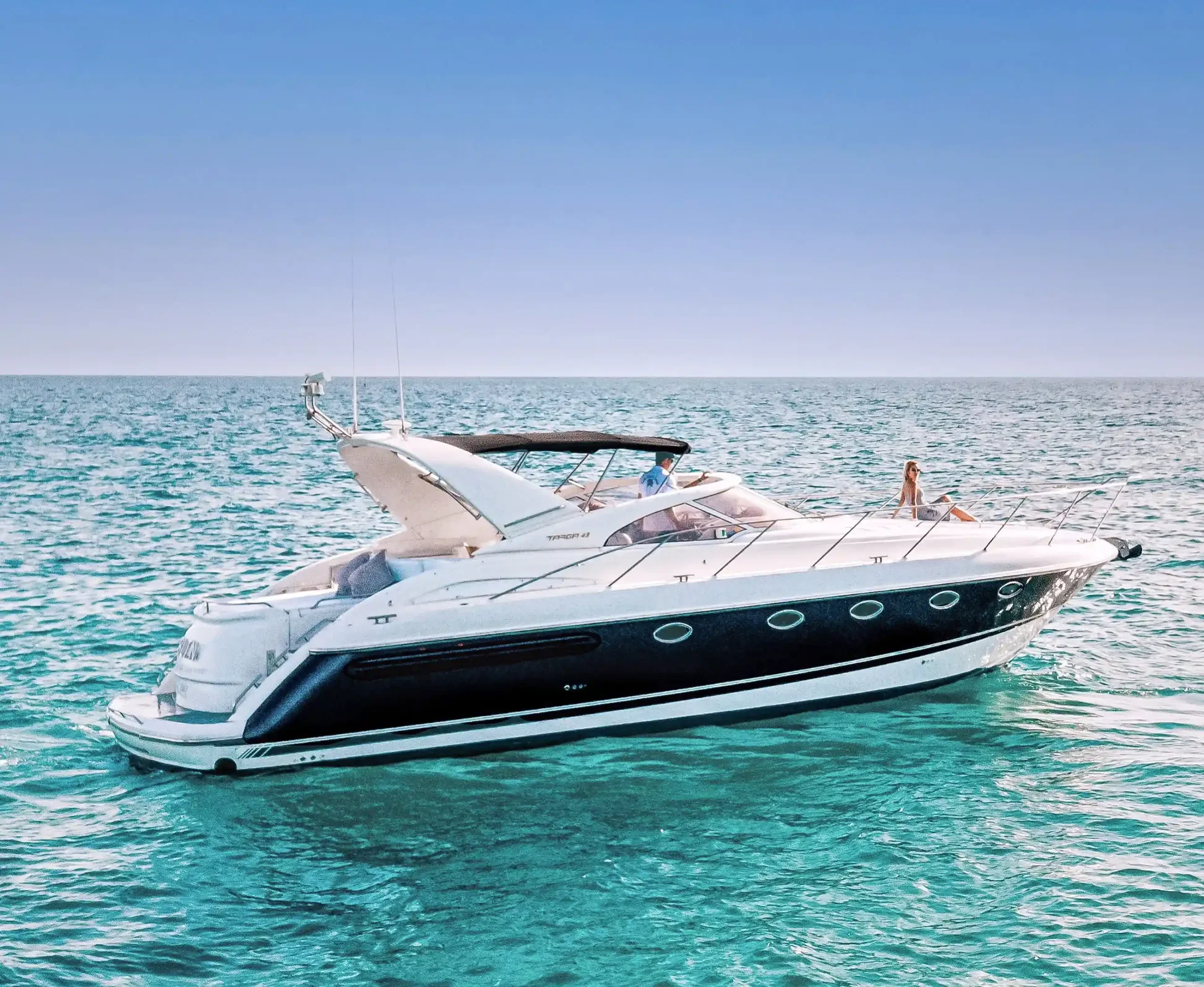
Some boats age better than others, and the Fairline Targa 43 is one of those designs that still looks remarkably right more than 20 years after it first appeared.
Built from the late 1990s into the mid-2000s, the Targa 43 came from a particularly strong period for British sports cruisers. Fairline, Princess and Sunseeker were producing fast, substantial boats with proper shaft-drive diesel engines, beautifully finished interiors and hulls designed for serious coastal cruising rather than simply looking good tied to a pontoon.
Today, a used Fairline Targa 43 offers an enormous amount of boat for the money. The catch is that these are now ageing, complex motor yachts, and buying the wrong one can become expensive very quickly.
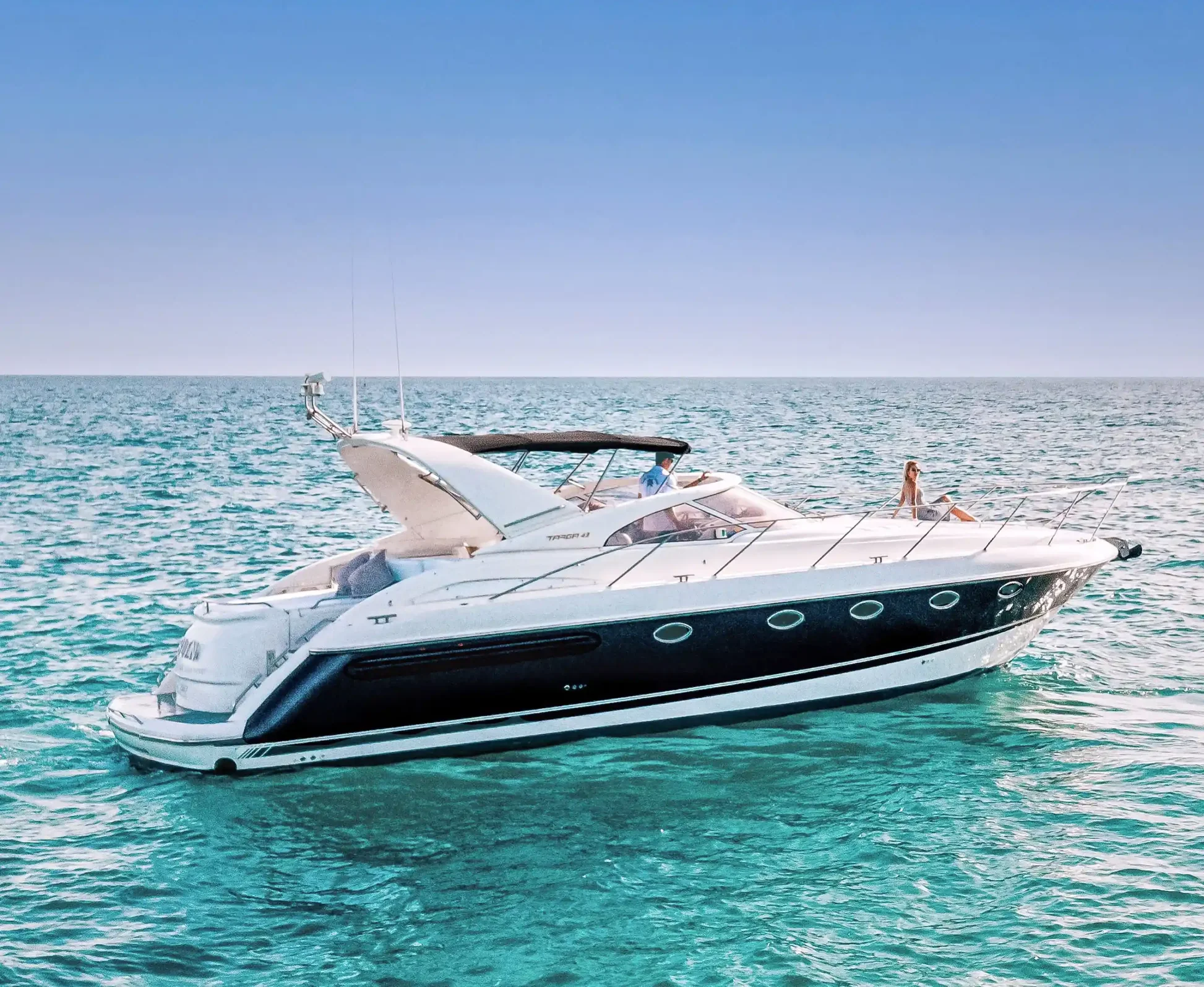
So, is the Fairline Targa 43 still worth buying?
In the right condition, absolutely.
A Proper British Sports Cruiser
Designed by Bernard Olesinski and Fairline's own design team, the Targa 43 measures around 13.74 metres overall with a 3.8-metre beam. Fuel capacity is approximately 1,274 litres, while the hull uses the deep-V configuration that helped establish Fairline's reputation for capable sea-going motorboats.
It is a relatively narrow, sleek boat by modern standards, and that's part of its appeal. Newer sports cruisers have become wider, taller and increasingly focused on maximising interior volume. The Targa 43 feels lower, leaner and more purposeful.
There's still plenty of accommodation below. The usual layout provides a double owner's cabin forward, a twin guest cabin, two heads and a proper saloon and galley. Four people can cruise very comfortably, with additional occasional sleeping space depending on configuration.
Then there's the tender garage.
Today, garages are commonplace on larger sports cruisers, but having an integral tender garage on a boat of this size was a genuinely premium feature when the Targa 43 appeared. It also keeps the cockpit and bathing platform far cleaner than carrying a tender permanently on the stern.
What Is the Fairline Targa 43 Like to Drive?
This is arguably the best reason to buy one.
The Targa 43 was produced before joystick-controlled pod drives became the norm, and most examples use conventional twin diesel engines driving straight shafts.
That brings compromises in efficiency and low-speed manoeuvring, but underway it gives the boat a reassuringly substantial feel.
Depending on year, Fairline offered several engine combinations, including Volvo Penta TAMD63s, TAMD74s and later TAMD75s, with some Caterpillar-powered examples also produced. Maximum speeds vary from roughly 30 knots with the smaller engines to the mid-30-knot range with the more powerful installations.
A later Targa 43 fitted with twin 480hp Volvo Penta TAMD75s can theoretically reach around 35 knots or slightly more in favourable conditions.
But outright speed isn't really the point.
The Olesinski hull has a reputation for handling rougher water well, and the boat feels reassuringly planted at cruising speed. There is a weight and solidity to the way it moves through the sea that is increasingly difficult to find in lighter modern sports cruisers.
It's the sort of boat that encourages you to keep going when the weather becomes slightly less pleasant than forecast.
The Cockpit Is Still Excellent
The Targa 43 was designed around outdoor living long before manufacturers started describing every cockpit as a "beach club".
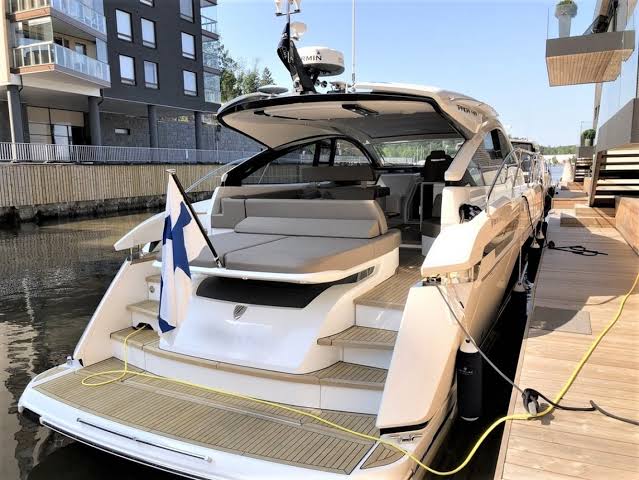
There is a large seating area aft, a wet bar, plenty of room around the helm and direct access to the bathing platform. Add the tender garage underneath and the entire rear half of the boat works extremely well for summer cruising.
It is particularly well suited to the Mediterranean, but arguably makes just as much sense on the south coast of Britain, where the ability to close the cockpit beneath the canopy extends the boating season considerably.
The helm position also feels like a proper driving environment rather than part of the saloon. Visibility is good, throttles fall easily to hand and there's enough separation from everyone lounging aft to make the driver feel as though they're actually piloting something.
And the Interior?
This is where age becomes more obvious.
Even nicely maintained Targa 43s feel like yachts from another era compared with a new Fairline. There is more timber, smaller windows and considerably less natural light below decks.
That isn't necessarily a criticism.
Many buyers actively prefer the lacquered cabinetry and traditional British yacht interior to the pale fabrics and enormous glass surfaces of newer boats.
More importantly, the quality is generally very good.
A well-kept Targa 43 can still feel expensive inside today, which says plenty about Fairline's standards at the time.
The forward owner's cabin has a proper double berth and its own bathroom, while the guest cabin uses twin berths and has access to a second heads compartment.
For a couple, it's luxurious. For a family of four, it's genuinely practical.
Which Fairline Targa 43 Engine Is Best?
This is one of the most important questions for anyone looking at a Fairline Targa 43 for sale.
The earlier Volvo Penta TAMD63 is a simpler, largely mechanical engine producing around 370hp. Later boats commonly received the electronically controlled TAMD74 or 75, with the TAMD75 producing roughly 480hp.
There is an argument for both.
The TAMD63 doesn't provide quite the same performance, but its relative mechanical simplicity is attractive on a boat now approaching 25 years old. Owner discussions also regularly praise the 63 for robustness and straightforward maintenance.
The TAMD75 gives the Targa considerably more shove and suits the boat extremely well, but the electronic controls introduce additional components that need to be in good condition.
We wouldn't automatically choose one over the other.
We'd choose the boat with the best maintenance history.
A meticulously maintained TAMD63 boat is preferable to a neglected TAMD75 boat, and vice versa.
At this age, evidence of servicing matters far more than an extra three or four knots of top speed.
What Should You Check Before Buying a Targa 43?
This is where buyers need to be realistic.
You're no longer buying a relatively new £100,000-plus sports cruiser. You're buying a complex luxury motorboat that has potentially spent more than two decades exposed to salt water.
The engines and gearboxes deserve a proper mechanical inspection, ideally including a cold start and full-load sea trial. Cooling systems, exhaust components, turbochargers and engine mounts can all generate substantial bills if maintenance has been deferred.
Check the electronic engine controls carefully on TAMD74 and TAMD75 boats. There are documented owner reports involving EDC-related components such as solenoids and throttle potentiometers, although that doesn't mean every electronically controlled boat will suffer problems.
The rest of the boat deserves equally close attention. Look at the condition of the teak, cockpit upholstery, canopy, navigation electronics, generator, air conditioning, windlass, trim tabs and hydraulic tender-garage mechanism.
None of these things makes the Targa 43 unreliable.
They simply illustrate the difference between buying an old car and an old luxury motor yacht: there are a lot more expensive things attached to the latter.
A full marine survey and specialist engine inspection would be high on our list before completing any purchase.
What Does a Fairline Targa 43 Cost to Run?
This isn't the boat for someone hoping to experience 43-foot motor-yacht ownership on a shoestring.
Two large diesel engines, more than 1,200 litres of fuel capacity and almost 10 tonnes of dry weight mean fuel consumption isn't insignificant.
You'll also need to budget for berthing, insurance, annual engine servicing, antifouling, anodes and periodic replacement of ageing equipment.
The shaft drives themselves are arguably a positive from an ownership perspective. They're mechanically straightforward and avoid some of the servicing requirements associated with large sterndrives or pod systems.
But the Targa 43 is still a genuine 40-plus-foot motor yacht.
Its purchase price may now overlap with much smaller modern boats, but its maintenance costs haven't magically shrunk with depreciation.
That distinction is important.
Targa 43 vs a Newer Sports Cruiser
This is where the Fairline becomes particularly interesting.
For the price of a good used Targa 43, you may be looking at a considerably smaller modern boat.
The newer boat will probably have better electronics, lower fuel consumption, easier manoeuvring and a brighter interior.
The Targa gives you something different: two proper cabins, twin large diesels, shaft drives, substantial tankage, a tender garage and the feeling of a much bigger yacht.
It is essentially the classic used-luxury-car equation applied to boats.
You're getting considerably more machine for your purchase price, but you need to be prepared to maintain the machine you have bought.
Is the Fairline Targa 43 a Good First Motor Yacht?
It can be, but it isn't necessarily a beginner's boat.
At nearly 14 metres long, twin-shaft manoeuvring takes some practice, particularly if you haven't handled a larger motorboat before. A bow thruster makes marina work significantly easier, and many used examples have one fitted.
Once underway, however, the Targa 43 is far less intimidating than its dimensions suggest.
Visibility is good, the hull is predictable and twin engines provide plenty of control. Some appropriate practical training would make the transition manageable for someone determined to start with a substantial boat.
The bigger question is financial rather than technical.
A first-time buyer needs to understand that buying a £100,000 Targa 43 doesn't mean they're operating a £100,000 boat. They're operating what was originally an expensive luxury yacht, and replacement parts and major repairs reflect that.
The Verdict
The Fairline Targa 43 remains one of the most appealing used British sports cruisers of its generation.
It looks good, drives beautifully, has proper accommodation and feels like a much more expensive boat than its current market value might suggest.
More importantly, it has character.
Modern sports cruisers are generally more spacious, efficient and easier to manoeuvre, but few provide quite the same combination of low-slung styling, shaft-drive solidity and old-school British build quality.
The downside is obvious: age.
A cheap Targa 43 with tired engines, old electronics and years of deferred maintenance could swallow money at an alarming rate. A cherished example with comprehensive invoices, regular servicing and sensible upgrades is a completely different proposition.
Buy on condition rather than price and the Targa 43 still makes enormous sense.
Our rating: 9/10
For someone looking for a used 40-foot sports cruiser with genuine offshore ability, two proper cabins and classic Fairline appeal, there aren't many better ways to spend the money.
Found a Fairline Targa 43 for sale?
Before committing to a purchase, [Jack & Anchor BoatCheck](https://jackanchor.com/boatcheck) can help investigate the advertised boat, its specification, vessel details, documentation, listing history, valuation and potential warning signs.
It doesn't replace a professional marine survey or engine inspection, but it can help establish whether the boat you're considering looks right before you start spending serious money on the buying process.